Lantana Plant Care 101: How to Grow, Prune & Rebloom
This article may contain affiliate links. As an Amazon Associate, I earn from qualifying purchases at no extra cost to you.
Lantana is a heat-loving flowering shrub in the verbena family, grown across the US for clusters of small, bright flowers that cover the plant from late spring until frost. Butterflies and hummingbirds visit it, and it tolerates sun and dry spells far better than most garden flowers. Good lantana plant care comes down to a few basics: six or more hours of sun, well-drained soil, deep but infrequent watering, light feeding, and a trim when growth gets leggy. Two cautions matter before you buy: lantana is toxic to pets and people if eaten, and some varieties are invasive in warm regions, so choosing the right cultivar is part of caring for it responsibly.
Recommended Products for Getting Started With Lantana
- 🪴 Large Pots with Drainage Holes and Saucers—Check price on Amazon
- 🌱 Well-Draining Potting Mix for Containers—Check price on Amazon
- 🧤 Garden Gloves—Check price on Amazon
Lantana Plant Care at a Glance
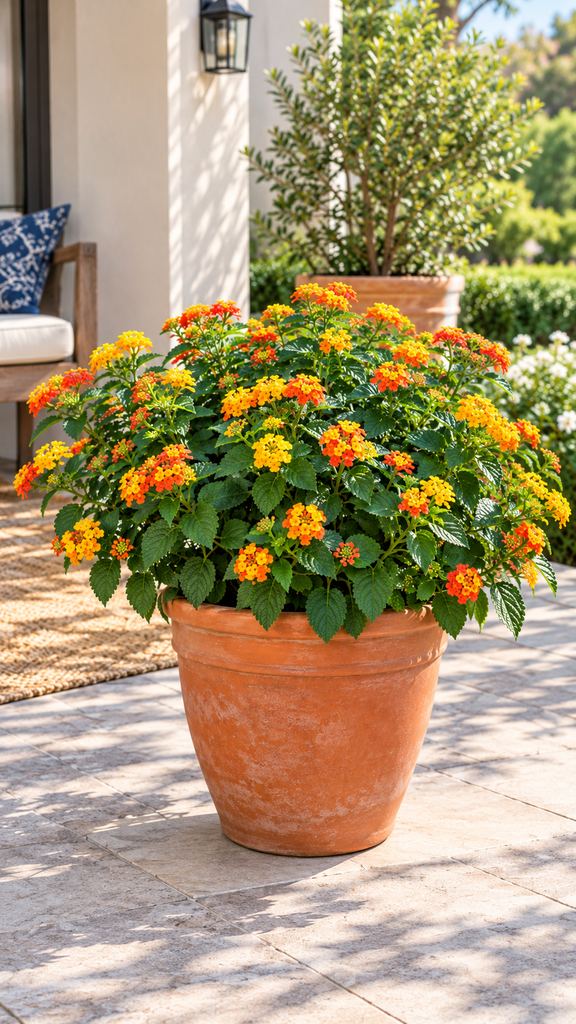
Lantana Care Requirements
The table covers common garden lantana (Lantana camara) and trailing lantana (L. montevidensis). Check your plant tag, because cultivars differ.
| Factor | What it needs | Key detail |
|---|---|---|
| Light | Full sun, at least 6 hours of direct light | Less sun means fewer flowers and more mildew. |
| Watering | Water deeply, then let the top inch or two of soil dry. | Established plants tolerate drought; soggy soil causes root rot. |
| Soil | Well-drained soil or a quality potting mix | Poor drainage is the most common killer. |
| Temperature | Loves heat; frost kills top growth | Perennial only in warm regions (roughly zones 8–11, depending on the type) |
| Fertilizer | Light feeding | Too much nitrogen gives leaves instead of flowers. |
| Flowering | Spring until frost on new growth | Trimming and deadheading keep it blooming. |
Indoor vs. Outdoor Growing Conditions
Lantana is an outdoor plant. It needs more sun than most windowsills offer, so it rarely blooms well indoors. In cold regions, gardeners grow it as an annual or in pots that move to a bright, frost-free spot for winter. In warm regions, it grows year-round in the ground as a shrub.
How Difficult Is Lantana to Grow?
Lantana is among the easier flowering plants once it has sun and drainage. The real decisions are about the plant itself: it is toxic if eaten, and the fertile forms of L. camara can spread into natural areas in warm climates. Sterile cultivars let you grow it with less concern.
1. What Is a Lantana Plant?
Botanical Background and Growth Habits
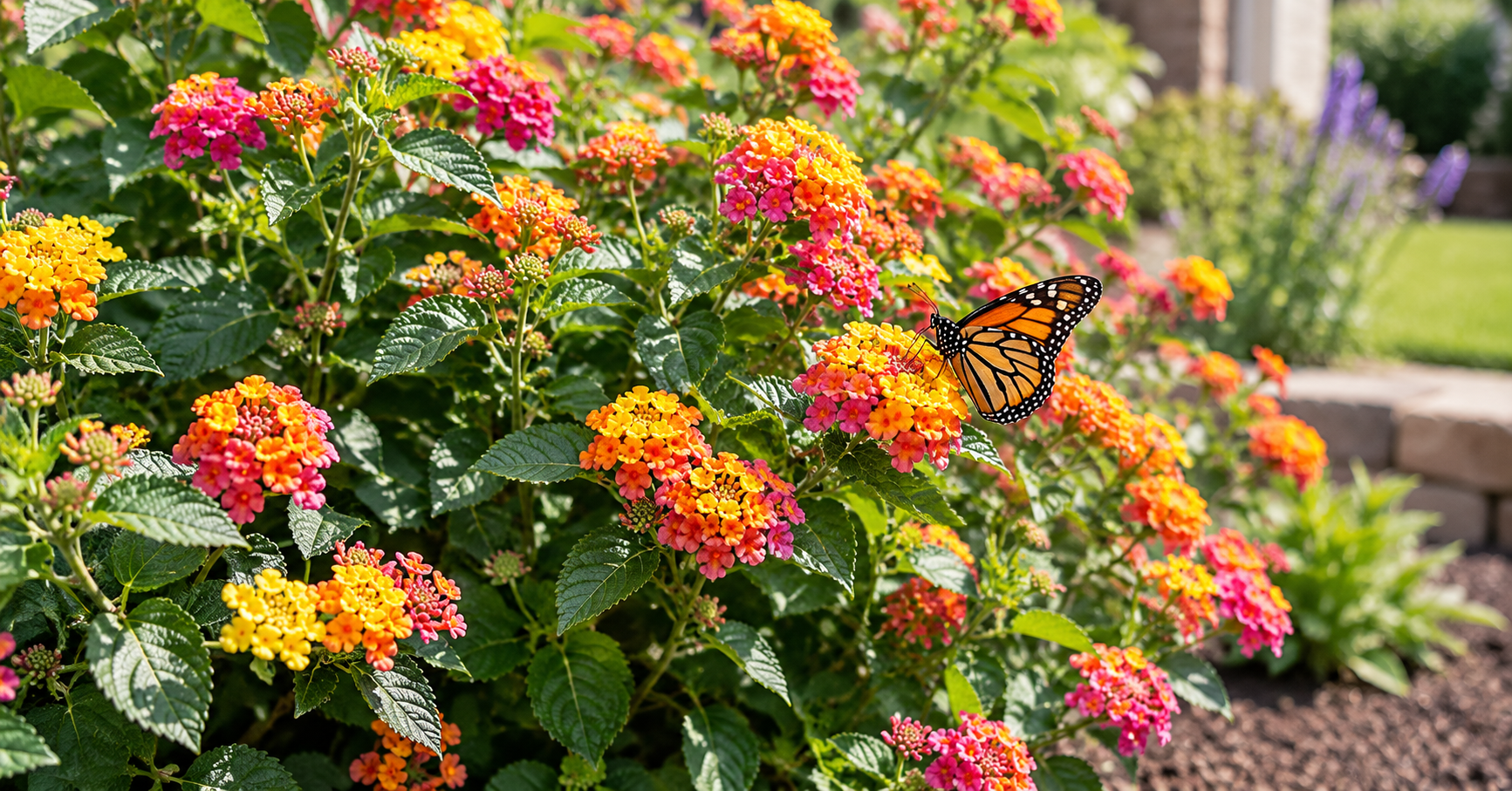
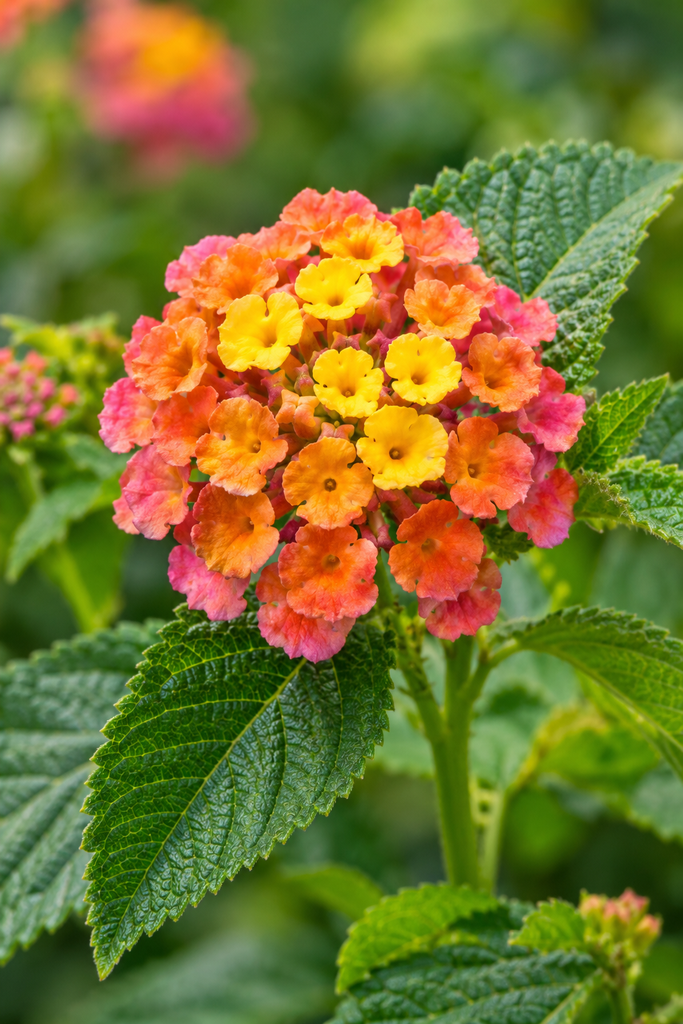
Lantana belongs to the verbena family (Verbenaceae) and is native to tropical regions of the Americas. The garden species most people know is Lantana camara, a rounded shrub with rough, aromatic, toothed leaves. Trailing lantana (L. montevidensis) is a low, spreading plant with lavender or white flowers. The tiny flowers cluster into rounded heads, and in wide varieties they change color as they age, so one cluster can show two or three shades at once. After flowering, the plant can form small berries that ripen dark.
Why Lantana Is Popular as a Garden Plant
Lantana flowers for months, thrives in heat, tolerates drought once established, and attracts butterflies and other pollinators. It works in borders, hanging baskets, mixed containers, and as a trailing groundcover.
How Long Can a Lantana Plant Live?
In frost-free regions, lantana is a long-lived woody shrub that can persist for many years, though it becomes woody and leggy without pruning. In colder regions, it is usually treated as an annual or kept as an overwintered container plant. Lifespan depends on climate, pruning, and drainage.
2. How Much Sunlight Does Lantana Need?
The Best Light for Lantana
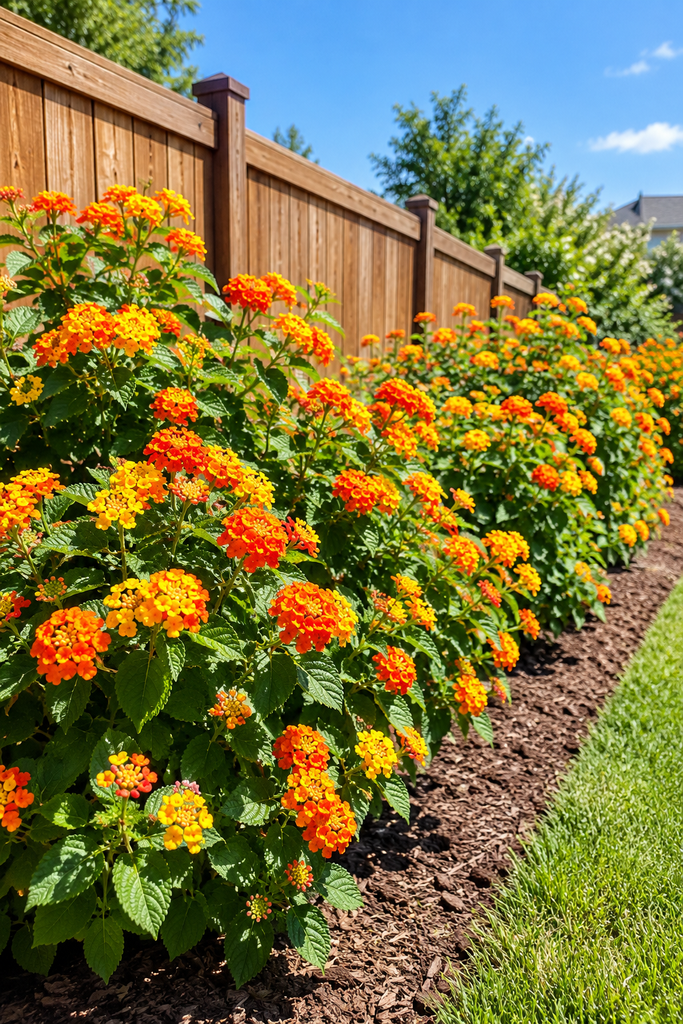
Lantana wants full sun: at least six hours of direct light a day, and more is fine. In very hot, dry climates, a little afternoon shade can reduce stress, but heavy shade leads to fewer flowers and a sprawling, mildew-prone plant.
Can Lantana Grow in Direct Sun?
Yes, direct sun is what it prefers. New nursery plants can scorch if moved straight from a shady store display into hot afternoon sun, so harden them off over a week or so before planting in a very sunny spot.
Signs of Too Much or Too Little Light
- Too little: Few or no flowers, stretched stems, small pale leaves, and powdery mildew.
- Too much (rare): Crispy brown leaf edges and wilting in the afternoon in extreme heat, especially in small pots with dry soil.
Where to Place Lantana in Your Garden or on a Patio
Plant it in the sunniest spot you have, such as a south- or west-facing bed, along a driveway, or in a large pot on a sunny patio. Give it room, since many cultivars grow into rounded shrubs, and avoid planting it near fences or areas where pets or children chew plants.
3. How Often Should You Water Lantana?
How to Tell When Your Lantana Needs Water
There is no fixed schedule. Weather, soil, plant size, and pot size all change how fast the soil dries. Push a finger two inches into the soil. If it is dry at that depth, it is time to water. Newly planted lantana needs regular watering for the first few weeks while roots establish. Established in-ground plants often need water only during extended dry spells. Potted lantana dries out much faster and may need water every few days in hot weather.
The Best Way to Water Lantana
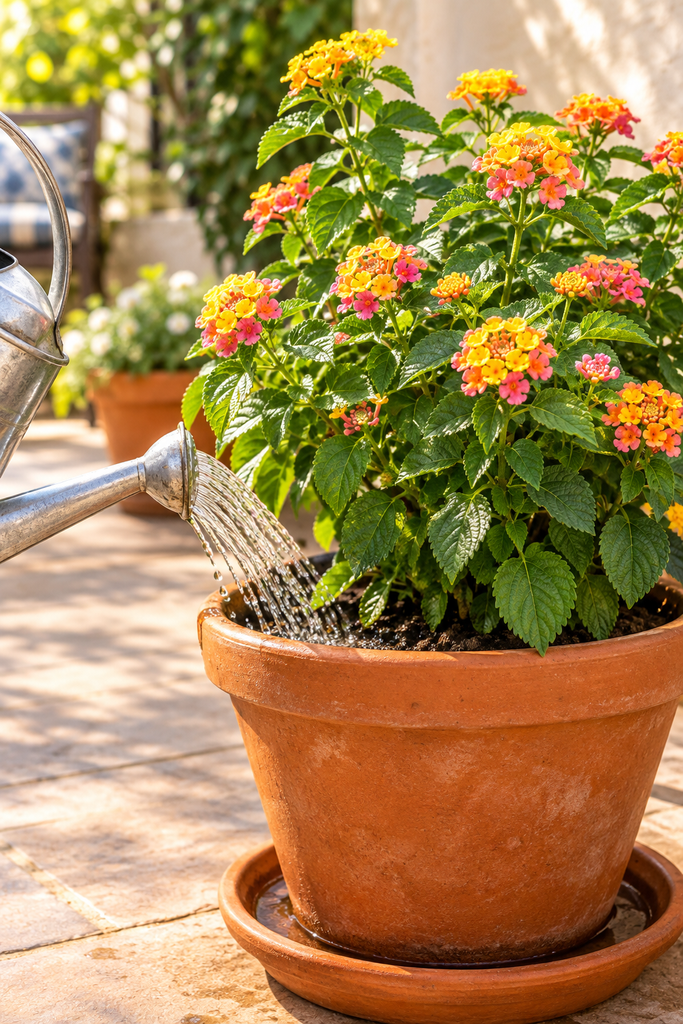
Water deeply at the base, soaking the root zone, then let the soil dry before watering again. Avoid frequent shallow sprinkling, which encourages weak roots, and avoid wetting the foliage late in the day, which can encourage mildew. In pots, water until it flows from the drainage holes and empty the saucer.
Lantana Watering in Summer and Winter
In hot summer weather, containers may need frequent watering, while in-ground plants need far less. In winter, growth slows or stops, so water sparingly. Overwintering plants indoors should be watered only when the soil is dry a couple of inches down.
Signs of Overwatering and Underwatering
- Overwatering: Yellowing leaves, drooping stems on wet soil, a soft or darkened stem base, leaf drop, and few flowers.
- Underwatering: Wilting leaves that perk up after watering, crisp leaf edges, and flowers that dry up quickly, most common in pots in hot weather.
How to Fix an Overwatered Lantana
- Stop watering and let the soil dry well below the surface.
- Make sure the pot has drainage holes, nothing is blocking them, and tip out any standing water in the saucer.
- If the plant is in a bed with heavy soil, improve drainage around it or move it to a raised bed or container.
- If the plant keeps declining, slide it out and check the roots. Healthy roots are pale and firm. Brown, mushy roots are rotting. Trim them and repot in a fresh, well-drained mix.
Recommended Products for Watering Lantana
- 💧 Watering Can with a Long Spout—Check price on Amazon
- 📏 Soil Moisture Meter (a rough guide only; confirm with your finger) — Check price on Amazon
4. What Is the Best Soil for Lantana?
Choosing a Well-Draining Soil Mix
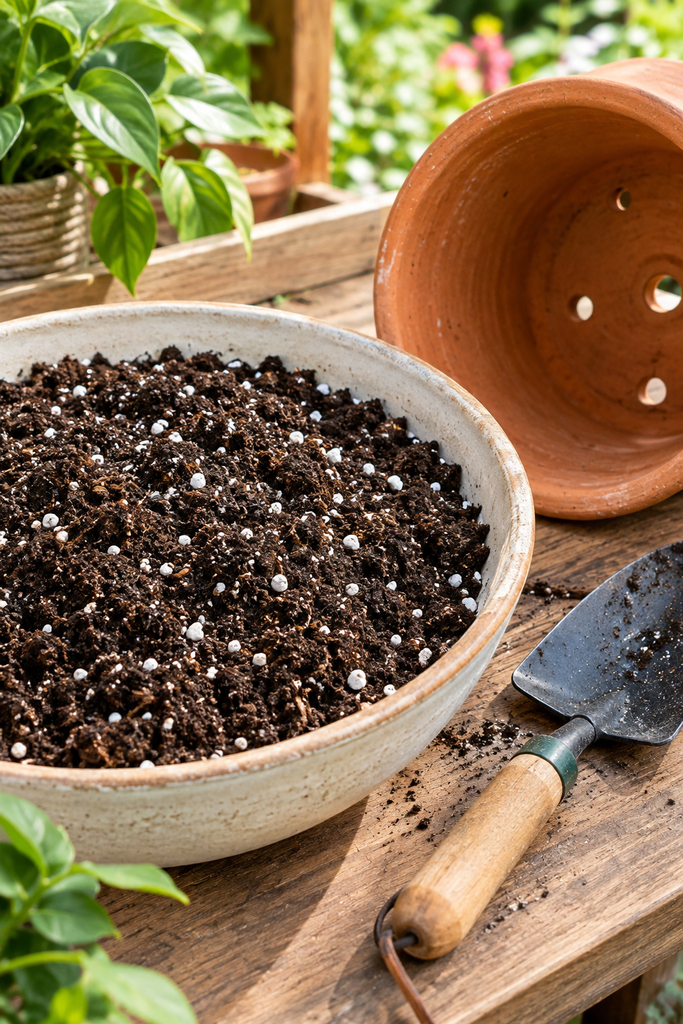
Lantana tolerates poor, rocky, or sandy soil but not wet soil. In the ground, plant it where water drains away after rain, and work in compost only if your soil is very sandy or compacted. In containers, use a quality potting mix and add perlite or coarse sand if it feels heavy.
A bagged well-draining potting mix for containers is a simple starting point for pots and baskets.
Can You Use Regular Garden Soil or Potting Soil?
Garden soil from the yard compacts in pots and drains poorly, so do not use it alone in containers. Ordinary potting mix works if it drains freely. In beds, average garden soil is fine if water does not pool on it. Heavy clay should be loosened or amended, or lantana planted in a raised bed.
Choosing the Right Pot and Drainage Holes
Choose a pot with drainage holes sized to the plant, with room for the root ball to grow. A larger pot holds more moisture and reduces the need for constant watering in summer. Terracotta dries faster than plastic, which helps overwatering-prone growers, while plastic holds moisture longer in hot climates.
How to Prevent Root Rot
Use a fast-draining mix, a pot with holes, and water only when the top couple of inches are dry. Do not let pots sit in saucers of water, and avoid overwatering in cool, cloudy weather when the plant uses less water.
Recommended Products for Lantana Soil and Pots
- 🌱 Well-Draining Potting Mix for Containers—Check price on Amazon
- 🪴 Large Pots with Drainage Holes and Saucers—Check price on Amazon
5. Ideal Temperature and Humidity for Lantana
The Best Temperature Range
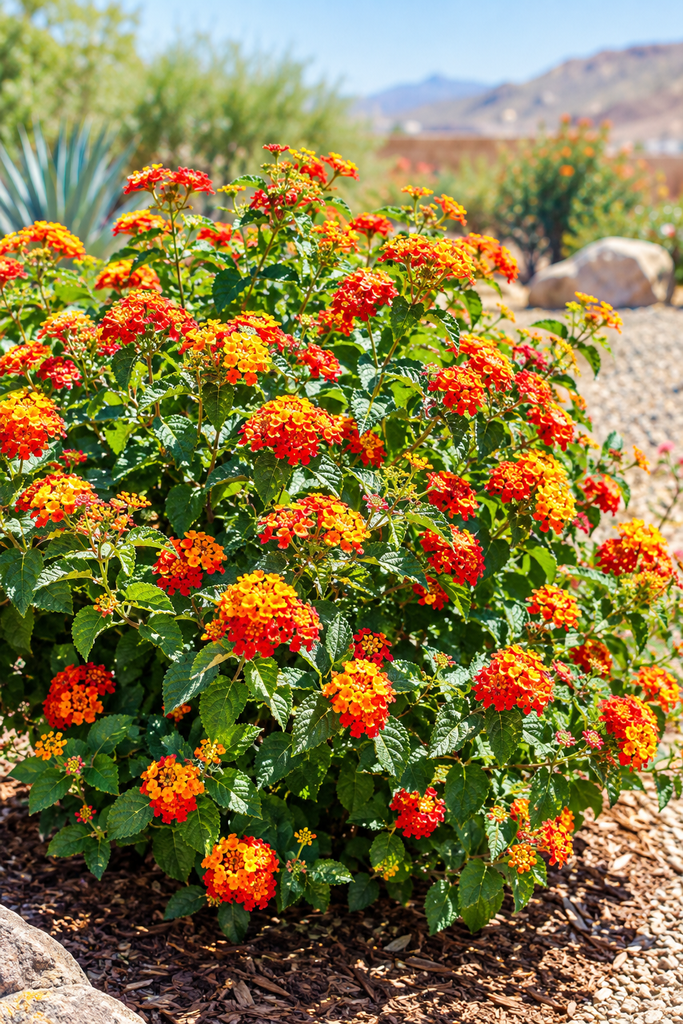
Lantana thrives in warm to hot weather and grows and flowers most vigorously in summer heat. Growth slows in cool weather and nearly stops when temperatures drop in fall.
Protecting Lantana From Cold and Frost
Lantana is not frost tolerant. A frost typically kills the top growth, and in warmer zones (roughly zones 8–9, depending on the type and the winter) the roots may survive under mulch and resprout in spring. In zones 10–11 it generally stays evergreen and keeps growing. In colder regions, treat it as an annual or move pots to a bright, frost-free spot before nights drop near freezing. Hardiness varies by cultivar, so check your plant tag.
Does Lantana Need High Humidity?
No. Lantana tolerates dry air and handles humid climates too, but in very humid, crowded conditions it is prone to powdery mildew and other fungal problems. Give plants space and good airflow.
Can You Grow Lantana Outdoors in the United States?
Yes, in most of the country as a summer plant, but be thoughtful about the type. Lantana camara is listed as a Category I invasive species in Florida by the Florida Exotic Pest Plant Council, and UF/IFAS describes it as invasive there. It can also spread in other warm regions. If you live in a mild-winter area, choose a sterile cultivar, deadhead berries, avoid dumping trimmings outdoors, and check with your local extension office before planting.
Recommended Products for Protecting Lantana From Frost
- 🧣 Frost Cloth or Plant Covers — Check price on Amazon
6. How and When to Fertilize Lantana
Choosing a Suitable Fertilizer
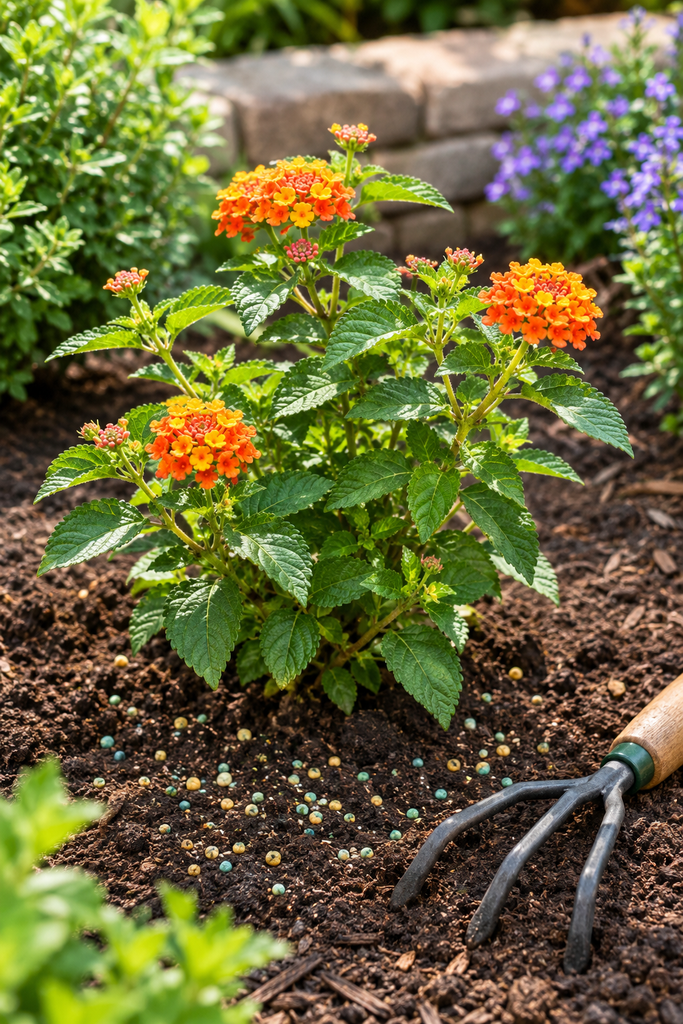
Lantana needs little feeding, especially in the ground. A slow-release granular fertilizer worked in at planting or applied once in spring is usually enough. For containers, a balanced fertilizer or one made for flowering plants is fine, following the label.
When to Feed Lantana During Active Growth
Feed in spring as growth starts and, for potted plants, lightly every month or so during summer if the plant looks pale. In-ground plants in decent soil may need nothing at all.
Fertilizing After Flowering
Lantana does not stop flowering in a single flush, so there is no special after-flowering feed. After a mid-summer trim, a light feeding can help growth rebound. Stop feeding in late summer or fall as growth slows.
Common Fertilizing Mistakes
- Using high-nitrogen fertilizer, which produces lush leaves and fewer flowers.
- Feeding at full strength to potted plants, which can burn roots.
- Fertilizing in fall or winter when the plant is not growing.
- Fertilizing dry soil without watering it in.
Recommended Products for Fertilizing Lantana
- 🌸 Slow-Release Granular Fertilizer for Flowering Plants — Check price on Amazon
7. How to Make Lantana Bloom Again
Why Your Lantana Is Not Flowering
The most common causes are too little sun, too much nitrogen fertilizer, overwatering, and an overgrown, woody plant that needs trimming. Newly planted lantana may take a few weeks to settle in before flowering heavily. Very hot, dry stress can also pause flowering temporarily.
How Lantana Flowers: No Special Trigger Needed
Unlike houseplants that need a controlled dark period, lantana flowers on new growth from spring until frost as long as it has plenty of sun, warmth, and healthy growth. The goal is to keep producing fresh, well-lit growth.
How to Encourage More Blooms
- Give it at least six hours of direct sun.
- Water deeply but infrequently, and never let the roots sit in soggy soil.
- Avoid high-nitrogen fertilizer, and feed lightly.
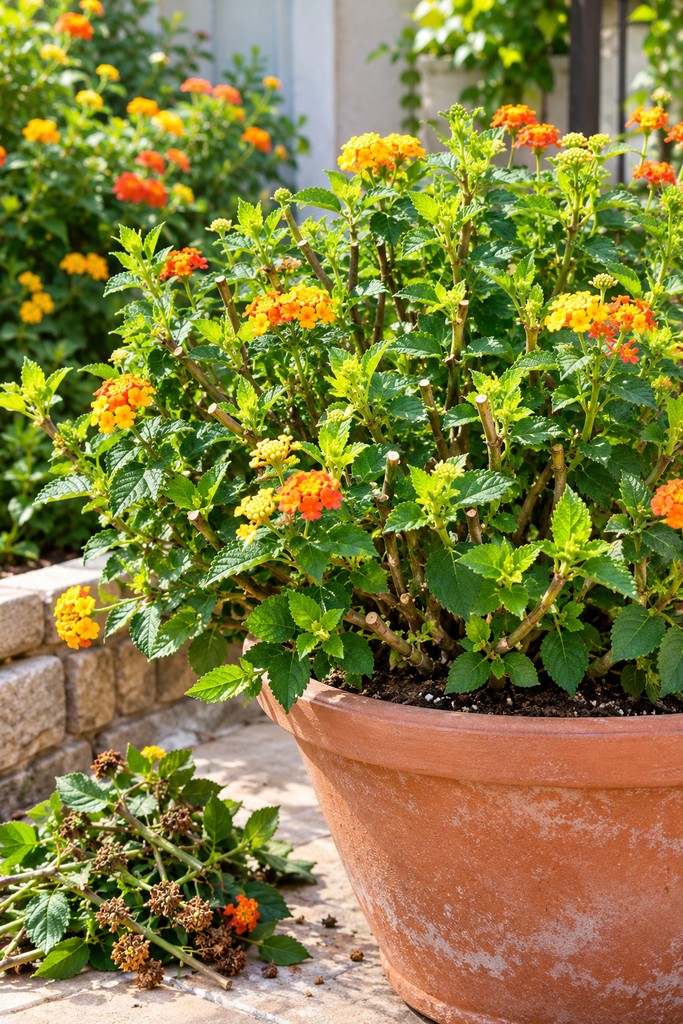
- Trim leggy stems and remove spent flower clusters and berries.
- Give a light shear in mid-summer if plants slow down.
How Long Does Lantana Take to Bloom?
Garden-center plants are often already blooming when you buy them. Cuttings or young plants may flower within weeks to a couple of months in warm, sunny conditions, depending on size and weather. Plants coming out of winter dormancy resume flowering once warm weather returns and new growth appears.
What to Do After the Flowers Fade
Remove faded clusters and any berries, trim back leggy growth, and keep watering as needed. Lantana will usually push out fresh growth and more flowers. In fall, as frost approaches, stop fertilizing and prepare to cut back, mulch, or move pots indoors.
8. How to Prune Lantana for Healthy Growth
When to Prune Lantana
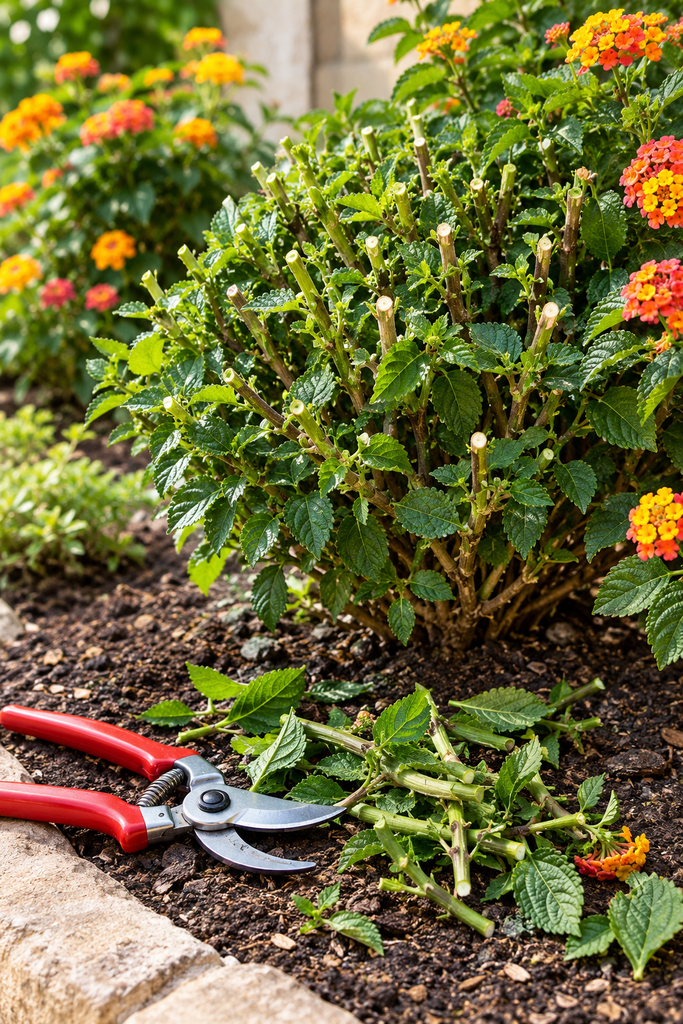
The main pruning time is late winter or early spring, just before new growth starts, or after frost has killed back the top growth in colder areas. A lighter trim any time in the growing season keeps plants compact and flowering.
How to Remove Spent Flowers
Snip off faded flower clusters and any developing berries. Many gardeners also give a light shear over the whole plant in mid-summer. Removing berries matters for two reasons: it directs energy into new flowers, and it reduces the chance of seeds spreading and the risk of pets or children eating them.
Wear garden gloves, since lantana leaves are rough and can irritate sensitive skin, and avoid putting trimmings where pets can chew them.
How to Fix a Leggy Lantana
Leggy, sparse growth usually means too little sun, too much nitrogen, or a woody plant overdue for pruning. Cut stems back by about a third to half, making cuts just above a pair of leaves. In very overgrown plants, a hard cut back in early spring will encourage new, flower-bearing stems. Increase sun and cut back on fertilizer.
Should You Cut Back Lantana After Flowering?
Lantana flowers continuously, so there is no single after-flowering cut. Trim back leggy growth in mid-summer to refresh the plant, and do a larger cut back in late winter or early spring. In fall, avoid heavy pruning before frost, since it can stimulate tender new growth that cold will damage.
Recommended Products for Pruning Lantana
- ✂️ Bypass Hand Pruners — Check price on Amazon
- 🧤 Garden Gloves — Check price on Amazon
9. How to Propagate Lantana at Home
How to Propagate Lantana From Stem Cuttings
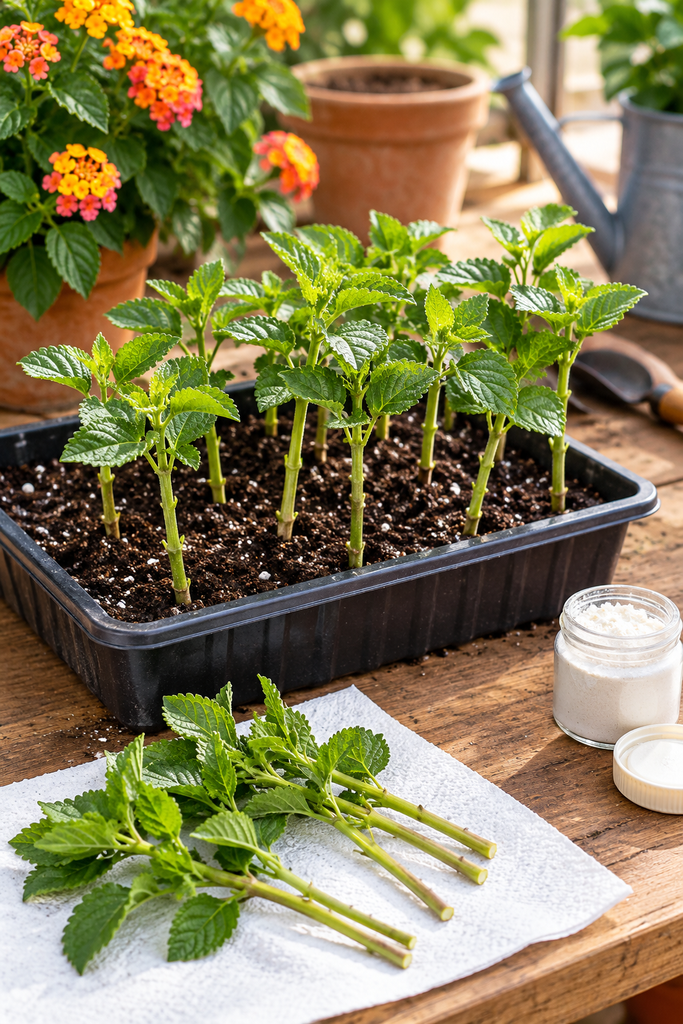
Cuttings are the easiest and most reliable method, and the only way to reproduce a named cultivar exactly.
- Choose a healthy, non-flowering (or de-flowered) stem tip about 4–6 inches long.
- Cut just below a leaf node with clean pruners.
- Remove the lower leaves, leaving two or three pairs at the top. Remove any flower buds.
- Optionally dip the cut end in rooting hormone.
How to Root Lantana Cuttings in Soil
Plant cuttings in moist, well-drained potting mix, firm the mix around the stem, and place them in bright, indirect light, out of harsh sun. Keep the mix lightly moist, not wet. Roots often form in a few weeks in warm weather, and a gentle tug that meets resistance suggests rooting. Success varies with the plant and conditions.
Can You Propagate Lantana From a Leaf?
Not reliably. A single leaf without a node generally will not grow into a plant. Use stem cuttings instead.
Can You Grow Lantana From Seed?
Yes, but it is not the best method. Seed-grown plants from named cultivars may not match the parent, and fertile lantana berries are how some types spread into natural areas. If you grow lantana in a warm climate, prefer cuttings of sterile cultivars.
How to Care for Newly Propagated Plants
Keep new plants in bright, indirect light and water when the top of the mix is dry. Pot them up once roots fill the cell, and harden them off before moving them into full sun. Avoid fertilizer until growth is steady.
Recommended Products for Propagating Lantana
- 🌿 Rooting Hormone Powder — Check price on Amazon
- 🪴 Small Nursery Pots or Propagation Trays — Check price on Amazon
10. When and How to Repot Lantana
Signs Your Lantana Needs a Bigger Pot
- Roots growing out of the drainage holes or circling the surface.
- Soil that dries out within a day in warm weather.
- Growth that has slowed in spite of good care.
- A plant that tips over when it is full of flowers.
Step-by-Step Repotting Instructions
- Choose a pot with drainage holes one size larger than the current one.
- Add fresh, well-draining mix to the bottom.
- Slide the plant out, loosen circling roots, and trim any dead or rotten ones.
- Set it at the same depth as before and fill in with mix.
- Water thoroughly and let it drain.
The Best Time of Year to Repot
Spring through early summer, when the plant is growing actively. Avoid repotting in cold weather or when the plant is stressed.
Aftercare to Reduce Transplant Stress
Place the plant in bright light, out of extreme afternoon sun for a few days, and water when the top of the soil dries. Hold off on fertilizer for a few weeks.
Recommended Products for Repotting Lantana
- 🧰 Hand Trowel — Check price on Amazon
11. Popular Lantana Varieties to Grow at Home
Common Lantana (Lantana camara)
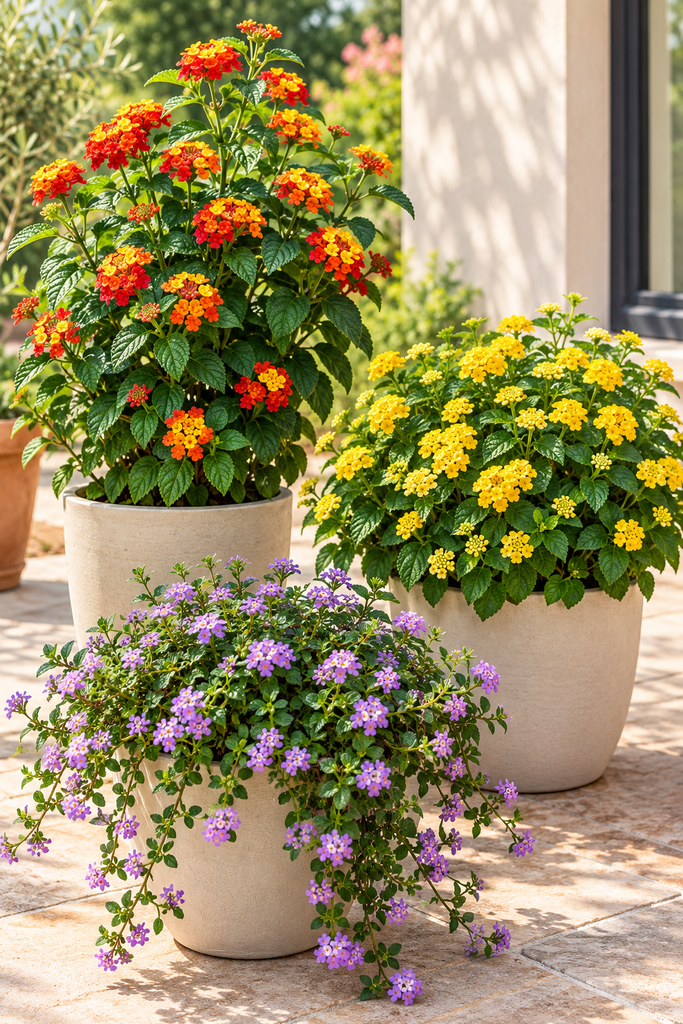
The species and many older cultivars are fertile, with multicolored flower clusters that change shade as they age. In warm regions, fertile forms can be invasive, so check local guidance before planting them.
‘Bloomify Red’ and ‘Bloomify Rose’ (Sterile Lantana camara Cultivars)
Two cultivars developed by UF/IFAS as highly infertile alternatives to invasive types. UF/IFAS reports that they produce very little fruit and do not hybridize with Florida’s native lantana. They are a good choice in warm regions where spread is a concern.
‘Luscious Royale Red Zone’ (Sterile Lantana)
A patented UF-developed sterile cultivar, described by UF/IFAS as non-spreading. Check the plant tag for mature size and flower color.
‘Gold Mound’ (Lantana camara Cultivar)
A compact, mounding yellow-flowered type that the Florida Exotic Pest Plant Council has recognized as sterile, according to UF/IFAS. It suits borders and containers.
‘New Gold’ (Lantana Cultivar)
A yellow-flowered, spreading cultivar that UF/IFAS also lists among varieties recognized as sterile. It works as a low groundcover or container spiller.
Trailing Lantana (Lantana montevidensis)
A low, spreading plant with lavender-purple (or white) flowers, popular in hanging baskets, rock walls, and as groundcover. It is often somewhat hardier than common lantana, but it is also toxic to pets.
‘Miss Huff’ (Cold-Hardy Lantana Camara Cultivar)
Often sold as a cold-hardy lantana for cooler regions, with orange and pink flowers. Its invasive potential and exact hardiness should be checked with your local extension office before planting.
How to Choose the Right Lantana for Your Garden
Choose sterile cultivars in warm, frost-free regions where lantana can naturalize. In cooler regions, where it dies back in winter, almost any cultivar works as an annual or container plant. Pick compact mounding types for borders, trailing types for baskets and slopes, and larger upright types for background color. Check local guidance before planting any lantana in a warm climate.
| Common name | Botanical name | Appearance | Mature size (approximate) | Light needs | Growing considerations |
|---|---|---|---|---|---|
| Common lantana | L. camara | Multicolor clusters, rough leaves | Shrub; often 3 ft. or more in warm regions | Full sun | Can be invasive; toxic to pets |
| ‘Bloomify Red’ / ‘Bloomify Rose’ | L. camara cultivars | Red or rose flower clusters | Check plant tag | Full sun | Developed as infertile; toxic to pets |
| ‘Luscious Royale Red Zone’ | L. cultivar | Red flower clusters | Check plant tag | Full sun | Sterile cultivar; toxic to pets |
| ‘Gold Mound’ | L. camara cultivar | Yellow clusters, compact mound | Compact; check plant tag | Full sun | Recognized as sterile; toxic to pets |
| ‘New Gold’ | L. cultivar | Yellow clusters, spreading | Low and spreading; check tag | Full sun | Recognized as sterile; toxic to pets |
| Trailing lantana | L. montevidensis | Lavender-purple or white flowers | Low, trailing | Full sun | Good for baskets; toxic to pets |
| ‘Miss Huff’ | L. camara cultivar | Orange and pink clusters | Large shrub; check tag | Full sun | Reported cold-hardy; check local invasive status |
Sizes are approximate and vary with climate and pruning. Check each plant tag.
Recommended Products for Growing Lantana Varieties
- 🏷️ Reusable Plant Labels — Check price on Amazon
12. Common Lantana Problems and How to Fix Them
Why Are My Lantana Leaves Turning Yellow?
Yellow leaves usually mean overwatering or poor drainage, especially if the soil is wet and stems droop. They can also come from cold nights, nutrient deficiency in pots, or normal shedding of old inner leaves. Check the soil moisture and roots first.
Why Are the Leaves Wilted, Soft, or Mushy?
Wilting with dry soil means thirst, especially in pots in hot weather. Wilting or soft, dark stem bases with wet soil point to root rot. Check the soil before watering again.
Why Is My Lantana Dropping Leaves?
Leaf drop can come from overwatering, drought, cold, a move to a new location, or pests. Frost makes lantana drop leaves and die back, and warm-region plants may go semi-dormant in winter.
Why Is My Lantana Growing Tall and Leggy?
Usually too little sun, too much nitrogen, or an overgrown woody plant. Move it into full sun, ease off fertilizer, and cut it back.
Brown Leaf Edges and Sunburn
Crispy brown edges and scorched patches can come from drought stress in hot weather, fertilizer burn, or moving a shaded plant into hot sun too quickly. Water deeply, harden off new plants, and avoid over-fertilizing.
Common Lantana Pests and Diseases and How to Manage Them
Common pests include whiteflies, lace bugs, spider mites, aphids, and mealybugs. Powdery mildew can appear in shady or crowded plantings, and sooty mold can follow sap-sucking insects. Rinse pests off with a strong stream of water, remove badly affected foliage, improve airflow and sun, and use insecticidal soap or another labeled product if needed, following the label.
How to Tell Whether Your Lantana Can Be Saved
Scratch a stem with a fingernail. Green tissue underneath means the stem is alive. After frost, wait until spring to see where new growth appears before cutting back dead stems. A plant with a soft, black base and rotten roots is unlikely to recover.
| Symptom | Possible cause | How to confirm | Recommended solution |
|---|---|---|---|
| Yellow lower leaves, drooping | Overwatering or poor drainage | Soil is wet; roots dark and soft | Stop watering; improve drainage; repot if in a container |
| Wilting leaves, dry soil | Underwatering or heat stress | Soil is dry several inches down | Water deeply; mulch; water pots more often |
| Blackened leaves and stems after cold | Frost damage | Recent frost or freeze | Wait until spring, then cut back dead growth |
| Few or no flowers | Too little sun or too much nitrogen | Less than 6 hours of sun; very leafy growth | Move to sun; stop high-nitrogen feed; trim |
| Leggy, sparse growth | Low light or no pruning | Long bare stems, spaced leaves | Cut back by a third to a half; add sun |
| White powdery film on leaves | Powdery mildew | Film wipes off; shade or crowding | Improve sun and airflow; remove affected leaves |
| Tiny white insects flying up when disturbed | Whiteflies | Check leaf undersides | Rinse; insecticidal soap; yellow sticky traps |
| Stippled, bronzed, or speckled leaves | Lace bugs or spider mites | Dark spots or fine webbing on undersides | Rinse; insecticidal soap or other labeled treatment |
| Sticky residue and black film | Sap-sucking insects and sooty mold | Insects present; black film wipes off | Treat the insects; wash off the mold |
| Crispy brown edges | Drought, sun scorch, or fertilizer burn | Dry soil, recent move or feeding | Water deeply; harden off; reduce feed |
Recommended Products for Lantana Problems
- 🧴 Insecticidal Soap for Plants — Check price on Amazon
- 🪰 Yellow Sticky Traps — Check price on Amazon
13. Is Lantana Toxic to Cats and Dogs?
What Pet Owners Should Know About Lantana
Yes. The ASPCA lists lantana (Lantana camara) as toxic to dogs, cats, and horses. The toxic principles are pentacyclic triterpenoids. Clinical signs listed by the ASPCA include vomiting, diarrhea, labored breathing, and weakness, and liver failure is noted as more common in livestock. Lantana is also considered toxic to people if eaten, particularly the berries, so keep it away from children as well.
How to Keep Lantana Away From Pets
Plant lantana in areas pets cannot reach, such as fenced beds, raised planters, or hanging baskets, or choose a pet-safe alternative if your pet chews plants. Remove berries and fallen flower clusters, and do not leave trimmings where pets can reach them. Wear gloves when handling it.
What to Do if a Pet Eats Lantana
Remove any plant material from the pet’s mouth and call your veterinarian or the ASPCA Animal Poison Control Center at (888) 426-4435 right away (a consultation fee may apply). Mention the plant, how much was eaten, and when. Do not induce vomiting unless a professional tells you to. Do not wait for symptoms.
Recommended Products for Handling Lantana Safely
- 🧤 Garden Gloves — Check price on Amazon
14. Seasonal Lantana Care Calendar
Timings below are general for US gardens. Regional climate, the lantana type, and your hardiness zone change the schedule.
Spring: Encourage New Growth
Plant once nights stay warm and frost has passed. Prune back dead or leggy growth, divide or take cuttings, and apply a slow-release fertilizer. Harden off nursery plants and overwintered pots before moving them into full sun.
Summer: Manage Sunlight and Watering
Provide full sun, water deeply when the soil is dry, and deadhead or lightly shear in mid-summer. Watch for whiteflies, mites, and mildew, and keep pots well watered during heat waves.
Fall: Prepare for Winter
Stop fertilizing, remove berries, and take cuttings of favorite plants before frost. In cold regions, move pots to a bright, frost-free spot or let them go dormant in a cool, protected place. In mild regions, avoid heavy pruning until after the last frost danger.
Winter: Protect the Plant and Support Dormancy
In warm zones, lantana may stay semi-evergreen and bloom lightly. In cooler zones where roots survive, mulch the base and wait until spring to cut back dead stems. Overwintered pots need bright light and only occasional water.
15. Frequently Asked Questions About Lantana Plant Care
Is Lantana an Indoor or Outdoor Plant?
Outdoor. Lantana needs full sun and rarely blooms well indoors. It can be grown in containers and overwintered in a bright, frost-free spot in cold regions.
How Often Should You Water a Lantana?
Water deeply when the top inch or two of soil is dry. Containers may need water every few days in hot weather, while established in-ground plants often need it only during extended dry spells.
Does Lantana Need Direct Sunlight?
Yes. It blooms best with at least six hours of direct sun a day. Less sun means fewer flowers and more mildew.
Can Lantana Bloom More Than Once?
It blooms continuously from spring until frost on new growth. Deadheading, trimming, and a light mid-summer shear keep flowers coming.
Should You Remove Dead Lantana Flowers?
Yes, it helps. Remove faded clusters and berries to encourage new blooms, reduce seed spread, and lower the risk of pets or children eating berries.
Can Lantana Survive Winter?
In frost-free or mild-winter regions, yes, and in some cooler zones the roots survive under mulch. In colder regions, treat it as an annual or bring pots indoors. Hardiness varies by cultivar.
Can You Grow Lantana From Cuttings?
Yes. Stem cuttings 4–6 inches long root readily in moist, well-drained mix in bright, indirect light, and they reproduce the parent plant exactly.
Why Is My Lantana Healthy but Not Blooming?
Usually not enough sun or too much nitrogen fertilizer. Move it into full sun, stop high-nitrogen feeding, and trim leggy growth.
Final Thoughts on Growing a Healthy Lantana
Healthy lantana needs full sun, well-drained soil, deep but infrequent watering, light feeding, and regular trims. Remove berries, choose a sterile cultivar in warm regions, and keep the plant away from pets and children, since it is toxic if eaten. Start by checking your sun and drainage, because those two things decide whether lantana will bloom heavily or struggle.