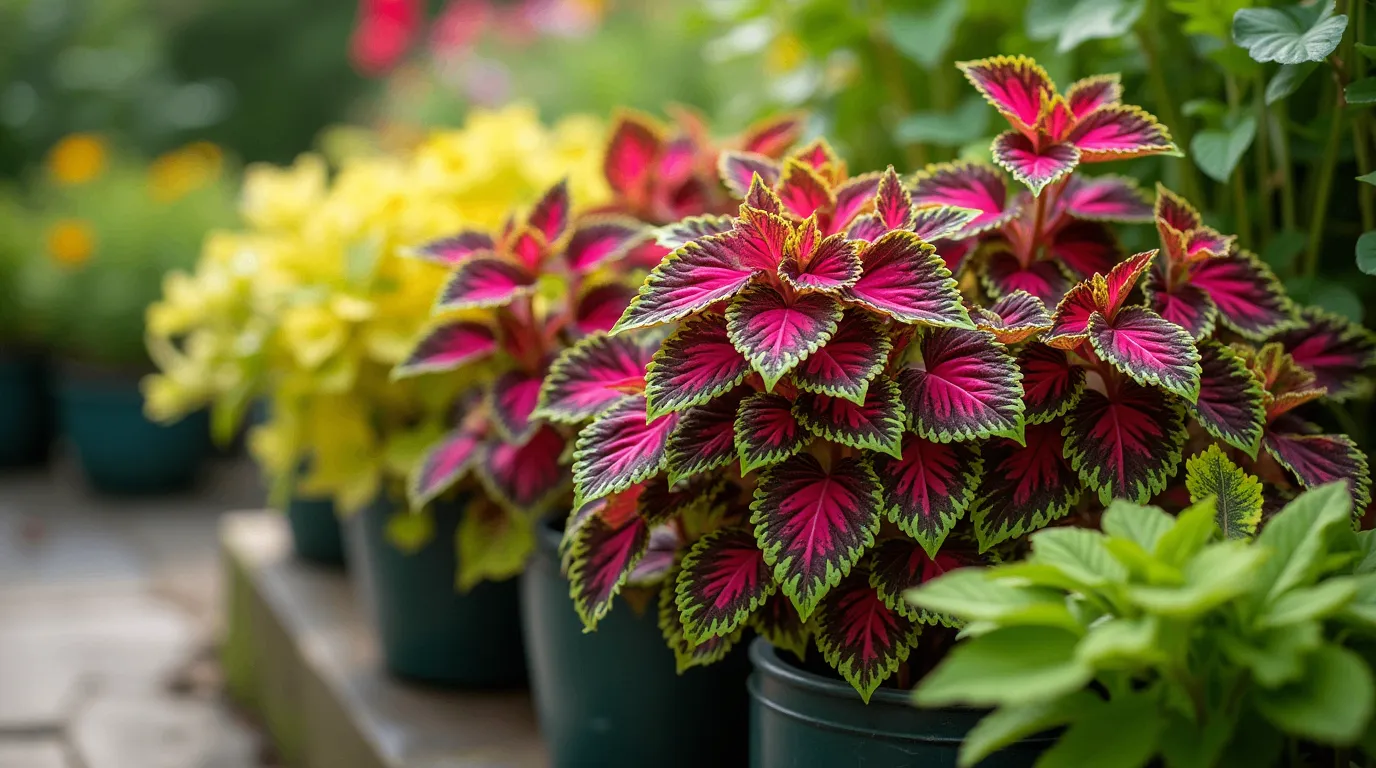
Coleus Plants: How to Care for Stunning Colorful Leaves
This article may contain affiliate links. If you purchase through these links, I may earn a small commission at no extra cost to you.
Coleus plants are popular for their bright and colorful leaves and are easy to take care of. These plants come in many different leaf patterns and colors, from deep purples to bright greens, and can make any garden look beautiful. Whether you are an experienced gardener or a beginner, coleus plants are a joy to grow. This guide will cover the basics of planting, caring for, and maintaining coleus so your garden can thrive with these stunning plants.

Getting Started with Coleus Plants
Choosing the Right Variety
Choosing the right coleus variety is important to get the look you want for your garden. Coleus plants come in different sizes, from small types for containers to larger ones for garden beds. Think about the colors and patterns that will match your garden. Popular varieties include ‘Wizard Mix’ with its colorful leaves and ‘Kong Rose’ with large pink and green leaves. Also, remember that some coleus plants like shade, while others prefer partial sun. By choosing the right type, you can make sure your coleus plants will look great and grow well.
👉 Coleus plants grow best with rich soil, proper watering, and colorful foliage plant care essentials.
Ideal Growing Conditions
For your coleus plants to do well, you need to provide the right growing conditions. They like well-draining soil rich in organic matter with a pH of 6.0 to 7.0. Plant them in a spot that gets partial shade to bright, indirect sunlight; too much direct sun can burn their leaves. Maintain soil moisture consistently, avoiding excessive wetness. Mulching around the plants can help keep the soil moist and reduce how often you need to water. Coleus plants also prefer warm temperatures between 60°F and 75°F. Avoid cold temperatures below 50°F, as Coleus does not like the cold. By giving them these ideal conditions, your coleus will stay healthy and colorful all season.
Planting Your Coleus
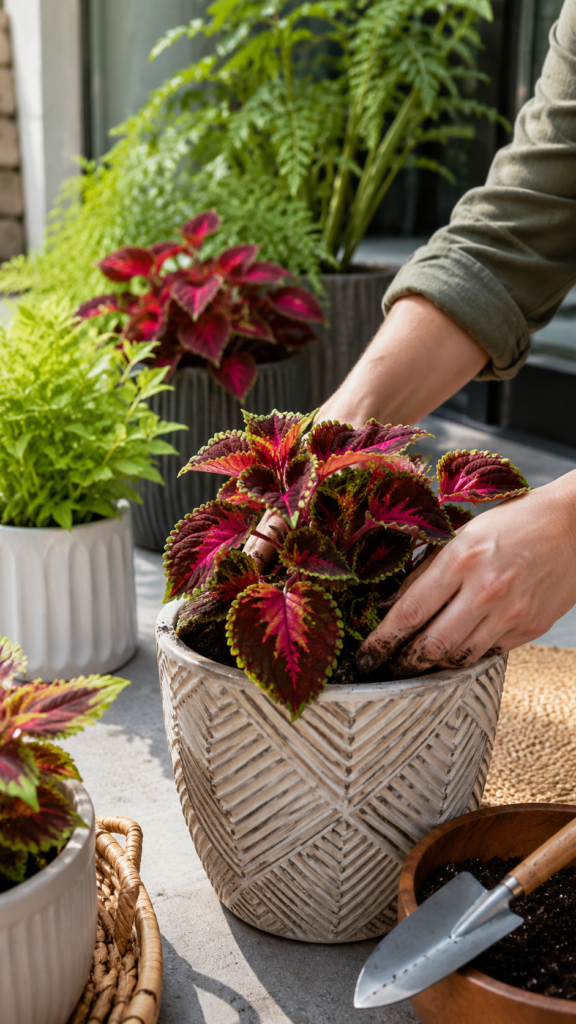
Planting coleus is easy and can be done with seeds or cuttings. If starting with seeds, sow them indoors 8-10 weeks before the last frost date. Lightly press the seeds into the soil but do not cover them because they need light to germinate. Keep the soil consistently moist and at about70°F. Seedlings usually sprout in 10-14 days.
If using cuttings, choose healthy stems and cut just below a node. Remove the lower leaves and place the cuttings in water until roots form, which takes 1-2 weeks. Once the roots are ready, plant the cuttings in pots or directly in the garden.
When planting, space them 12-18 inches apart to allow good air circulation. Water them well after planting to help the roots settle.
👉 Different coleus varieties thrive better with the right lighting and planting setup.
Caring for Your Coleus
Watering and Feeding
Consistent watering is key for coleus plants to keep their vibrant leaves. Maintain consistent soil moisture without oversaturating it. Water the plants well when the top inch of soil feels dry. During hot months, you may need to water more often. Be careful not to overwater, as this can cause root rot.
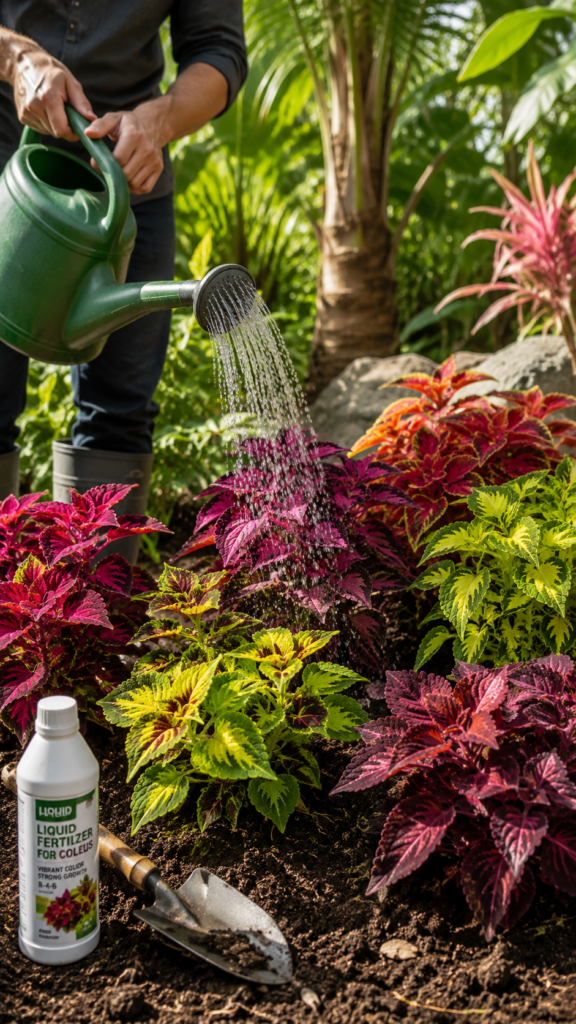
Fertilize coleus plants regularly to promote strong growth and bright leaf colors. Apply a well-balanced, water-soluble fertilizer every 4-6 weeks throughout the growing season. A10-10-10 fertilizer is good. For coleus in containers, you may need to fertilize more often due to nutrient loss in the soil.
👉 Consistent watering and feeding help coleus plants maintain bold colorful foliage.
By keeping a regular watering schedule and providing regular feedings, you can keep your coleus healthy and beautiful.
Pruning and Pinching
Pruning and pinching help keep coleus plants bushy and vibrant. Regularly pinch off the growing tips to encourage branching and fuller growth, especially when the plants are young. Use your fingers to remove the top leaves and the growing tip above a node.
Prune any long or overgrown stems using clean, sharp scissors or pruning shears. Focus on keeping a balanced shape and removing dead or damaged leaves. Remove any flower spikes that appear, as coleus flowers are not very attractive and can take away from the beauty of the leaves.
👉 Regular pruning keeps coleus plants fuller, bushier, and more colorful.
By regularly pinching and pruning, you’ll keep your coleus plants dense and attractive.
Dealing with Pests and Diseases
Coleus plants are typically resistant to pests and diseases, but they can still encounter issues. Typical garden pests comprise aphids, spider mites, and whiteflies. Check your plants frequently for indicators such as discolored leaves or sticky residue. If pests are detected, apply insecticidal soap or neem oil to the plants.
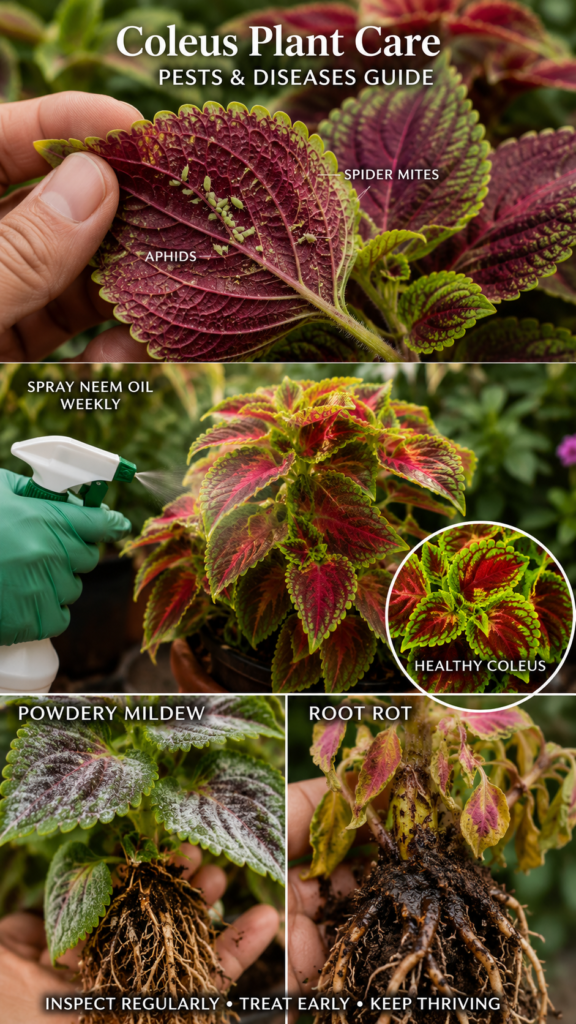
Fungal diseases like powdery mildew and root rot can also affect coleus, especially in humid conditions or if the soil is too wet. Prevent these issues by maintaining adequate air circulation and refraining from watering from overhead. If you see signs of disease, such as white powder on the leaves or wilting, remove the affected parts and use a suitable fungicide.
👉 Proper pest control helps protect coleus leaves from damage and fungal problems.
By keeping an eye on your coleus plants and acting quickly at the first sign of problems, you can keep them healthy and vibrant all season.