19 Stunning Bonsai Fruit Trees Tips You Need to See
This article may contain affiliate links. If you purchase through these links, I may earn a small commission at no extra cost to you.
Bonsai trees aren’t just a feast for the eyes; some varieties can also bear fruit! These mini trees come in a range of species, and each one has its unique charm and potential for tiny, tasty treats. From miniature figs to small citrus fruits, growing bonsai fruit trees can be a rewarding experience for gardeners looking to try their hand at something a bit different.
Fertilizing Bonsai Fruit Trees for Maximum Yield
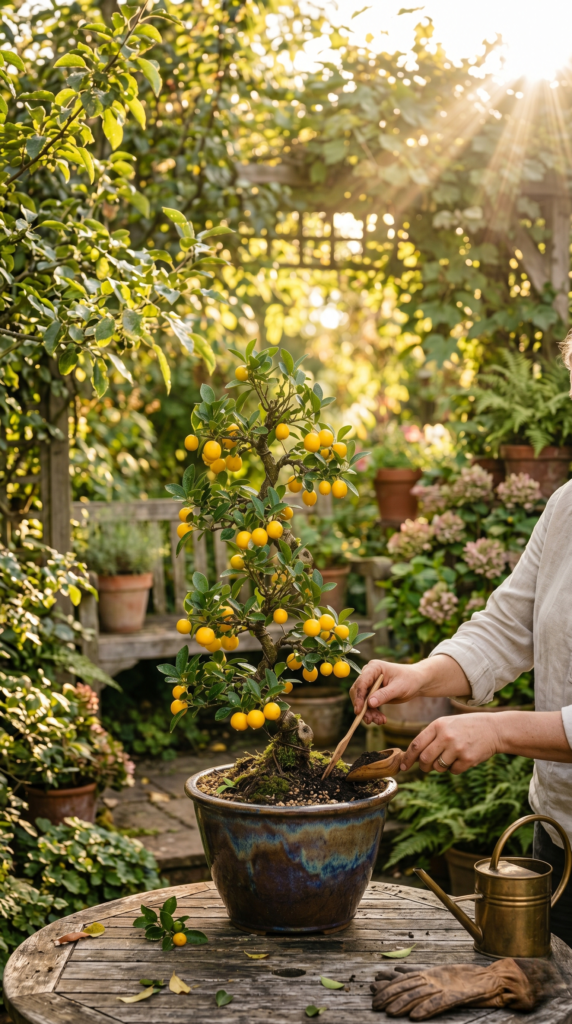
Fertilizing bonsai fruit trees is key to getting the most out of your little green friends. In the image, we see someone carefully tending to a bonsai tree loaded with bright yellow fruit. This attention to detail is crucial for healthy growth.
When it comes to fertilizing, timing matters. Use a balanced fertilizer during the growing season. This helps the tree absorb nutrients effectively. The person in the image is adding soil, which is just as important as the fertilizer. Good soil provides a solid foundation for roots to thrive.
Don’t forget to water your bonsai after fertilizing. This helps the nutrients seep into the soil. The tools around the bonsai, like the trowel and rake, show that care and preparation are essential. Regular maintenance will lead to a fruitful harvest.
Lastly, keep an eye on your tree’s growth. Adjust the fertilizer based on how well your bonsai is doing. With the right care, your bonsai fruit tree can flourish and produce delicious fruit.
Watering Practices for Bonsai Fruit Trees
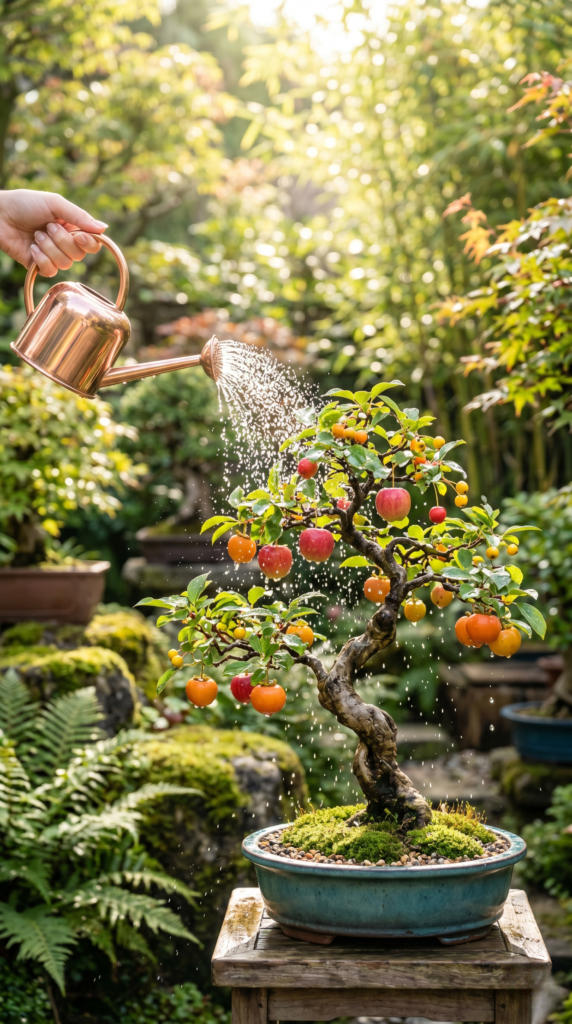
Watering is key to keeping your bonsai fruit tree healthy and thriving. In the image, we see a beautiful bonsai tree with vibrant fruit, being gently watered. This visual perfectly captures the care these trees need.
When watering bonsai fruit trees, it’s important to check the soil moisture regularly. The top layer of soil should feel slightly dry before you water again. Overwatering can lead to root rot, while underwatering can stress the tree.
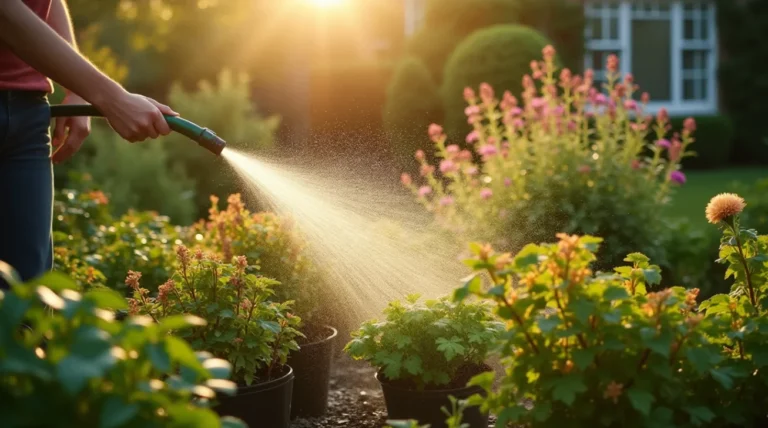
Using a fine spray nozzle, like the one shown in the image, helps distribute water evenly. This method ensures that the roots get the moisture they need without overwhelming them. Aim to water early in the morning or late in the afternoon to avoid evaporation.
Keep an eye on the leaves too. If they start to droop, it might be a sign that your tree needs more water. On the other hand, yellowing leaves can indicate overwatering. Finding that balance is crucial for your bonsai’s health.
Pest and Disease Management in Bonsai Fruit Trees
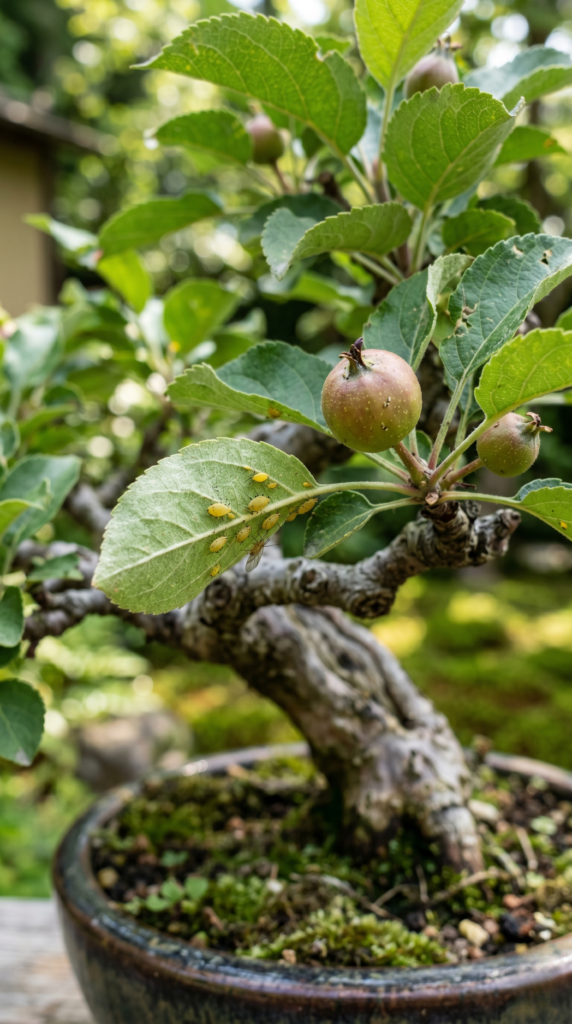
Bonsai fruit trees, like the one shown in the image, can be a delightful addition to any garden. They not only provide beauty but also bear fruit, making them a unique choice for plant lovers. However, keeping these miniature trees healthy requires some attention, especially when it comes to pests and diseases.
Common pests that might target bonsai fruit trees include aphids, spider mites, and scale insects. These tiny invaders can sap the tree’s strength and affect fruit production. Regularly inspecting your tree can help catch these pests early. If you notice any, a gentle spray of water can often dislodge them. For more stubborn infestations, consider using insecticidal soap.
Diseases can also pose a threat. Fungal infections, like powdery mildew, can affect the leaves and overall health of your bonsai. Ensuring good air circulation around the tree and avoiding overhead watering can help prevent these issues. If you spot any signs of disease, removing affected leaves and applying a suitable fungicide can be effective.
Maintaining a proper watering schedule and providing adequate sunlight are also key to keeping your bonsai fruit tree healthy. Healthy trees are less susceptible to pests and diseases. So, give your bonsai the care it needs, and enjoy the fruits of your labor!
Natural treatments help protect bonsai trees from pests. 👉 Check neem oil pest control solution here
Understanding the Basics of Bonsai Fruit Trees
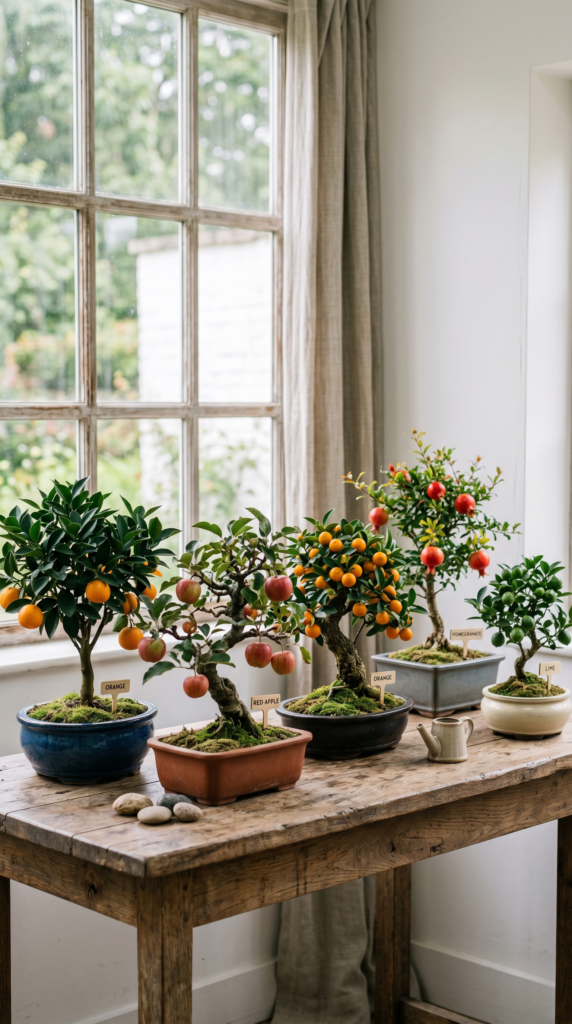
Bonsai fruit trees are a delightful blend of art and nature. The image showcases several beautifully shaped bonsai trees, each adorned with vibrant orange fruits. These miniature trees not only serve as stunning decor but also offer the joy of growing fruit in a compact form.
Growing bonsai fruit trees requires patience and care. They need proper pruning, watering, and sunlight to thrive. The fruits, like those shown in the image, can be both ornamental and edible, making them a unique addition to any garden or indoor space.
These trees can be cultivated from various species, including citrus varieties. The sight of ripe fruits hanging from the branches adds a charming touch to the bonsai’s aesthetic. Plus, they can be a conversation starter for guests!
Whether you’re a seasoned gardener or a beginner, bonsai fruit trees can be a rewarding project. They offer a chance to connect with nature while enjoying the beauty of fruit-bearing plants on a small scale.
Special bonsai soil mixes improve drainage and root health. 👉 See the best bonsai soil mix here
Pruning Techniques for Healthy Bonsai Fruit Production
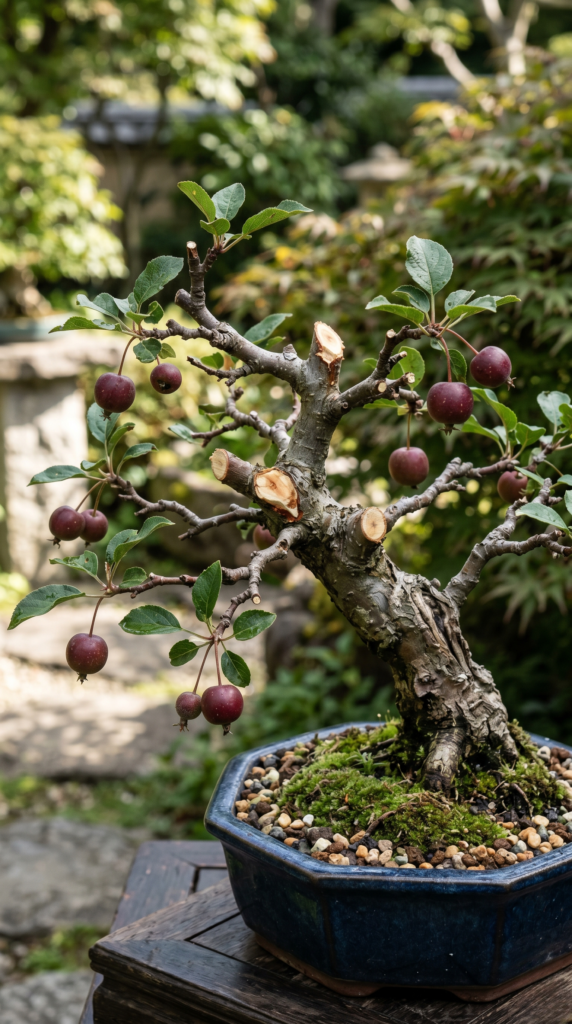
Pruning is key to keeping your bonsai tree healthy and productive. In the image, we see a bonsai tree adorned with vibrant orange fruits, showcasing the beauty of a well-maintained specimen. The hand holding the pruning shears indicates that it’s time to give this little tree some attention.
When it comes to bonsai fruit production, regular pruning helps shape the tree and encourages new growth. Start by removing any dead or unhealthy branches. This allows the tree to focus its energy on producing fruit. Be gentle and precise with your cuts to avoid damaging the tree.
Next, consider thinning out the leaves. This not only improves air circulation but also allows more sunlight to reach the fruits. A well-lit tree is more likely to produce healthy, juicy fruit. Remember, balance is important; you want to maintain the tree’s shape while promoting growth.
Timing is also essential. Prune during the tree’s dormant season to minimize stress. This is usually in late winter or early spring. Keep an eye on the fruit as it develops, and adjust your pruning techniques as needed to support its growth.
Popular Bonsai Fruit Varieties
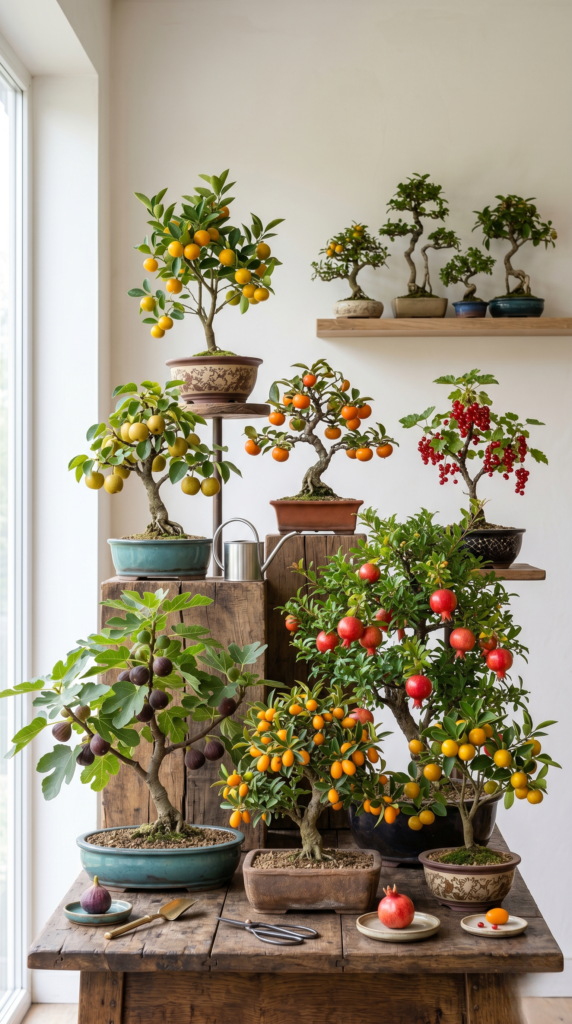
Bonsai trees are not just about their stunning shapes; they can also bear fruit! Some popular varieties include the Ficus and the Citrus. These trees can produce small, delightful fruits that add charm to any bonsai collection.
The image showcases a vibrant display of bonsai fruit trees, with their branches heavy with colorful fruits. The reds, oranges, and yellows create a beautiful contrast against the lush green leaves. This visual appeal makes bonsai fruit trees a favorite among enthusiasts.
Ficus bonsai, for instance, can produce tiny figs that are quite unique. Citrus bonsai, on the other hand, can yield small oranges or lemons, bringing a burst of color and a refreshing scent. Growing these trees can be rewarding, as they not only enhance your space but also offer a taste of nature’s bounty.
The Role of Soil in Bonsai Fruit Growth
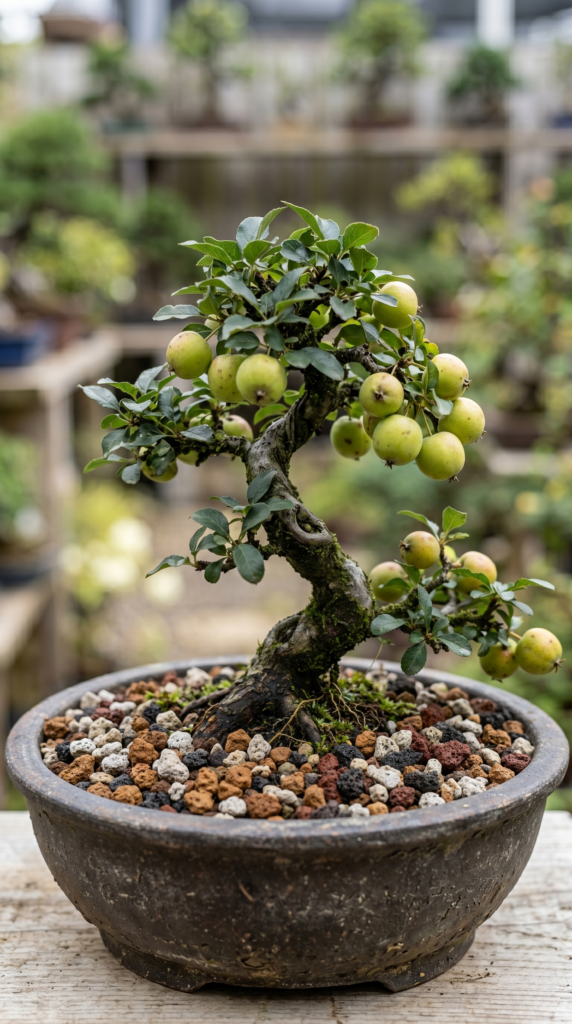
The image shows a beautiful bonsai tree with vibrant green leaves and a bright orange fruit hanging from its branches. This scene highlights the delicate balance of nature in a miniature form. Bonsai trees, especially those that bear fruit, require special attention to their soil.
Soil plays a key role in the health and growth of bonsai fruit. The right mix provides essential nutrients, supports root development, and ensures proper drainage. A good soil blend for bonsai typically includes components like akadama, pumice, and lava rock. This combination allows for aeration and moisture retention, which are crucial for the tree’s overall health.
When the soil is well-prepared, it helps the bonsai tree thrive and produce fruit. The roots need to be able to access nutrients easily, and the right soil mix can make all the difference. If the soil is too compact or lacks nutrients, the tree may struggle to grow and bear fruit.
In summary, the soil is not just a base for the bonsai; it is a vital part of its ecosystem. A healthy bonsai tree, like the one in the image, showcases the beauty of nature and the importance of proper care.
Cultivation Techniques for Bonsai Fruit Trees
Bonsai fruit trees are a delightful blend of art and nature. The image shows a beautifully shaped bonsai tree, heavy with ripe fruit. This visual captures the essence of what makes bonsai fruit trees so special: their ability to produce fruit while maintaining a compact form.
To cultivate these miniature trees, start with the right species. Some popular choices include figs, citrus, and pomegranates. Each type has its own unique care requirements, so do a bit of research before selecting.
Proper watering is key. Bonsai trees need consistent moisture, but avoid overwatering. A good rule of thumb is to check the soil; if it feels dry an inch below the surface, it’s time to water.
Pruning is another vital technique. Regular trimming helps maintain the tree’s shape and encourages fruit production. Focus on removing any dead or overcrowded branches to allow sunlight to reach all parts of the tree.
Fertilizing is essential for healthy growth. Use a balanced fertilizer during the growing season to provide the necessary nutrients. This will help your bonsai fruit tree thrive and produce delicious fruit.
Lastly, don’t forget about sunlight. Most bonsai fruit trees thrive in bright, indirect light. Placing your tree in a well-lit area will promote healthy growth and fruiting.
The Benefits of Growing Bonsai Fruit Trees
Growing bonsai fruit trees is a delightful way to enjoy gardening. These miniature trees not only add beauty to your space but also provide delicious fruits. Imagine a small tree bursting with vibrant oranges, pears, and apples, just like the one in the image. It’s a wonderful sight!
One of the main benefits of bonsai fruit trees is that they can be grown in limited spaces. Whether you have a tiny balcony or a small backyard, these trees fit right in. They allow you to cultivate your own fruit without needing a large garden.
Another perk is the joy of harvesting your own fruit. Picking ripe oranges or pears from your bonsai tree can be a rewarding experience. It’s a fun activity for families, as shown in the image where kids are enjoying the fruits of their labor. Sharing this experience can create lasting memories.
Moreover, bonsai fruit trees can be a conversation starter. Guests will be intrigued by your unique gardening choice. They can also serve as a beautiful centerpiece in your home or garden.
Lastly, caring for bonsai trees can be a relaxing hobby. It encourages mindfulness and patience. Watching your tree grow and flourish can bring a sense of accomplishment.
Propagation Methods for Bonsai Fruit Trees
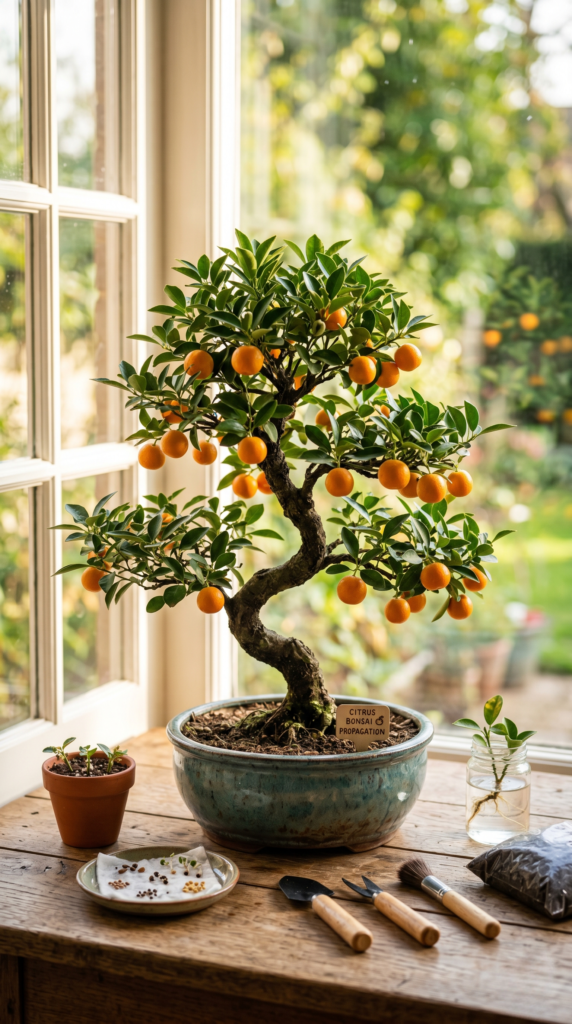
Growing bonsai fruit trees can be a rewarding experience. The image shows a beautiful bonsai tree adorned with vibrant orange fruits, showcasing the potential of these miniature trees. They not only add beauty to your space but also provide delightful fruits.
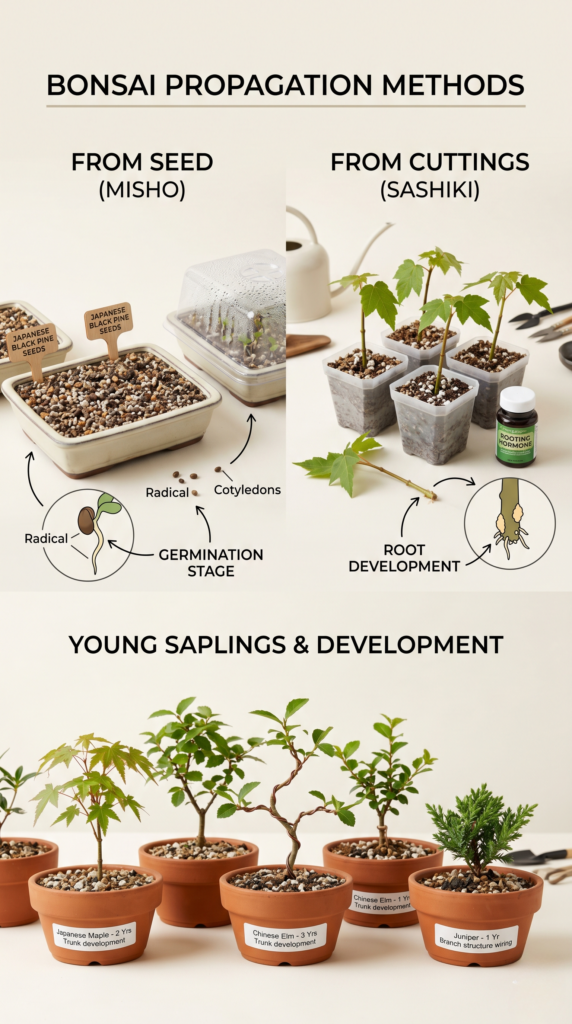
One common method for propagating bonsai fruit trees is through seeds. Start by selecting healthy, ripe fruits. Remove the seeds and clean them thoroughly. Once dried, plant them in a well-draining soil mix. Keep the soil moist and place the pot in a warm, sunny spot.
Another effective method is using cuttings. Choose a healthy branch and cut it just below a leaf node. Dip the cut end in rooting hormone and plant it in a pot filled with a suitable mix. Ensure it stays humid by covering it with a plastic bag or a dome until roots develop.
Layering is also a popular technique. Bend a low branch to the ground and bury a portion of it in soil, leaving the tip exposed. This encourages roots to form while still attached to the parent tree. Once rooted, you can cut it free and pot it separately.
Whichever method you choose, patience is key. With proper care, your bonsai fruit tree can thrive and produce beautiful fruits, just like the one in the image.
Seasonal Care for Bonsai Fruit Trees
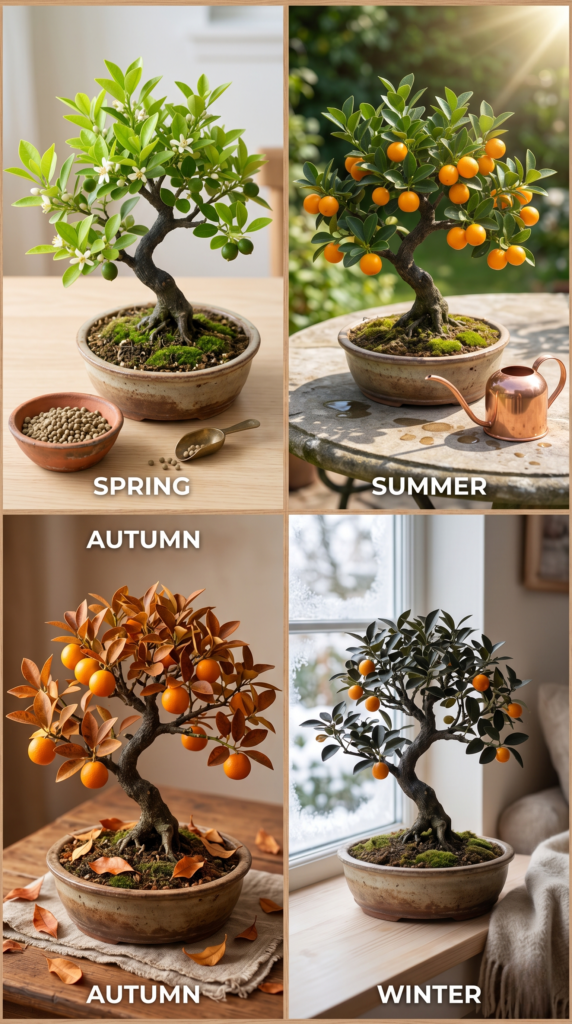
Bonsai fruit trees are a delightful addition to any garden. They bring beauty and a touch of nature indoors. The image shows a vibrant bonsai tree, heavy with small, bright orange fruits. This visual serves as a reminder of the joy these trees can bring when cared for properly.
Seasonal care is key to keeping your bonsai healthy and fruitful. In spring, focus on watering and fertilizing. As the tree comes out of dormancy, it needs nutrients to support new growth. Use a balanced fertilizer to encourage strong branches and healthy leaves.
During the summer, keep an eye on the watering schedule. Hot weather can dry out the soil quickly. Ensure the tree gets enough moisture, but avoid overwatering. Pruning is also essential in this season. Trim back any overgrown branches to maintain the shape and promote air circulation.
As fall approaches, you’ll want to prepare your bonsai for winter. This is the time to reduce watering and stop fertilizing. The tree will enter dormancy, and too much water can lead to root rot. If your bonsai is outdoors, consider bringing it inside if temperatures drop too low.
Winter care involves keeping the tree in a cool, but not freezing, environment. Check for pests and ensure it gets enough light. With the right seasonal care, your bonsai fruit tree can thrive and produce beautiful fruits year after year.
Troubleshooting Common Issues with Bonsai Fruit Trees
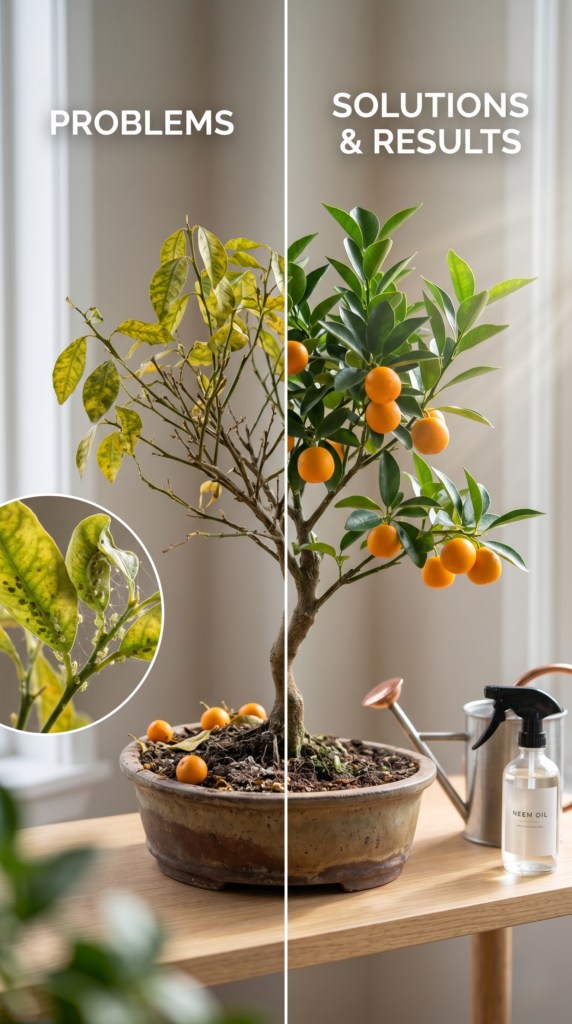
Bonsai fruit trees can be a delightful addition to your home or garden. They not only look beautiful but also offer the joy of growing your own fruit. However, like any plant, they can face some challenges.
One common issue is fruit drop. This can happen for several reasons, such as stress from overwatering or underwatering. Make sure to check the soil moisture regularly. If it’s too dry or too wet, adjust your watering schedule accordingly.
Pests can also be a problem. Aphids and spider mites are known to target bonsai trees. Regularly inspect your tree for any signs of infestation. If you spot any pests, consider using insecticidal soap or neem oil to treat the problem.
Another concern is poor fruit development. This can occur if the tree isn’t getting enough sunlight. Ensure your bonsai is placed in a location where it can receive adequate light throughout the day. If natural light is limited, you might want to consider using grow lights.
Lastly, keep an eye on the leaves. Yellowing leaves can indicate nutrient deficiencies. A balanced fertilizer can help provide the nutrients your bonsai needs to thrive.
Harvesting Techniques for Bonsai Fruit
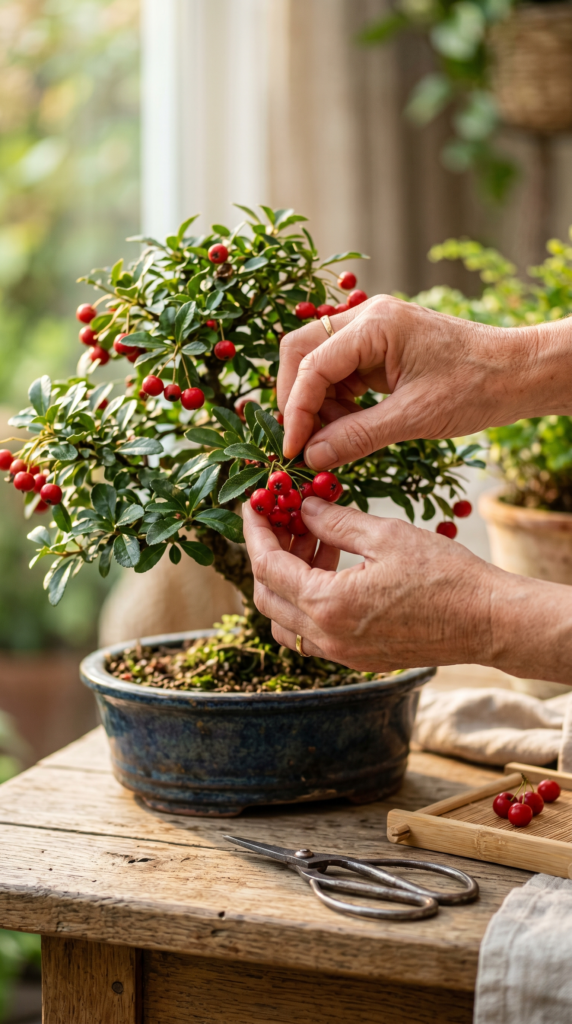
Harvesting bonsai fruit is a rewarding experience. The image shows a hand reaching for ripe, red fruit on a bonsai tree. These fruits not only look beautiful but also symbolize the care and effort put into growing the tree.
Timing is key when it comes to harvesting. Wait until the fruit is fully ripe, which is often indicated by a vibrant color and slight softness. Gently twist or cut the fruit from the branch to avoid damaging the tree.
Using clean, sharp tools can help make the process smoother. This ensures that you don’t introduce any diseases to the tree. After harvesting, it’s a good idea to inspect the fruit for any signs of pests or damage.
Enjoying your bonsai fruit can be a delightful treat. Whether you eat them fresh or use them in recipes, the fruits of your labor will surely be satisfying!
Bonsai Fruit Trees in Different Cultures
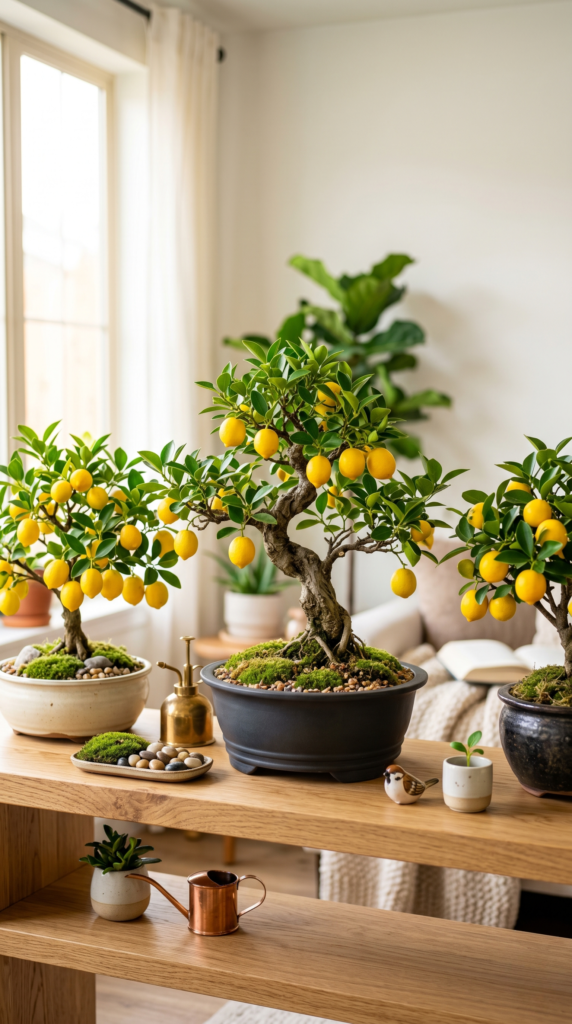
Bonsai fruit trees are a fascinating blend of art and nature, celebrated across various cultures. The image showcases a beautifully crafted bonsai tree adorned with vibrant fruits, highlighting the delicate balance between aesthetics and functionality.
In many Asian cultures, bonsai trees symbolize harmony and peace. They are often seen as a way to connect with nature, even in urban settings. The fruits on these trees, like the ones in the image, represent abundance and prosperity.
In Japan, bonsai is not just a hobby; it is a revered art form. The meticulous care given to these trees reflects a deep respect for nature. The fruits, whether they are oranges or apples, add a unique charm, making them even more special.
Similarly, in Chinese culture, bonsai trees are associated with good luck. The fruits are often seen as a sign of fertility and wealth. Displaying a bonsai fruit tree in the home is believed to bring positive energy and good fortune.
Overall, bonsai fruit trees are more than just decorative plants. They carry rich cultural meanings and serve as a reminder of the beauty of nature, even in miniature form.
Creating a Bonsai Fruit Tree Display
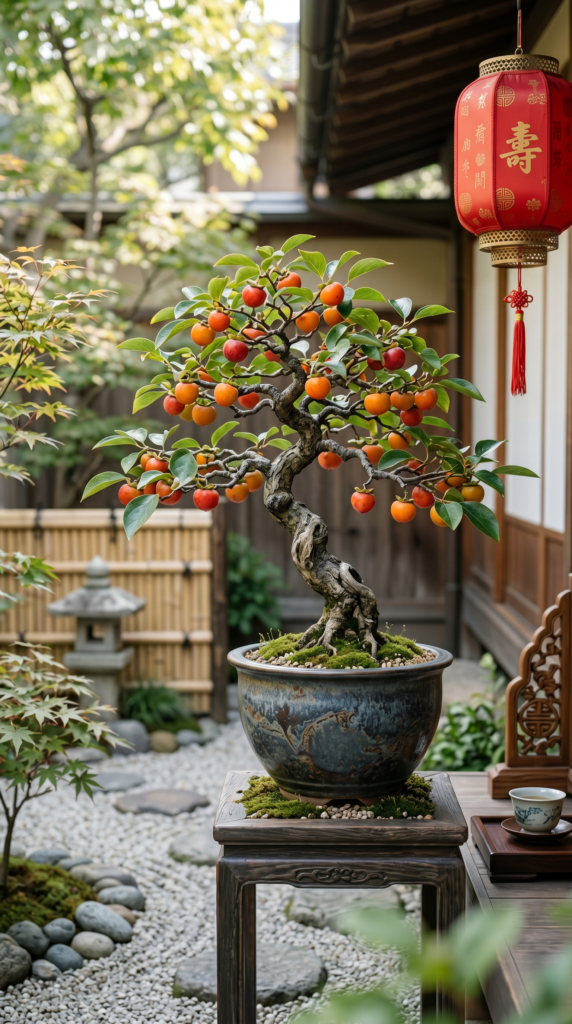
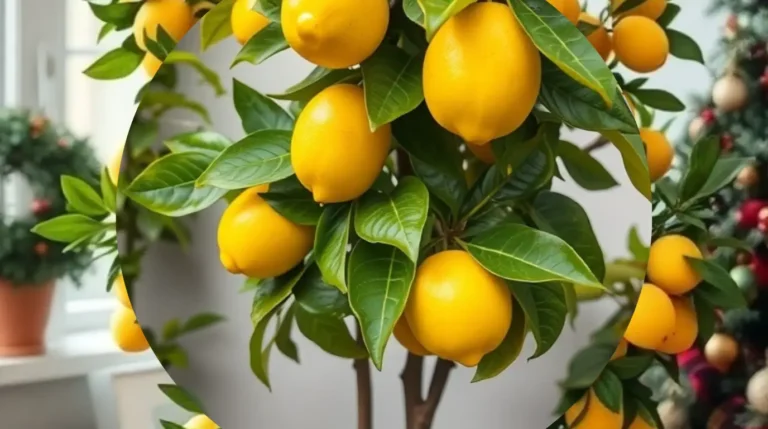
Creating a bonsai fruit tree display can be a delightful project. Imagine a small tree, perfectly shaped, adorned with vibrant fruits. This image showcases a stunning bonsai tree loaded with bright yellow fruits, making it a focal point in any space.
When setting up your display, consider the arrangement of your bonsai trees. Grouping them together can create a mini orchard effect. You can mix different types of bonsai fruit trees to add variety. The contrast of colors and shapes will make your display even more eye-catching.
Don’t forget about the pots! Choosing the right pots can enhance the beauty of your bonsai trees. Dark pots can make the fruits pop, while lighter pots can provide a soft background. Make sure the pots have proper drainage to keep your trees healthy.
Lighting is another important factor. Place your bonsai display in a spot where it can receive indirect sunlight. This will help the fruits develop beautifully while keeping the leaves lush and green.
Finally, regular care is key. Water your bonsai trees appropriately and prune them to maintain their shape. With a little effort, your bonsai fruit tree display will thrive and bring joy to your home.
The Aesthetic Appeal of Bonsai Fruit Trees
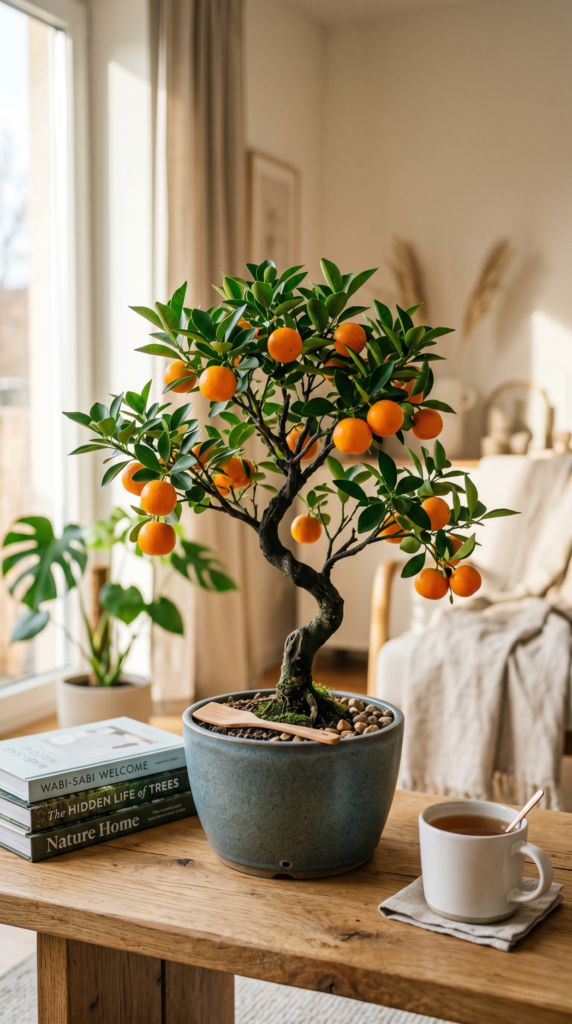
Bonsai fruit trees are a delightful blend of nature and artistry. The image showcases a beautifully shaped bonsai tree, adorned with vibrant orange fruits. This striking visual draws attention and creates a sense of tranquility.
The compact size of bonsai trees makes them perfect for any space. They can brighten up a small apartment or add charm to a garden. The bright oranges against the lush green leaves create a stunning contrast, making the tree a focal point in any room.
These trees not only look good but also symbolize patience and dedication. Growing a bonsai fruit tree requires care and attention, which adds to its beauty. Watching the fruits develop over time is rewarding and brings a sense of accomplishment.
Incorporating a bonsai fruit tree into your home can enhance your decor. It adds a touch of nature and can even inspire conversations. Plus, the idea of having fresh fruit at your fingertips is quite appealing!
Exploring Exotic Bonsai Fruit Varieties
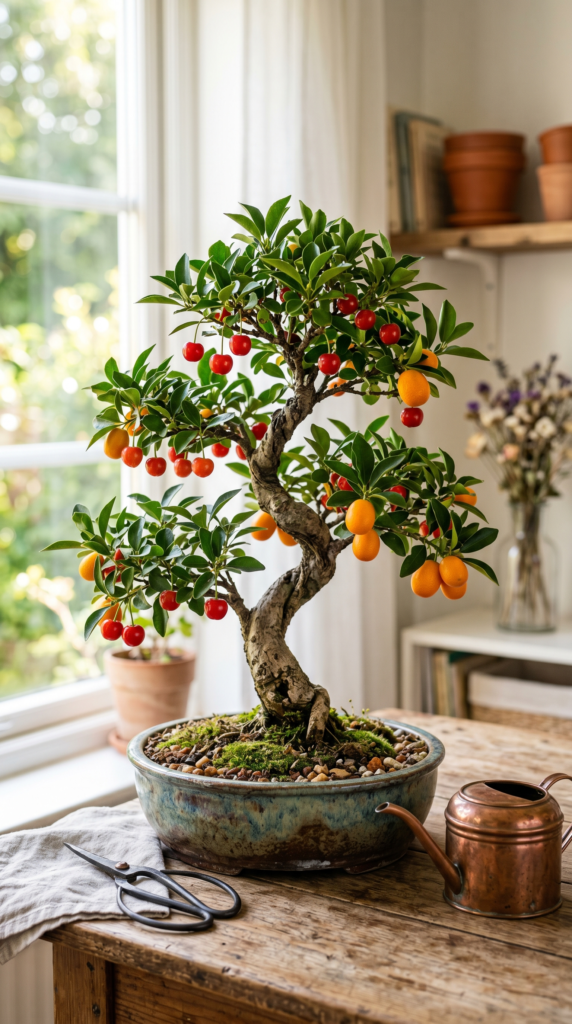
Bonsai trees can be more than just beautiful decorations; they can also bear fruit! The image shows a stunning bonsai tree adorned with vibrant fruits in shades of red and orange. These colors not only catch the eye but also hint at the delightful flavors that might come from these tiny fruits.
Fruits like these can come from various species of bonsai trees, such as the kumquat or the dwarf citrus. Each type offers its unique taste and aroma, making them a fun addition to any garden or indoor space. Imagine plucking a small, juicy fruit right from your bonsai tree!
Caring for a bonsai fruit tree involves regular pruning and proper watering. It’s essential to keep the tree healthy to ensure it produces fruit. With the right care, you can enjoy the beauty of the tree and the joy of harvesting its fruits.
The Journey of a Bonsai Fruit Tree
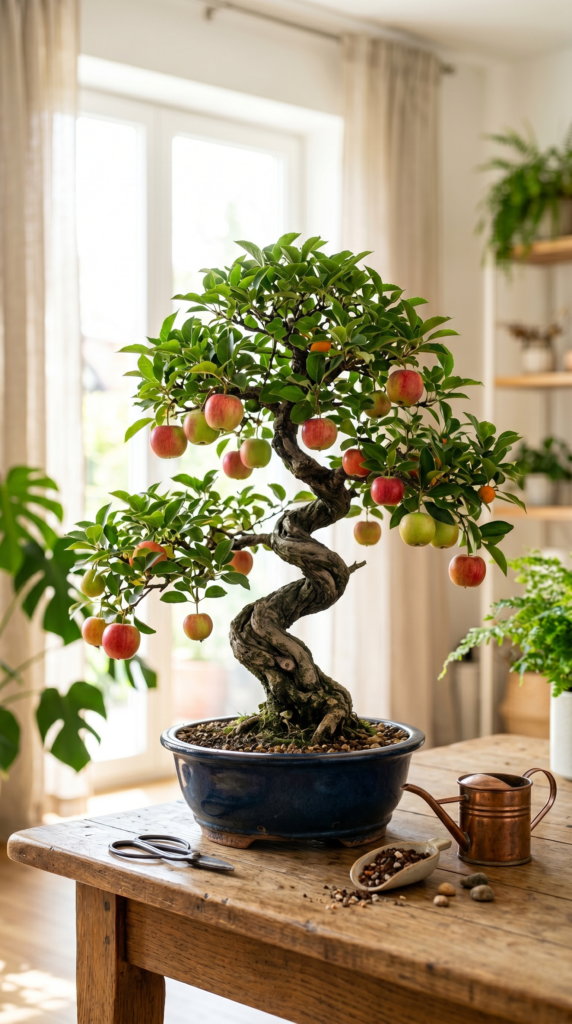
Bonsai fruit trees are a delightful blend of nature and artistry. The image shows a beautifully shaped bonsai tree, adorned with vibrant fruits. This small tree captures the essence of a full-sized fruit tree, showcasing how careful cultivation can lead to stunning results.
The journey of a bonsai fruit tree begins with selecting the right species. Some popular choices include apple, pear, and citrus trees. Each type has its unique charm and fruiting characteristics. Once you choose a species, the next step is to plant it in a suitable pot with quality soil.
As the tree grows, regular pruning is essential. This helps maintain its shape and encourages fruit production. The twisting trunk and lush green leaves in the image highlight the care that goes into shaping these trees. The fruits, bright and inviting, are a reward for the patience and effort invested.
Watering and fertilizing play a crucial role in the tree’s health. Bonsai trees need just the right amount of moisture and nutrients to thrive. Observing the tree closely allows you to adjust care as needed. The vibrant fruits in the image are a testament to successful nurturing.
Finally, harvesting the fruits is a joyful experience. It’s not just about the taste; it’s about celebrating the journey of growth and care. Each fruit symbolizes the dedication that goes into bonsai cultivation, making it a fulfilling hobby for many.
Bonsai Fruit Trees and Indoor Gardening
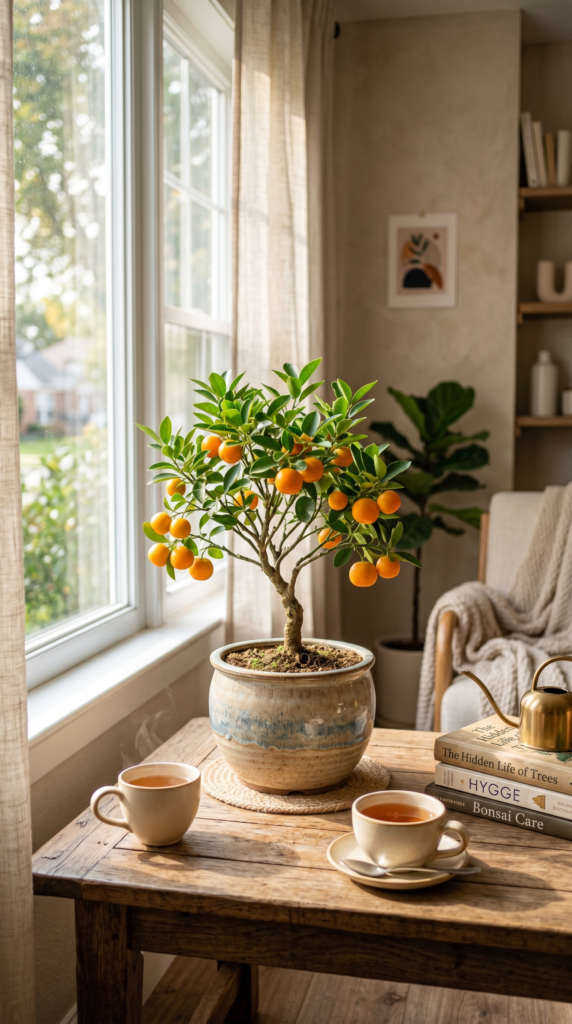
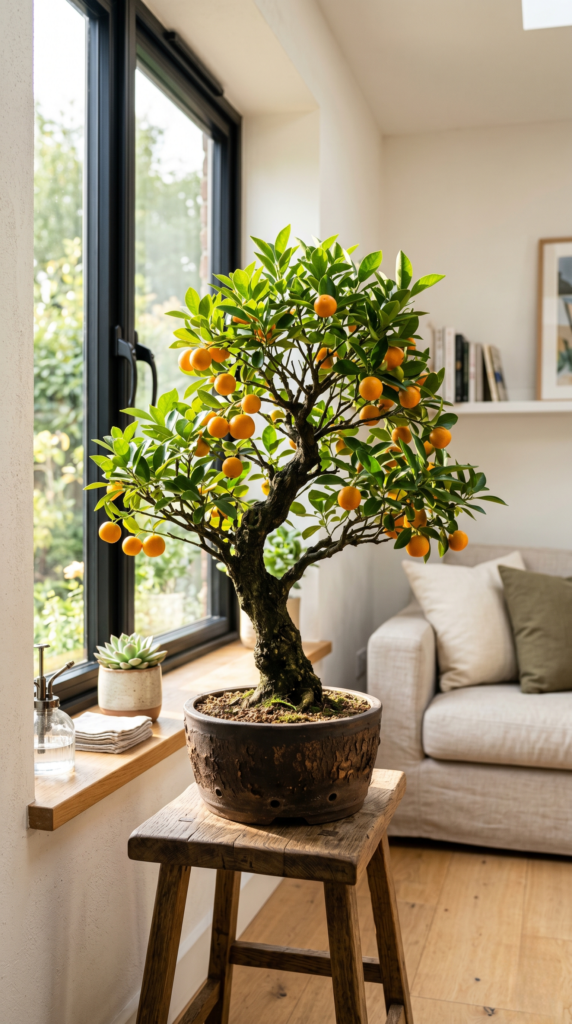
Bonsai fruit trees are a delightful addition to indoor gardening. They bring a touch of nature right into your home. The image shows a charming bonsai tree with vibrant orange fruits, perfectly positioned by a window. This setup not only provides sunlight but also adds a pop of color to any room.
Growing bonsai fruit trees can be a rewarding hobby. They require careful attention, but the results are worth it. Imagine nurturing a small tree that produces real fruit! It’s a unique way to enjoy gardening, even in limited space.
These trees thrive best in bright, indirect sunlight. Regular watering is key, but be careful not to overdo it. The right balance will keep your bonsai healthy and fruitful. Plus, they can be a conversation starter, impressing guests with their beauty and the idea of homegrown fruit.