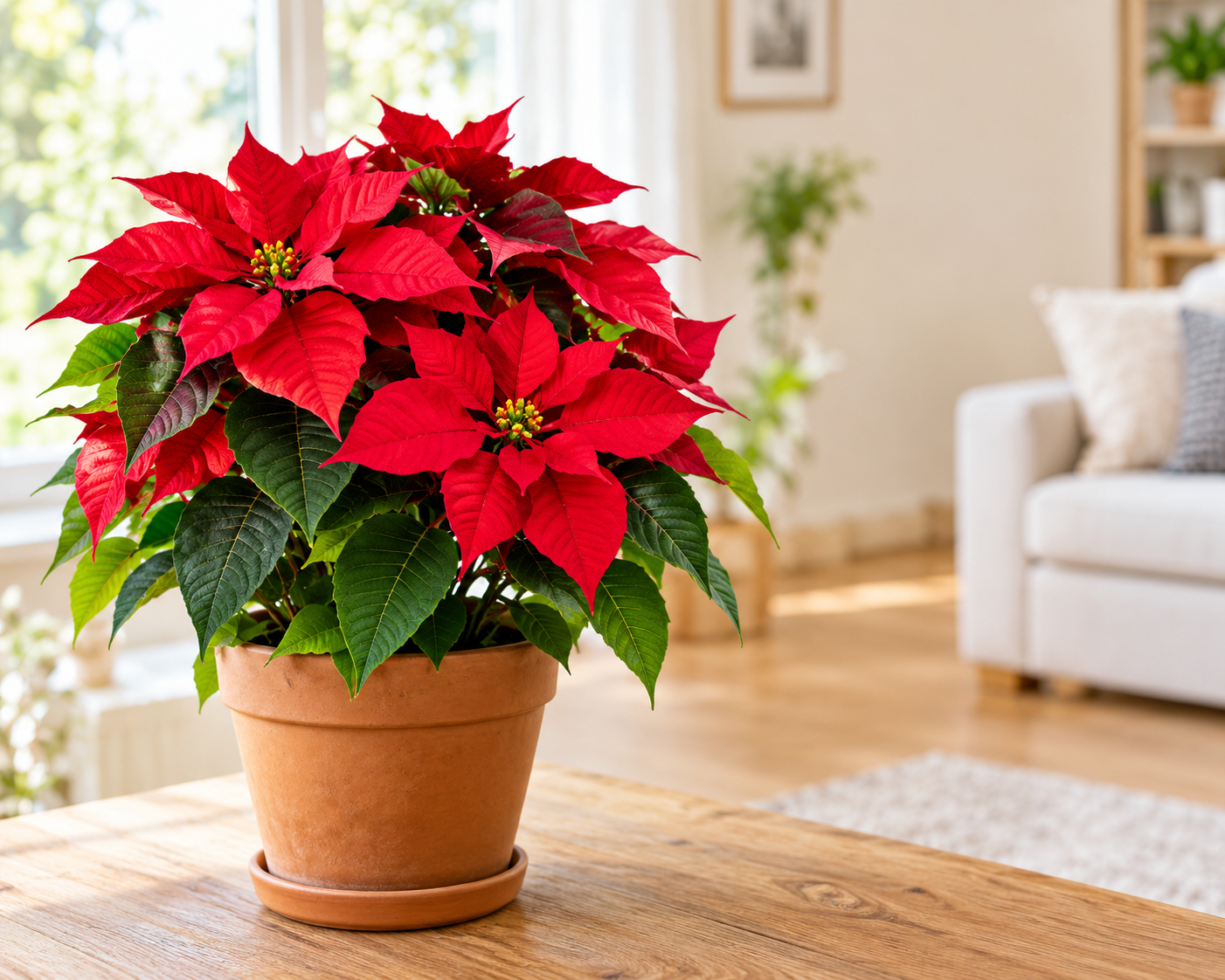
Poinsettia Plant Care 101: How to Grow, Water & Keep It Best for Blooming
This post contains Amazon affiliate links. As an Amazon Associate, I earn from qualifying purchases at no extra cost to you.
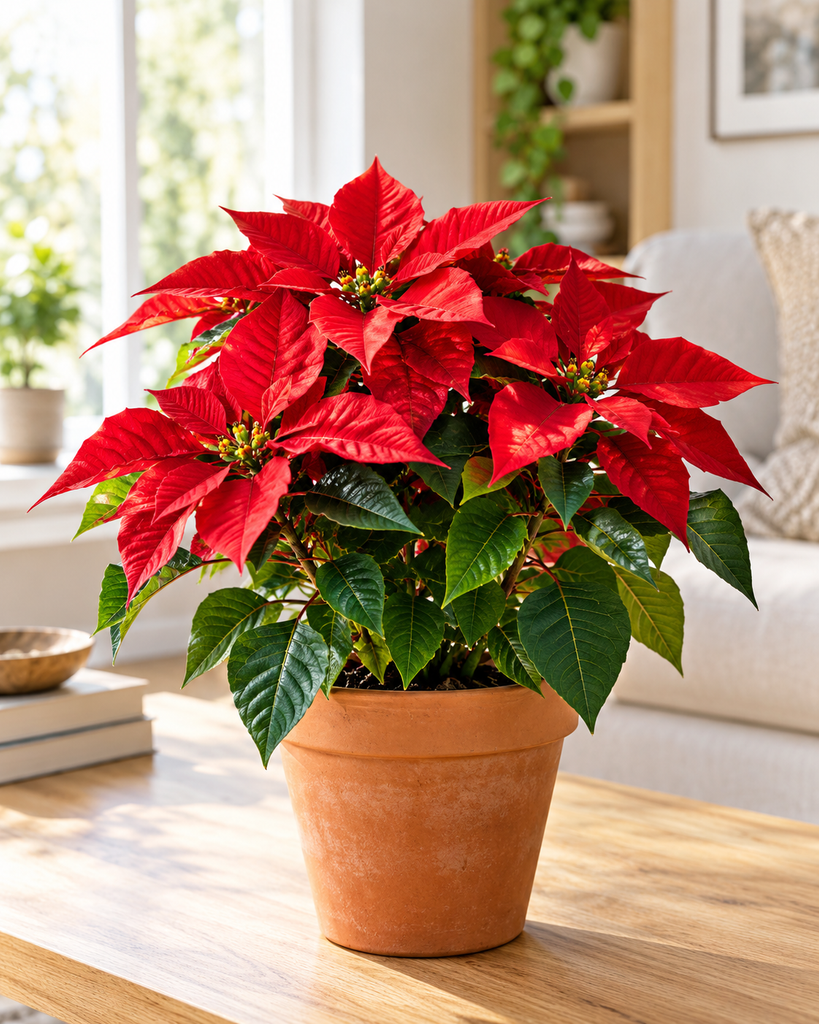
Every December, millions of poinsettias arrive in homes wrapped in foil and gone by January. That’s a shame, because the poinsettia is a tough tropical shrub that can live for years with a little attention. Its color comes from leaf-like bracts that can stay vivid for two to three months.
Most poinsettias don’t die from neglect. They die from the wrong kind of attention: too much water, a cold doorway, or a soggy foil sleeve. This guide covers how to care for a poinsettia through the holidays, keep it alive afterward, and get it to turn red again next winter.
Recommended Products for Your Poinsettia
Poinsettia Quick Care Guide
| Care Factor | What Your Poinsettia Needs |
|---|---|
| Light | Bright, indirect light, ideally 6+ hours daily |
| Water | When the top inch of soil is dry; drain fully |
| Soil | Light, well-draining potting mix, slightly acidic |
| Temperature | 65–70°F days, 60–65°F nights; never below 50°F |
| Humidity | Average home humidity (40–60%) is fine |
| Fertilizer | None while colorful; balanced feed every 2–4 weeks in active growth |
| Pruning | Cut back to 4–6 inches in spring; pinch tips until early September |
| Blooming season | Bracts color in late fall and winter, after long nights |
What Is a Poinsettia?
A poinsettia (Euphorbia pulcherrima) is a woody, tropical shrub native to Mexico. Its colorful “petals” are modified leaves called bracts. The true flowers are the tiny yellow clusters at the center.
In warm, frost-free regions, poinsettias grow as leggy shrubs that can reach 10 feet or more. The Aztecs called the plant cuetlaxochitl and used it for dye and medicine. The common name honors Joel Roberts Poinsett, the first U.S. Minister to Mexico, who introduced it to the United States in the 1820s.
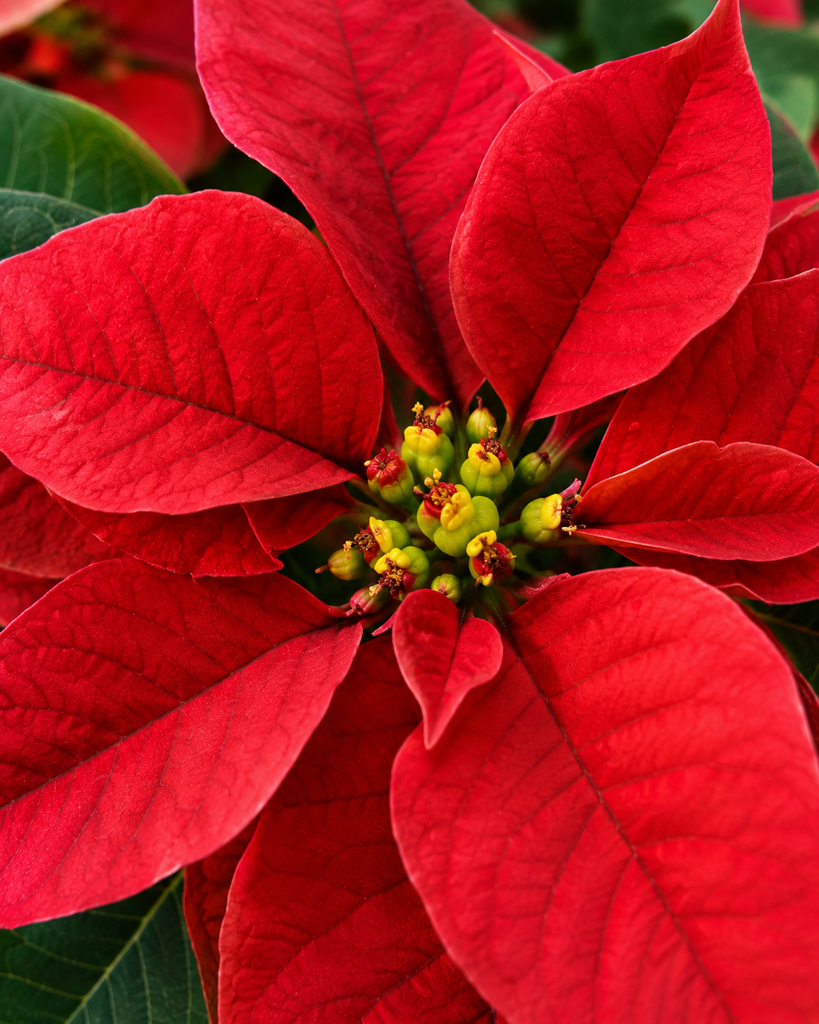
- Bracts: the red, pink, white, burgundy, or marbled “petals.” They’re colored leaves, which is why they last so long.
- Cyathia (true flowers): the small yellow clusters in the middle. Once they drop their pollen, the display is past peak.
- Leaves: oval to lance-shaped, medium green.
- Sap: milky, and it can irritate skin.
Poinsettias are short-day plants: they form colored bracts only after several weeks of long, uninterrupted nights. That’s the key to rebloom.
Poinsettia Plant Care Requirements
Poinsettias are easy once you meet four basics: bright light, careful watering, steady warmth, and good drainage.
Light Requirements
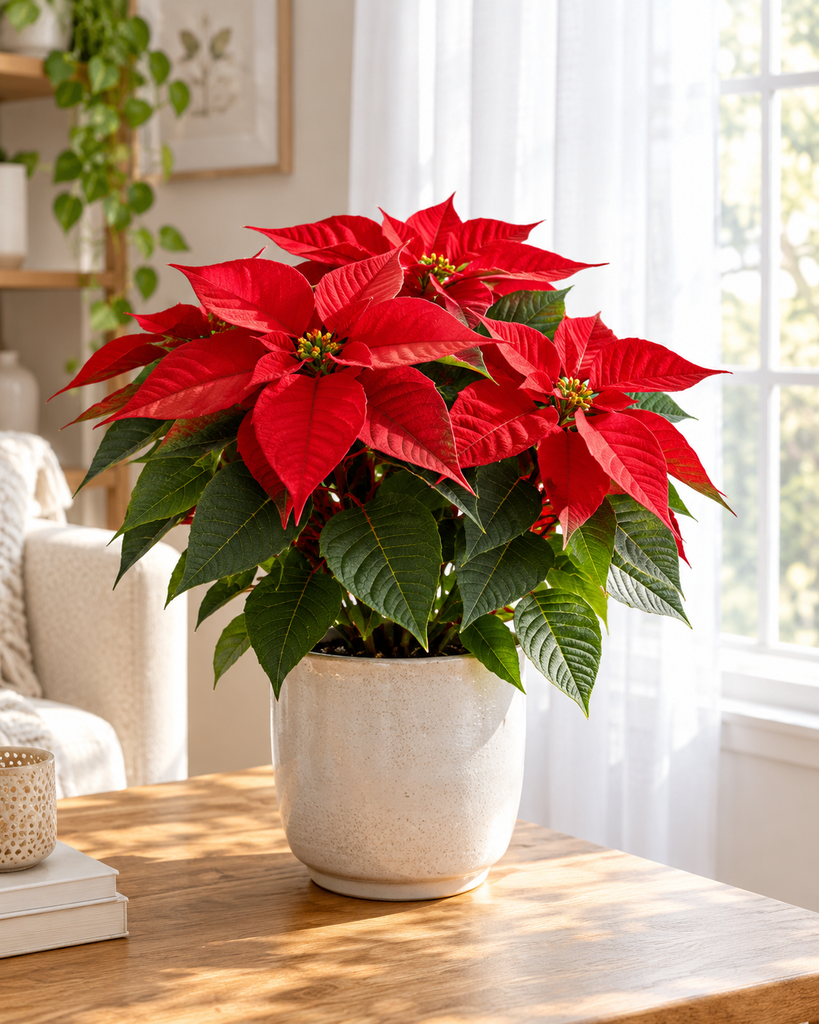
Poinsettias need bright, indirect light for at least six hours a day. A spot a few feet back from an east-, south-, or west-facing window works well.
- Too little light: leaves yellow and drop, stems stretch, and bract color fades faster.
- Too much direct sun: strong afternoon sun through glass can scorch leaves. A sheer curtain helps.
- Avoid: dark corners, hallways, and spots near exterior doors.
Rotate the pot a quarter turn weekly so growth stays even.
Helpful Products for Poinsettia Lighting
Watering
Water a poinsettia when the top inch of soil feels dry. Water thoroughly until it drains from the bottom, then empty the saucer. Poinsettias dislike soggy roots more than a little dryness.
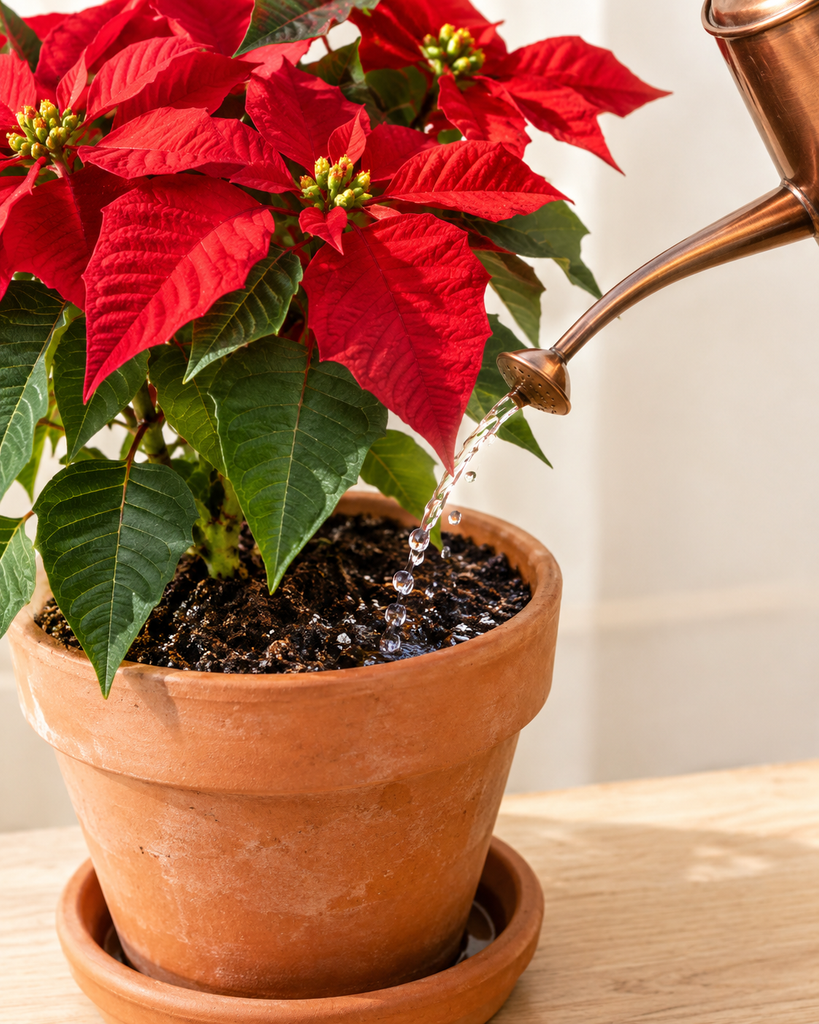
- Check first. Push a finger an inch into the soil. If it’s damp, wait.
- Water slowly at soil level until water runs from the drainage holes.
- Let it drain 10–15 minutes, then discard standing water.
- Unwrap or puncture the foil. Foil sleeves trap water around the roots.
In a typical heated home, that’s often about once a week, but pot size, light, and temperature change the rhythm, so check the soil rather than the calendar. Use lukewarm water.
Common mistakes: fixed schedules, saucers full of water, pots without drainage, letting the plant wilt repeatedly, and very cold water.
Helpful Products for Watering Poinsettias
Best Soil
The best soil for a poinsettia is a light, well-draining potting mix rich in organic matter, with a slightly acidic pH of about 5.5 to 6.5.
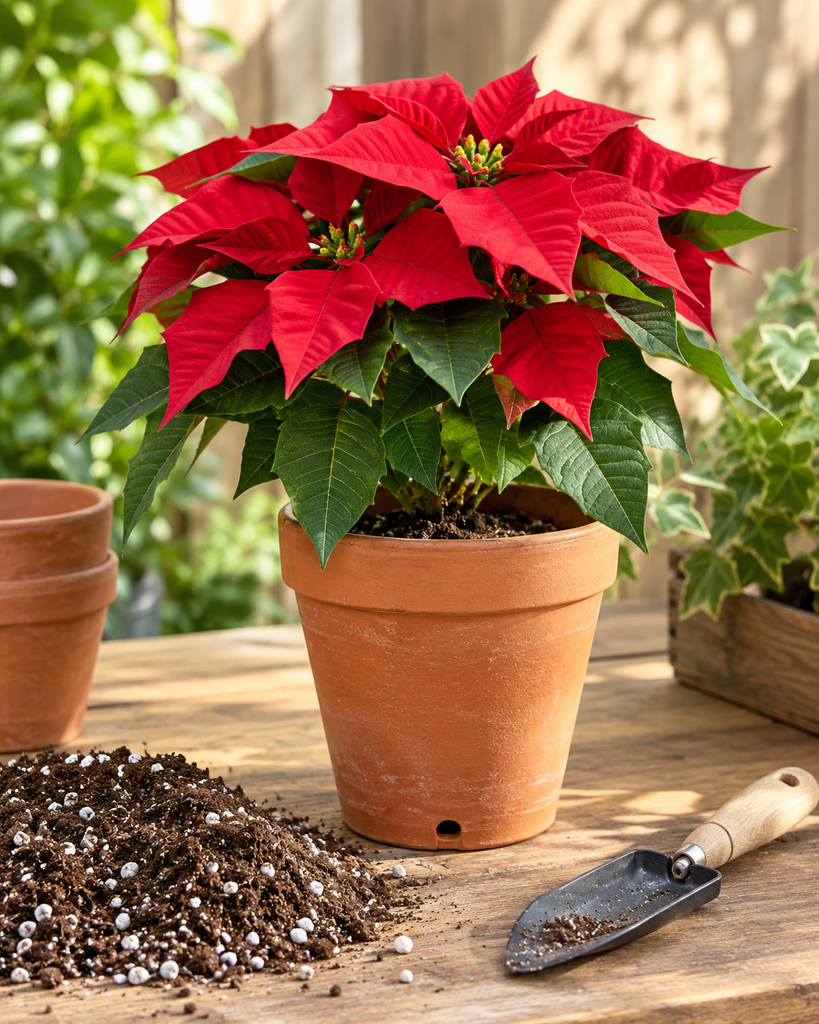
Roots need oxygen. Heavy, compacted soil holds water and invites root rot. Use a peat- or coir-based mix with about 1 part perlite to 3 parts mix, and never use garden soil in containers. Store-bought plants usually come in a workable mix.
Recommended Soil Products
Temperature
Poinsettias do best at 65–70°F by day and 60–65°F at night. Below 50°F, chilling injury and leaf drop can occur.
- Cold drafts: keep away from exterior doors. Wrap the plant when carrying it outside in winter.
- Heaters and vents: hot, dry air causes wilting and crispy leaves.
- Windows: Don’t let leaves touch cold glass overnight.
- Sudden swings: big jumps within hours trigger leaf drop.
Helpful Temperature Tools
Humidity
Poinsettias don’t need extra humidity. Normal indoor levels of roughly 40–60% are enough, and misting isn’t recommended.
If your air is very dry, group plants together, use a pebble tray (water below the pebble tops), or run a small humidifier nearby. Skip misting: wet bracts invite gray mold (Botrytis) and spots.
Helpful Humidity Products
Fertilizer
Don’t fertilize a poinsettia while it shows colorful bracts. Begin in spring when new growth appears, using a balanced liquid fertilizer every 2–4 weeks through summer.
- Flowering (winter): the grower has already fed the plant. Extra fertilizer won’t extend color and can burn roots.
- Active growth (spring to early fall): a balanced houseplant fertilizer (such as 20-20-20) at label rate, or half strength.
Water before feeding; never feed a dry or stressed plant, and flush the pot with plain water every couple of months to prevent salt buildup.
Recommended Fertilizers
How to Grow Poinsettias Successfully
Plant a poinsettia in a pot with drainage holes in a light, well-draining mix, place it in bright indirect light, keep it warm, and water only when the top inch of soil is dry.
- Choosing a plant: pick full-colored bracts and tight yellow cyathia. Check that leaves are green down the stem and look under them for white insects. Avoid plants displayed outdoors or in cold entryways.
- Pot: 1–2 inches wider than the nursery pot. Drainage holes are non-negotiable; terra-cotta is forgiving.
- Position: bright room, away from drafts and heat. Steady temperatures matter more than perfect ones.
- Repotting: most holiday plants can wait until spring.
Growing Poinsettias Outdoors
Poinsettias are perennial shrubs outdoors in USDA zones 9–11. Choose a sheltered spot with morning sun, shade from hot afternoon sun, and well-draining soil. In cooler climates, grow them in containers, move them out once nights stay above 50°F, and bring them in before fall chill. Related: Bougainvillea Care
How to Prune a Poinsettia
Prune a poinsettia in late March to April, after the bracts fade. Cut stems back to about 4–6 inches above the soil, leaving two to three leaf nodes per stem.
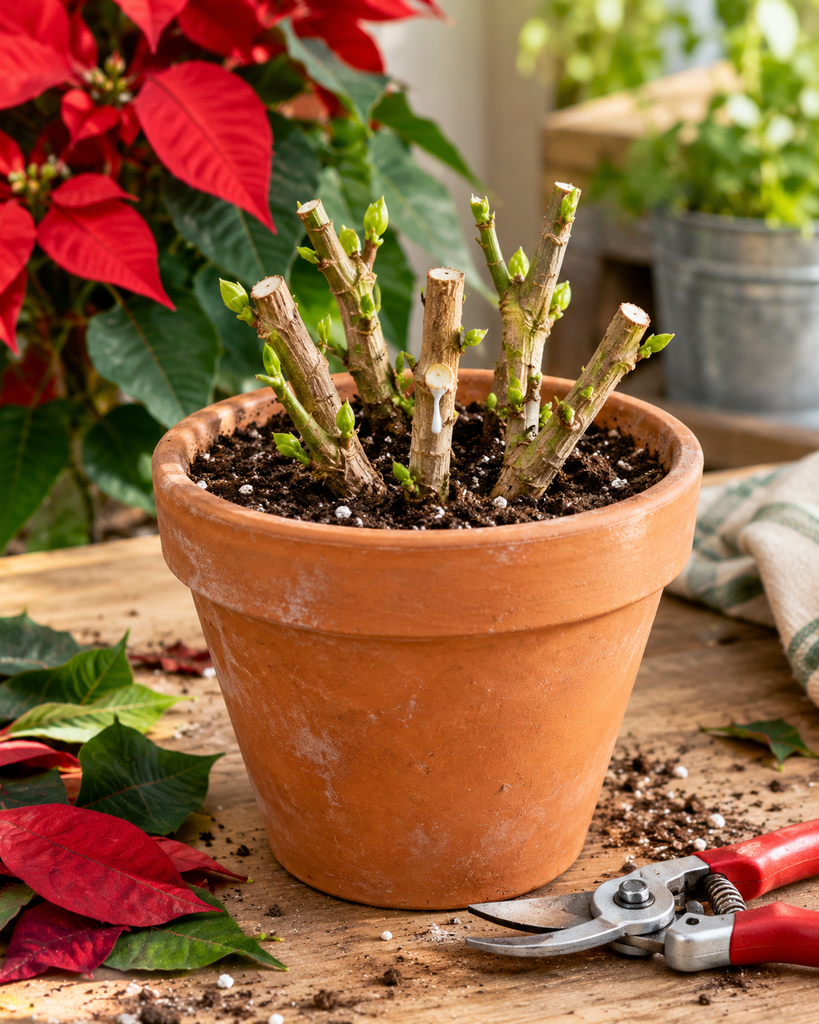
- Reduce watering slightly as bracts drop.
- Wear gloves; the sap can irritate skin.
- Cut with clean, sharp pruners just above a node.
- Water lightly. New shoots appear within a few weeks.
- When shoots reach 6 inches, pinch each to about 3 inches. Repeat every few weeks and stop around early September so the plant can set bracts.
Recommended Pruning Tools
How to Propagate Poinsettia
Propagate poinsettia from 4–6 inch stem-tip cuttings taken in late spring or early summer. Dip in rooting hormone and plant in a moist, well-draining mix in warm, bright indirect light.
- Cut healthy new growth 4–6 inches long, just below a node (wear gloves).
- Rinse off sap and let the cuts dry for an hour.
- Remove lower leaves, leaving 2–3 on top.
- Dip in rooting hormone (optional but helpful).
- Plant in moist perlite-and-peat mix.
- Cover loosely with a clear bag, venting occasionally.
- Keep at 70–75°F in bright indirect light. Roots form in about 3–6 weeks.
- Pot up once new growth appears.
Recommended Propagation Products
Some varieties are patented, which restricts commercial propagation; personal propagation is common.
How to Care for a Poinsettia After Christmas
Keep bright light and careful watering while bracts last, reduce water as they fade, prune in spring, repot if needed, and resume regular feeding.
- January–February: enjoy the color; bright light, no drafts, no fertilizer.
- March–April: as bracts fade and leaves drop, water less. This is a natural slowdown.
- Late March–April: prune to 4–6 inches.
- April–May: report if rootbound; feed once new growth shows.
- After the last frost: optionally move outdoors to bright shade, gradually over a week.
- Summer: pinch, feed, and water regularly.
- Early fall: bring indoors before nights drop below 50°F.
How to Make a Poinsettia Bloom Again
Give the plant 14 hours of complete darkness each night and 8–10 hours of bright light by day, starting around October 1, for 8–10 weeks. Keep nights at 60–70°F.
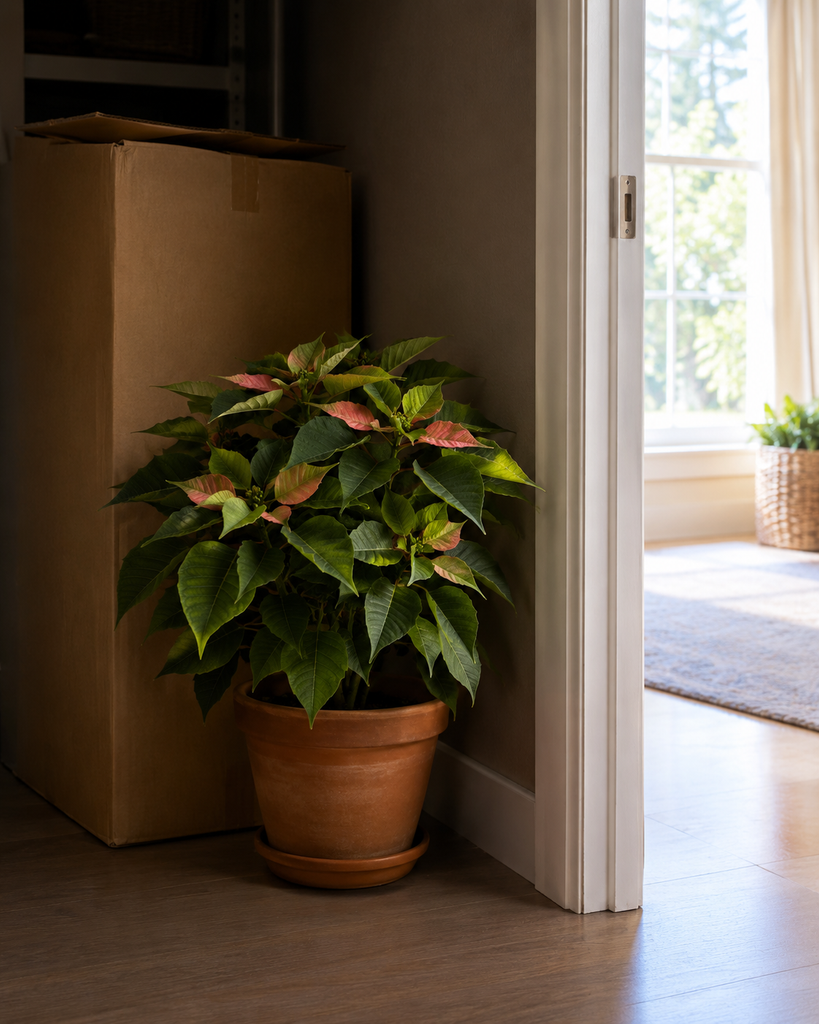
- Stop pinching in early September.
- Around October 1, start 14 hours of unbroken darkness nightly (for example 5 p.m. to 7 a.m.).
- Move the plant into a closet or cover it with an opaque box or bag each evening; uncover each morning.
- Give it your brightest spot by day.
- Be consistent: even brief light at night can disrupt the process.
- Water normally and feed lightly during this period.
- Stop the routine when bracts show color, usually late November to early December.
Helpful Products for Poinsettia Reblooming
- ⏲️ Programmable Outlet Timer — Check price on Amazon
- 🌑 Opaque Plant Cover — Check price on Amazon
- 💡 Indoor Grow Light — Check price on Amazon
Home-grown bracts are often smaller than commercial ones, and color can be patchy. That’s normal.
Poinsettia Care Through the Seasons
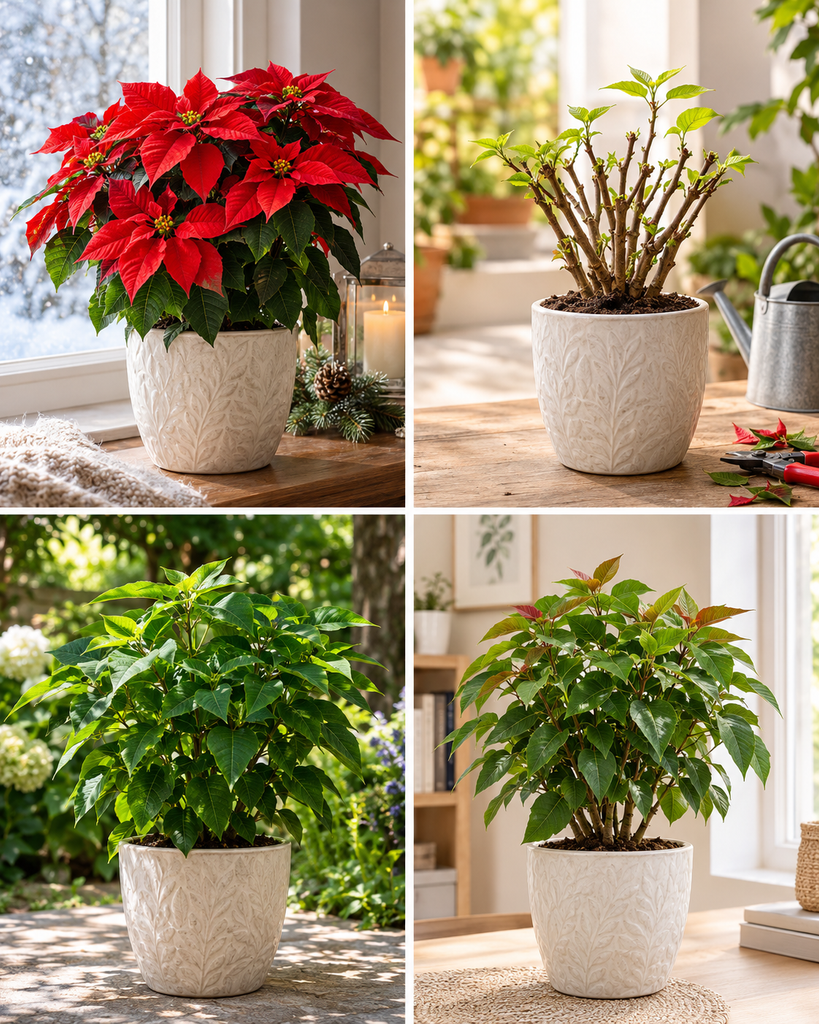
Winter Poinsettia Care
Display time. Bright light, 65–70°F, no drafts, water when the top inch is dry, no fertilizer.
Spring Poinsettia Care
Reset time. Reduce water as bracts fade, prune to 4–6 inches, repot if rootbound, and resume feeding when new growth appears.
Summer Poinsettia Care
Growth time. Bright light or filtered outdoor shade once nights are above 50°F, regular feeding, pinching, and more frequent watering. Protect from scorching afternoon sun.
Fall Poinsettia Care
Prep time. Bring the plant indoors before cold arrives, stop pinching by early September, and start the 14-hour dark routine around October 1 if you want rebloom.
Common Poinsettia Problems and Solutions
Poinsettia Leaves Turning Yellow
- Cause: most often overwatering; also low light, cold drafts, or nutrient deficiency.
- Signs: yellowing lower leaves, soggy soil, possible leaf drop.
- Fix: let soil dry about an inch deep, empty saucers, check drainage, move to brighter light.
- Prevention: water only when the top inch is dry; never leave the pot standing in water.
Poinsettia Leaves Falling Off
- Cause: cold shock, drafts, over- or underwatering, or low light. Some drop after bringing a plant home is common.
- Signs: green or yellow leaves dropping, often suddenly.
- Fix: move to a stable, warm, bright spot and correct watering. Don’t panic-prune.
- Prevention: protect it in transit, keep temperatures steady above 60°F, avoid vents.
Wilting Poinsettia
- Cause: underwatering, or overwatering that has damaged the roots.
- Signs: drooping stems and leaves. Dry soil means thirst; soggy soil means root trouble.
- Fix: if dry, water thoroughly; recovery is often within hours. If soggy, let it dry and check for root rot.
- Prevention: check moisture regularly and keep away from hot air.
Brown or Crispy Leaves
- Cause: dry heater air, too much direct sun, underwatering, or fertilizer burn.
- Signs: brown edges or tips, papery leaves.
- Fix: move away from heat and direct sun, water thoroughly, flush with plain water if you’ve fertilized heavily.
- Prevention: stable conditions and label-rate fertilizer.
Poinsettia Not Turning Red
- Cause: light at night, too little darkness, or warm nights. Low daytime light can contribute.
- Signs: green bracts in late fall or winter.
- Fix: follow the 14-hour dark routine for 8–10 weeks at 60–70°F nights.
- Prevention: start around October 1 and stay consistent.
Root Rot
- Cause: chronic overwatering or poor drainage, which favors fungal pathogens such as Pythium and Rhizoctonia.
- Signs: wilting despite wet soil, yellowing, black or mushy roots, dark stem base, sour smell.
- Fix: unpot, trim dark mushy roots with clean tools, and repot in fresh, well-draining mix in a clean pot. Severe cases are hard to save.
- Prevention: well-draining mix, no foil sleeves, water only when needed.
Pests on Poinsettias
- Cause: whiteflies, mealybugs, aphids, fungus gnats, and spider mites.
- Signs: tiny white insects flying up (whiteflies), cottony tufts (mealybugs), sticky honeydew, fine webbing (spider mites), small flies over the soil (fungus gnats).
- Fix: isolate the plant, wipe or rinse insects off, and treat with insecticidal soap or horticultural oil per label. Repeat weekly. For gnats, let soil dry more between waterings.
- Prevention: inspect new plants, keep leaves clean, avoid overwatering.
Helpful Products for Poinsettia Pests
- 🟨 Yellow Sticky Traps for Houseplants — Check price on Amazon
- 🌿 Insecticidal Soap for Plants — Check price on Amazon
- 🔍 Plant Pest Magnifier — Check price on Amazon
Is Poinsettia Toxic to Pets?
Poinsettias are mildly toxic to cats and dogs. Eating the plant most often causes mild drooling, stomach upset, or vomiting. Serious poisoning is rare, and the “deadly plant” reputation is a myth.
The milky sap contains irritating compounds, and the ASPCA lists poinsettia as mildly toxic.
- Mild irritation: drooling, lip-licking, mouth irritation, vomiting, occasionally diarrhea. Most pets recover without treatment.
- Skin contact: sap may cause redness or itching.
- Serious poisoning: not typical, though large amounts may cause more significant stomach upset, especially in small pets.
If your pet has eaten any, rinse the mouth and remove plant material. Contact your veterinarian, or the ASPCA Animal Poison Control Center or Pet Poison Helpline, especially if there is repeated vomiting, lethargy, or other worrying symptoms. Keep the plant out of reach. People with latex allergies should also handle the sap carefully.
Frequently Asked Questions About Poinsettias
How often should I water a poinsettia?
When the top inch of soil is dry, usually about once a week indoors. Water until it drains, then empty the saucer.
Does a poinsettia need direct sunlight?
No. It prefers bright, indirect light for at least six hours a day. Gentle morning sun is fine; strong afternoon sun through glass can scorch leaves.
How long can a poinsettia live?
Many years indoors with good care, and decades as a shrub outdoors in warm climates.
Can poinsettias grow indoors?
Yes. They do well in bright, warm rooms away from drafts, either as seasonal color or year-round houseplants.
Why are my poinsettia leaves falling off?
Usually cold drafts, overwatering, underwatering, or low light. Some drop after moving a plant home is normal. Stabilize conditions and check the soil.
How do I make my poinsettia turn red again?
Give 14 hours of complete darkness nightly and 8–10 hours of bright light by day for 8–10 weeks, starting around October 1, with nights at 60–70°F.
Can I keep a poinsettia after Christmas?
Yes. Keep bright light and careful watering until bracts fade, prune in spring, repot if needed, and feed in the growing season.
When should I prune a poinsettia?
Late March to April, after bracts fade. Cut to 4–6 inches, then pinch new growth through summer, stopping around early September.
Can poinsettias grow outside?
Year-round in USDA zones 9–11. In colder areas, keep them in pots and move them outdoors only when nights stay above 50°F.
What is the best soil for poinsettias?
A light, well-draining peat- or coir-based mix with perlite, slightly acidic (about pH 5.5–6.5), in a pot with drainage holes.
Conclusion: Keeping Your Poinsettia Healthy and Blooming
A poinsettia asks for very little: bright indirect light, steady warmth, and water only when the top inch of soil is dry. Avoid the big killers (cold drafts, soggy foil sleeves, overwatering) and it will reward you well past the holidays. Prune in spring, feed through summer, and if you want color again, commit to the 14-hour dark routine from October.
Want more easy plants? Try Arrowhead Plant Care, or Geranium Plant Care.
Poinsettia Care Checklist
- ☐ Bright, indirect light (6+ hours)
- ☐ Keep at 60–70°F, never below 50°F
- ☐ Avoid cold drafts, heaters, and vents
- ☐ Check the top inch of soil before watering
- ☐ Remove or puncture foil; empty saucers
- ☐ No fertilizer while in color
- ☐ Prune to 4–6 inches in late March–April
- ☐ Repot in spring if rootbound, then feed every 2–4 weeks
- ☐ Pinch new growth until early September
- ☐ Start 14-hour nightly darkness around October 1 for 8–10 weeks
- ☐ Keep away from pets; wear gloves when handling sap