Arrowhead Plant: Ultimate Care Tips For A Lush, Healthy Look
This article may contain affiliate links. If you purchase through these links, I may earn a small commission at no extra cost to you.
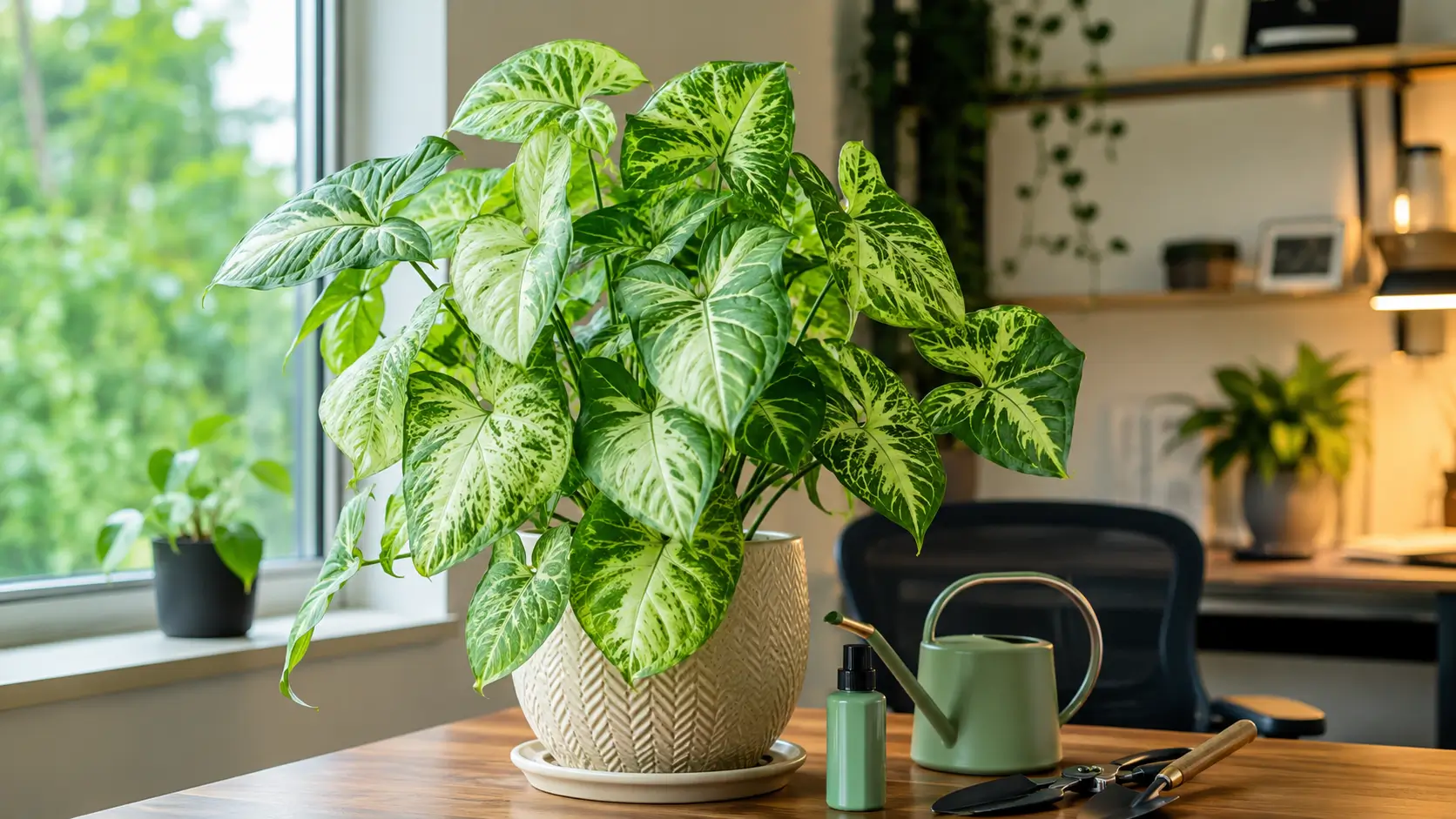
The Arrowhead Plant is a favorite for indoor spaces. With the right care, it can thrive and add beauty to your home or office. To keep it lush and healthy, follow specific care tips for the Arrowhead Plant. This will help it show off its beautiful foliage and vibrant colors.
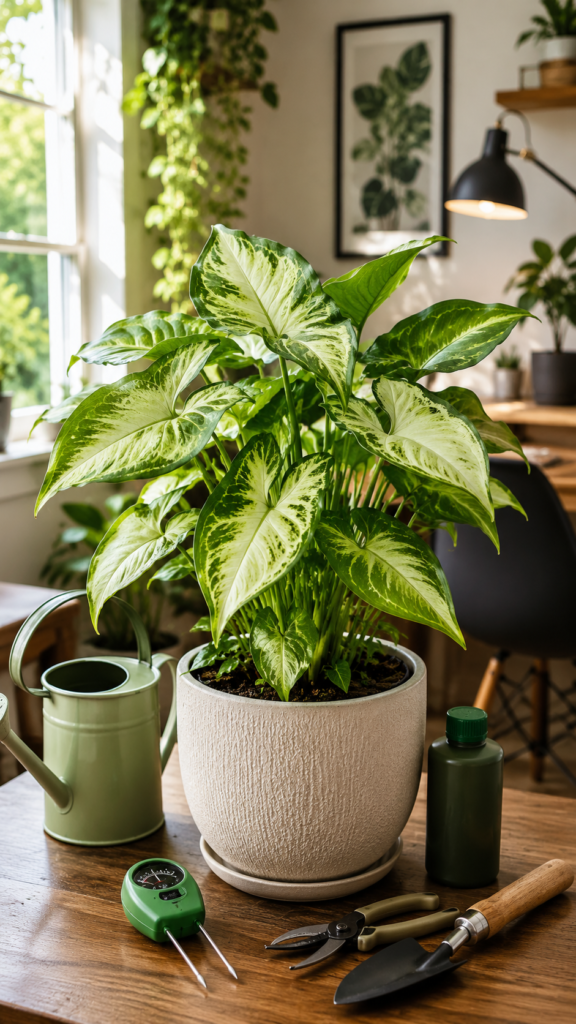
Proper care is key to keeping your Arrowhead Plant healthy and looking great. By following the best care tips, you ensure it gets the right light, water, and nutrients. This plant is easy to care for, making it great for busy people or those new to plants. With proper care, your Arrowhead Plant will flourish and enhance your indoor space.
Introduction to the Importance of Care
Caring for your arrowhead plant is more than just keeping it alive. It’s about helping it reach its full potential. By following the best care tips, you’ll enjoy many benefits of a healthy arrowhead plant. It can purify the air and reduce stress, improving your well-being and environment.
Key Takeaways
- Follow ultimate care tips to achieve a lush, healthy look for your Arrowhead Plant
- Provide the right amount of light, water, and nutrients for optimal growth
- Arrowhead Plants are versatile and low-maintenance, perfect for busy people or beginners
- Proper care can help your Arrowhead Plant reach its full potential and thrive
- Caring for your Arrowhead Plant can have numerous benefits, including air purification and stress reduction
- Ultimate care tips can help you enjoy the many benefits of having a healthy Arrowhead Plant
Introduction to the Arrowhead Plant
The arrowhead plant comes from the tropical areas of Central and South America. It’s a favorite houseplant because of its beautiful, arrowhead-shaped leaves. This introduction will cover its origin, popular types, and how it grows. It aims to give a full picture of this amazing plant.
The arrowhead plant grows wild, reaching up to 3-4 feet tall. To take care of it, knowing its growth habits and likes is key. It prefers bright, indirect light and soil that drains well.
Origin and Natural Habitat
The arrowhead plant loves tropical places, especially near rivers and streams. Its natural home has the right humidity and warmth for it to thrive.
Popular Varieties
There are many arrowhead plant varieties, like ‘White Butterfly’ and ‘Neon Robusta’. These have special features, like colorful leaves and small growth.
Growth Habits and Characteristics
The arrowhead plant is great for many homes. It has long stems and beautiful leaves. With the right care, it can grow up to 3-4 feet tall, adding beauty to any room.
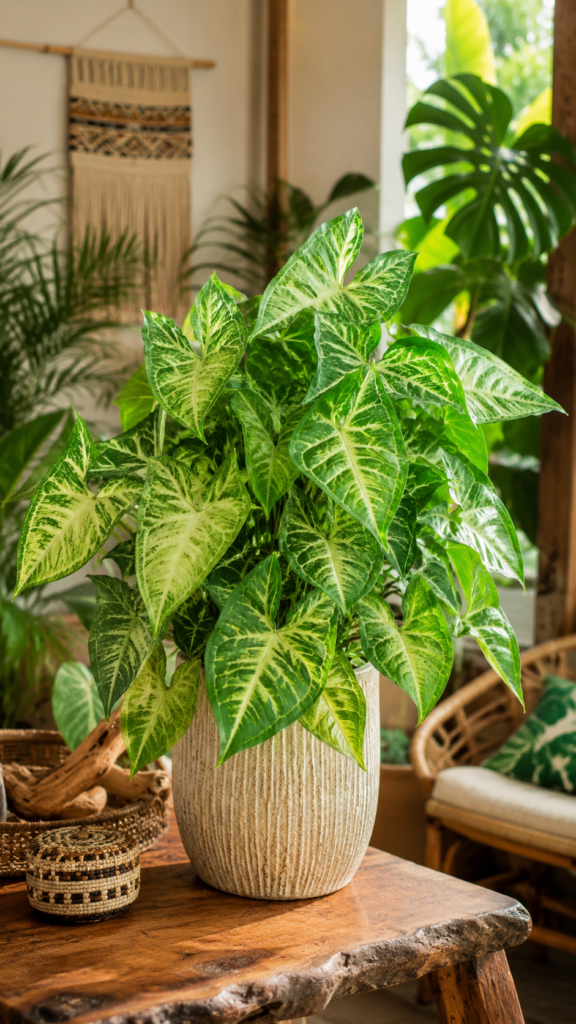
Learning about the arrowhead plant’s origin, types, and growth helps you care for it well. Whether you’re new to plants or experienced, this plant adds tropical beauty to your space.
| Variety | Description |
|---|---|
| White Butterfly | Variegated leaves with a compact growth habit |
| Neon Robusta | Bright, neon-colored leaves with a trailing stem |
👉 Start your Arrowhead Plant journey with beginner-friendly care essentials that help your Syngonium grow healthy indoors.
🪴 Arrowhead Plant Live Plant: Costa Farms Syngonium Arrowhead Plant
🪴 Decorative Indoor Pot: Ceramic Plant Pot with Drainage Hole
🌿 Beginner Plant Care Kit: Indoor Houseplant Care Tool Set
Essential Light Requirements
For the arrowhead plant, the right light is key to its health. It needs bright, indirect light but can handle different conditions. Knowing this helps your plant thrive.
Here’s a quick guide to the light needs of an arrowhead plant:
- East- or west-facing windows are perfect, offering gentle light.
- South-facing windows work too, but a sheer curtain may be needed to filter the sun.
- Avoid direct sunlight to prevent leaf scorching.
Arrowhead plants need 12-14 hours of light daily. Grow lights can help during winter when days are short.
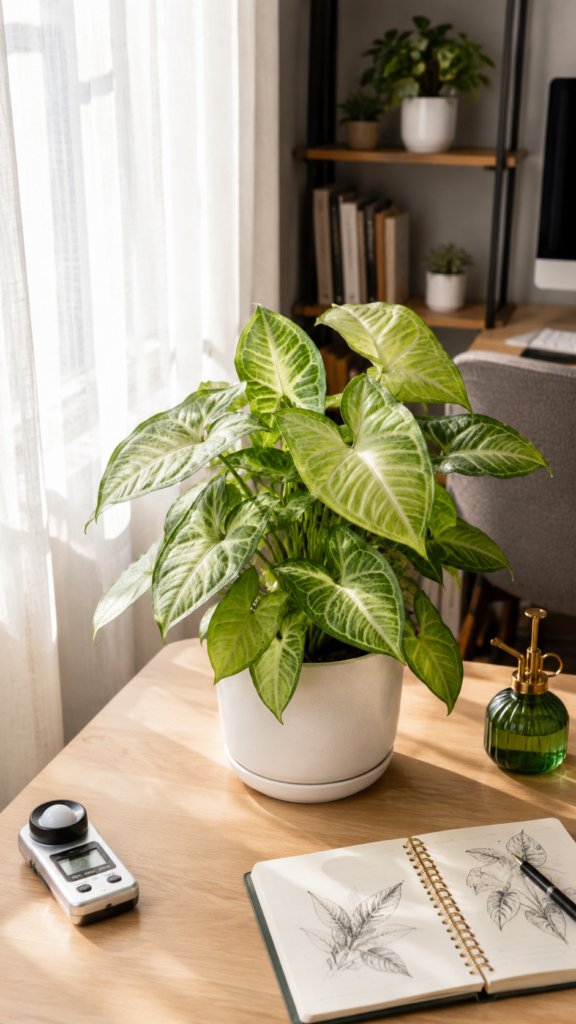
Understanding your arrowhead plant’s light needs helps it grow well. Watch how it reacts to different lights and adjust to keep it happy.
| Lighting Condition | Arrowhead Plant Response |
|---|---|
| Bright, indirect light | Thrives, with healthy growth and vibrant leaves |
| Direct sunlight | May become scorched, with discolored or damaged leaves |
| Low light | May become leggy, with reduced growth and pale leaves |
👉 Arrowhead Plants love bright, indirect light. These tools help you find the perfect spot indoors.
☀️ Plant Light Meter: Meter LX1330B Light Meter
💡 Indoor Grow Light: GooingTop LED Grow Light for Indoor Plants
🪟 Sheer Window Curtains: Light Filtering Sheer Curtains
Proper Watering Techniques
Watering is key to keeping an arrowhead plant healthy. It’s important to find the right balance. You want to give it enough moisture but not too much.
When watering your arrowhead plant, consider a few things. Think about the water quality and temperature, how often to water, and signs of bad watering. Here are some tips to help:
Water Quality and Temperature
Use water that’s room temperature. Cold water can shock your plant’s roots. Also, avoid tap water because it can have too much fluoride and minerals.
Watering Frequency
Check the soil’s top inch for dryness before watering. How often you water depends on your home’s humidity, temperature, and the season. Here’s a basic guide:
- Water every 7-10 days in spring and summer
- Water every 4-6 weeks in fall and winter
Signs of Improper Watering
Watch for signs of too much or too little water. Look for yellow leaves, droopy stems, or brown tips. If you see these, change your watering habits.
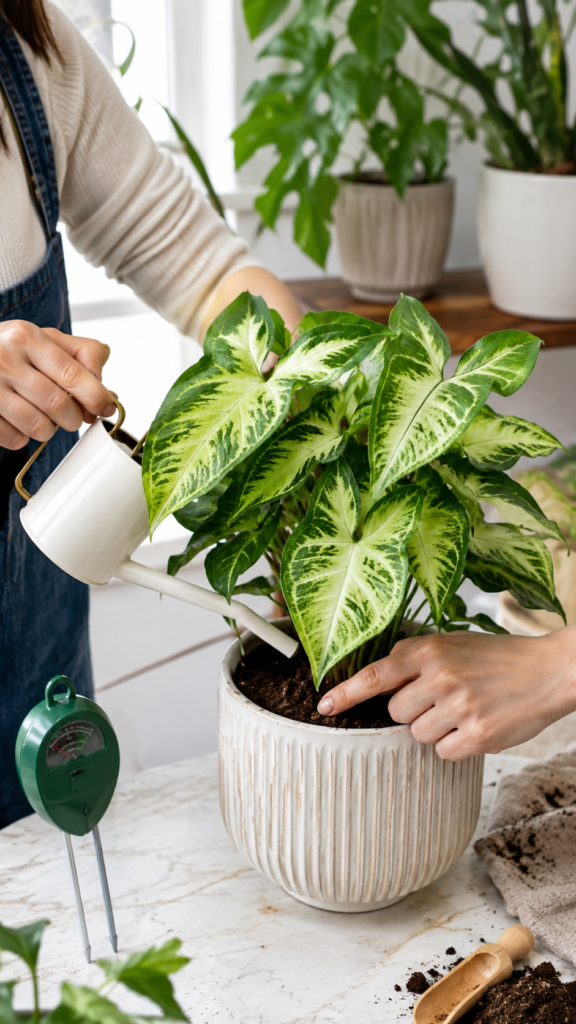
By following these tips and using the right watering techniques, your arrowhead plant will thrive. You’ll enjoy its beautiful, lush foliage.
| Watering Frequency | Season |
|---|---|
| Every 7-10 days | Spring and Summer |
| Every 4-6 weeks | Fall and Winter |
👉 Keep your Arrowhead Plant evenly moist without overwatering by using simple watering tools.
💧 Moisture Meter: XLUX Soil Moisture Meter
🚿 Indoor Watering Can: Small Long-Spout Watering Can
🪴 Self-Watering Pot: Self-Watering Planter with Drainage
Optimal Soil and Potting Mix
The right soil and potting mix are key for your arrowhead plant’s health. Look for a mix with the right pH, nutrients, and drainage. A mix that drains well is crucial to avoid waterlogged soil and root rot.
Here are some key factors to consider when selecting a potting mix for your arrowhead plant:
- Look for a potting mix that is specifically designed for tropical plants like the arrowhead plant.
- Choose a mix that contains a balanced blend of nutrients, including nitrogen, phosphorus, and potassium.
- Consider a potting mix that contains ingredients like peat moss or coconut coir, which can help retain moisture and improve drainage.
Repotting your arrowhead plant can also be beneficial, as it allows you to refresh the soil and provide a larger pot if necessary. When repotting, carefully take the plant out of its pot, ensuring the roots remain intact.
Then, place the plant in a new pot with fresh potting mix, and water thoroughly.
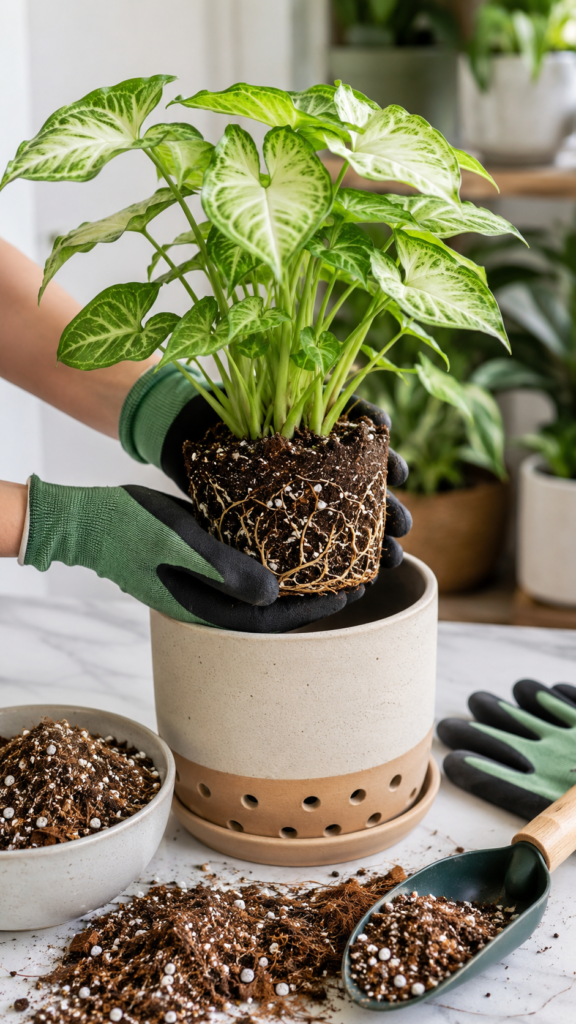
By choosing the right soil and potting mix, and repotting your arrowhead plant as needed, you can help ensure your plant stays healthy and thrives. Remember to monitor your plant’s condition and adjust its care accordingly, and don’t hesitate to reach out if you have any further questions or concerns.
| Potting Mix Ingredient | Benefits |
|---|---|
| Peat Moss | Retains moisture, improves drainage |
| Coconut Coir | Improves drainage, reduces soil compaction |
| Nitrogen | Promotes healthy leaf growth |
👉 A well-draining soil mix helps prevent root rot and keeps your arrowhead plant healthy.
🌱 Indoor Potting Mix: Miracle-Gro Indoor Potting Mix
🪨 Perlite for Drainage: Espoma Organic Perlite
🥥 Coco Coir: Burpee Organic Coconut Coir
Temperature and Humidity Needs
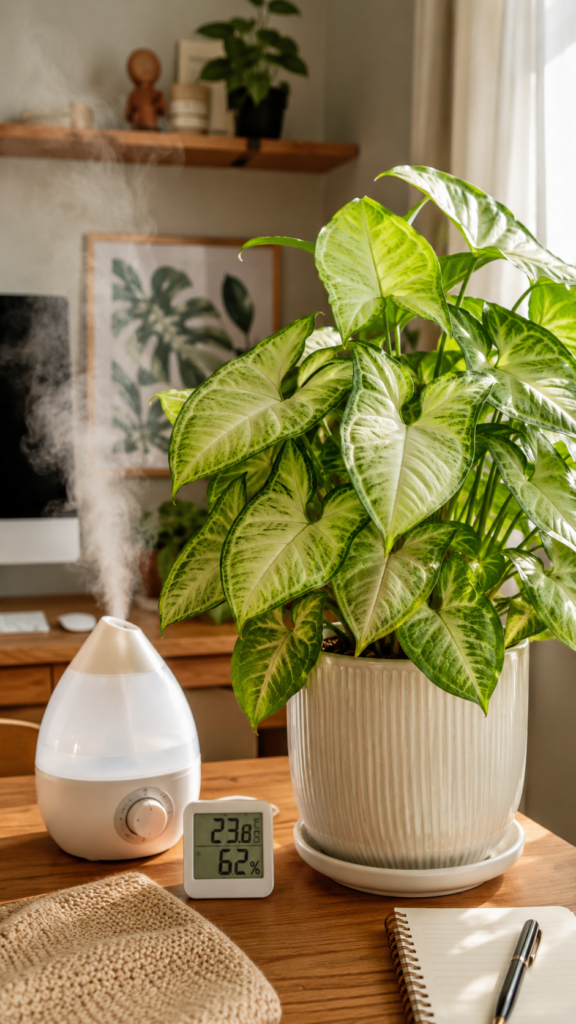
The arrowhead plant loves warm, humid places but can do well in regular home conditions. Keeping the temperature and humidity steady is key to its health. It grows best in temperatures between 65-75°F (18-24°C) and humidity of 50-70%.
It’s important to keep the humidity up, especially in dry places. You can do this by putting the plant on a tray with water and pebbles or using a humidifier. Remember, the arrowhead plant likes high humidity but can’t handle too much.
Ideal Temperature Range
The arrowhead plant likes a steady temperature, avoiding big changes. It’s best in 65-75°F (18-24°C), but can handle 55-85°F (13-29°C) for a bit.
Humidity Management Methods
- Place the plant on a tray filled with water and pebbles
- Use a humidifier to maintain a stable humidity level
- Group plants together to create a microclimate
Seasonal Adjustments
In spring and summer, the arrowhead plant needs more humidity and warmth. In fall and winter, lower the humidity and temperature to help it rest and avoid root rot. Making these changes helps your plant stay healthy all year.
| Season | Temperature | Humidity |
|---|---|---|
| Spring/Summer | 65-75°F (18-24°C) | 50-70% |
| Fall/Winter | 55-65°F (13-18°C) | 40-60% |
👉 Arrowhead Plants enjoy warm rooms and extra humidity, especially in dry indoor spaces.
💨 Plant Humidifier: LEVOIT Cool Mist Humidifier
🌡️ Humidity Meter: ThermoPro Digital Hygrometer
🪨 Pebble Tray: Humidity Tray for Indoor Plants
Fertilization Schedule and Requirements
The arrowhead plant needs a balanced fertilization schedule to grow well. Fertilization helps it develop healthily. The right fertilizer makes a big difference.
Use a water-soluble fertilizer that’s full of nutrients. A balanced fertilizer gives your plant what it needs to grow. Don’t fertilize too often, as it can harm the plant. Fertilize every two to three weeks when it’s growing.
- Use a water-soluble fertilizer that is rich in essential nutrients
- Fertilize every two to three weeks during the growing season
- Monitor your plant’s response to fertilization and adjust the schedule as needed
Don’t make the fertilizer too strong. It can hurt your plant’s roots. By following a good fertilization plan, your arrowhead plant will grow well. You’ll get to enjoy its beautiful leaves.
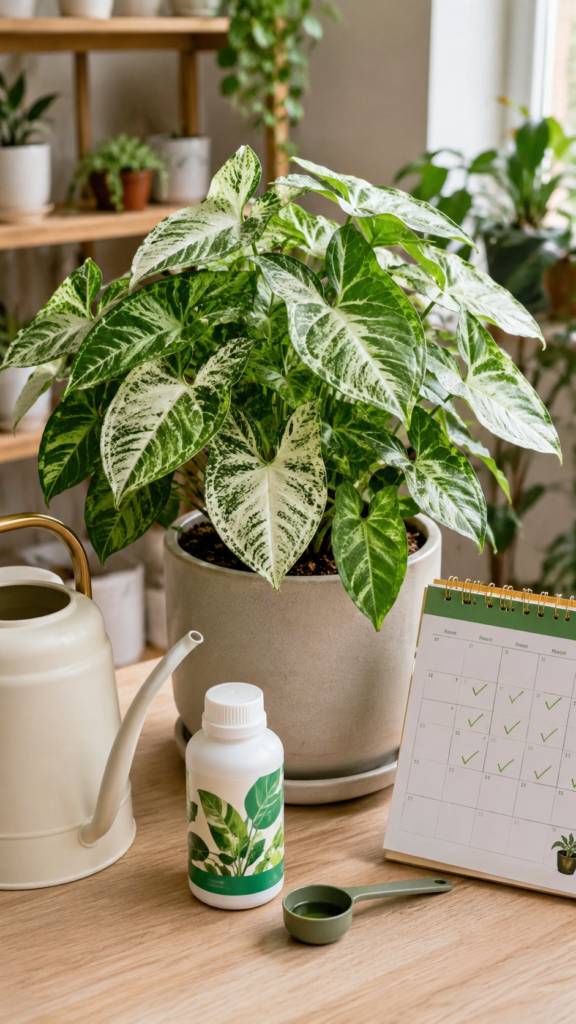
“A balanced fertilization schedule is key to promoting healthy growth and development in your arrowhead plant. By providing your plant with the necessary nutrients, you can enjoy its beautiful, lush foliage and keep it thriving for years to come.”
👉 Feed your Arrowhead Plant during the growing season to support lush, vibrant foliage.
🌿 Liquid Plant Fertilizer: Miracle-Gro Indoor Plant Food
🪴 Organic Plant Food: Espoma Organic Indoor Plant Food
Pruning and Maintenance
Keeping your arrowhead plant healthy means regular pruning and care. Pruning helps shape the plant and keeps it growing well. It also stops diseases from spreading. Start by cutting off any dead or damaged parts.
It’s important to keep your tools clean to avoid disease. Mix water with bleach to sterilize your pruning tools. Also, water your plant right to avoid root rot and other issues.
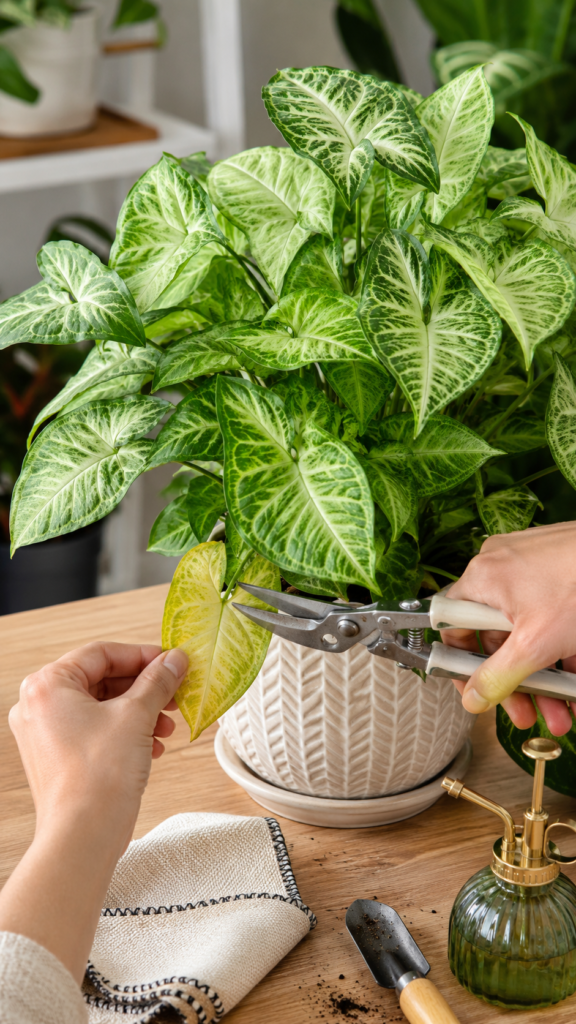
- Prune your arrowhead plant during the spring and summer months when it’s actively growing.
- Use sharp, clean tools to prevent spreading disease.
- Remove any dead or damaged leaves or stems to promote healthy growth.
- Water your plant properly, avoiding overwatering.
Follow these tips to keep your arrowhead plant healthy and vibrant. Always use clean tools to prevent disease. And make sure to water it right to avoid overwatering.
| Pruning Tool | Cleaning Method |
|---|---|
| Pruning Shears | Mixture of water and bleach |
| Pruning Saw | Soap and water |
👉 Regular pruning keeps your arrowhead plant bushy, clean, and attractive.
✂️ Pruning Shears: Fiskars Micro-Tip Pruning Snips
🧤 Gardening Gloves: Pine Tree Tools Bamboo Gardening Gloves
🧽 Leaf Cleaning Cloth: Microfiber Cleaning Cloths
Propagation Methods
Sharing your arrowhead plant with others or growing new ones is easy. You can use stem cuttings, division, or layering. Knowing how to do these methods and giving the right care is key for success.
Some important things to remember for arrowhead plant propagation include:
- Using healthy stem cuttings with at least two nodes
- Dividing the plant during the spring or summer months when it’s actively growing
- Providing the right amount of water and nutrients for the new plants
By following these tips and techniques, you can successfully propagate your arrowhead plant and enjoy its beautiful, lush foliage.
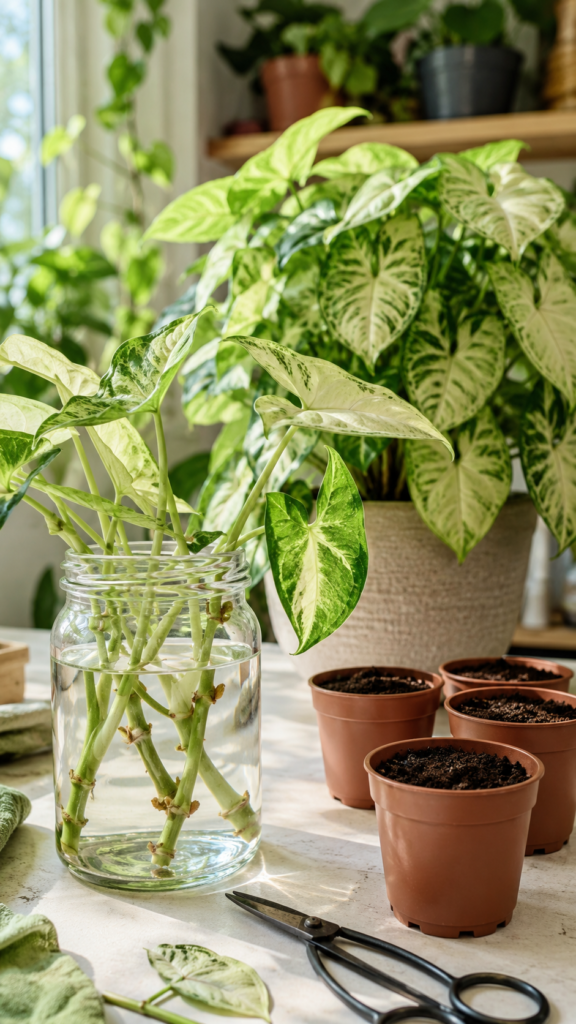
Here is a summary of the propagation methods:
| Method | Description |
|---|---|
| Stem Cuttings | Take 4-6 inch stem cuttings with at least two nodes and plant them in a well-draining potting mix |
| Division | Divide the plant during the spring or summer months, making sure each section has at least one growing node |
| Layering | Bend a long stem down to the soil and secure it with a rock or a U-shaped wire, allowing the node to touch the soil |
With the right techniques and care, you can successfully propagate your arrowhead plant and enjoy its beauty for years to come.
👉 Propagate Arrowhead Plant cuttings in water or soil with simple propagation supplies.
🌱 Propagation Station: Glass Plant Propagation Station
🪴 Small Nursery Pots: Plastic Plant Pots with Drainage
🌿 Rooting Hormone: Garden Safe TakeRoot Rooting Hormone
Common Pests and Diseases
Arrowhead plant owners often face pests and diseases that can harm their plants. It’s key to spot these problems early. The arrowhead plant can get damaged by pests like spider mites, mealybugs, and scale.
Regularly check your plant for signs of pests. Look for tiny webs on leaves, white powdery patches, or small, moving dots on stems. If you see these, act fast to stop the problem from getting worse.
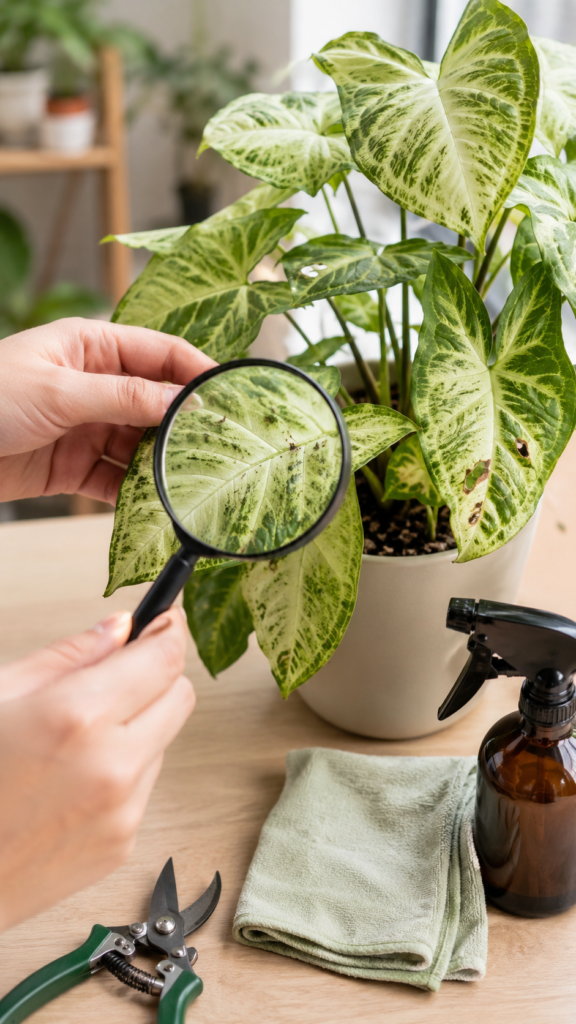
Common diseases include root rot, leaf spot, and crown rot. These can come from overwatering, poor air circulation, or contaminated soil. To avoid these, secure water rights, ensure good air flow, and use draining soil.
To fight pests and diseases, use insecticidal soap or neem oil for pests, and fungicides for diseases. Also, remove any sick leaves or stems to stop disease spread. These steps will help your arrowhead plant stay healthy and strong.
| Pest/Disease | Symptoms | Treatment |
|---|---|---|
| Spider Mites | Tiny webs on leaves | Insecticidal soap |
| Root Rot | Soft, mushy stems | Improve air circulation, reduce watering |
| Mealybugs | White powdery patches on stems | Neem oil |
👉 Protect your Arrowhead Plant from spider mites, mealybugs, and fungal problems with gentle plant-care products.
🐛 Neem Oil Spray: Bonide Captain Jack’s Neem Oil
🧼 Insecticidal Soap: Safer Brand Insect Killing Soap
🔍 Magnifying Glass: Handheld Magnifying Glass for Pest Inspection
Troubleshooting Growth Issues
Arrowhead plants can face growth problems. If your plant isn’t growing right, there might be a reason. Issues like yellow leaves, droopy stems, and slow growth are common. Finding the cause is key to fixing these problems.
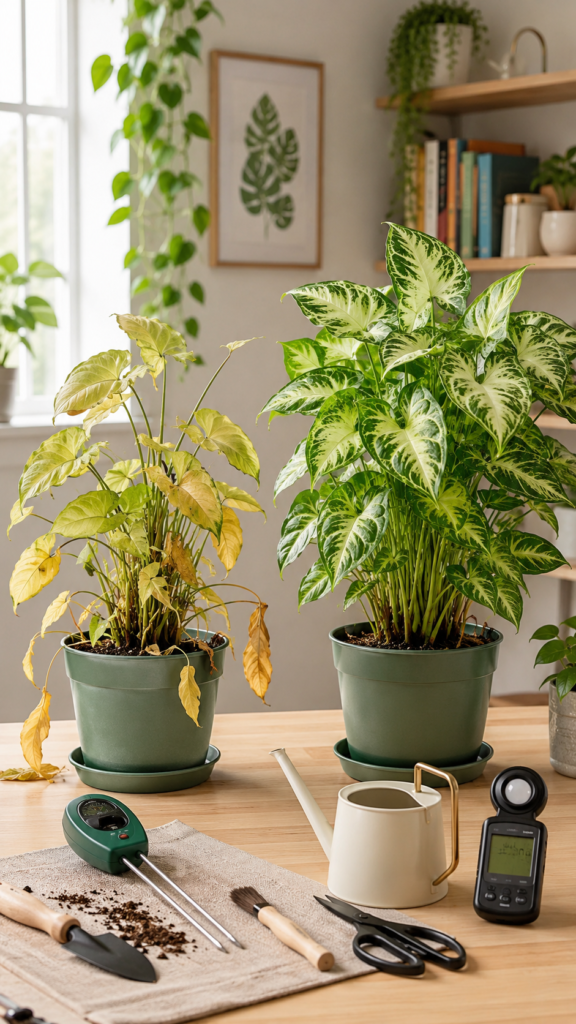
Light, water, and soil quality can affect your plant’s growth. To help it grow well, give it the right conditions. This means bright, indirect light, careful watering, and good soil.
- Check the light: Ensure your arrowhead plant is receiving the right amount of light. If it’s not getting enough light, consider moving it to a brighter location.
- Adjust watering: Make sure you’re not overwatering your plant. Allow the soil to dry slightly between waterings to prevent root rot.
- Improve soil quality: Use a high-quality potting mix that drains well to prevent waterlogged soil.
By fixing the root cause of growth issues, your arrowhead plant can thrive. With proper care, it will grow and flourish again.
👉 Yellow leaves, drooping stems, and slow growth are easier to fix with the right diagnostic tools.
💧 Soil Moisture Meter: XLUX Soil Moisture Meter
☀️ Plant Light Meter: Digital Light Meter for Indoor Plants
🪴 Plant Care Journal: Houseplant Care Planner Notebook
Seasonal Care Guide
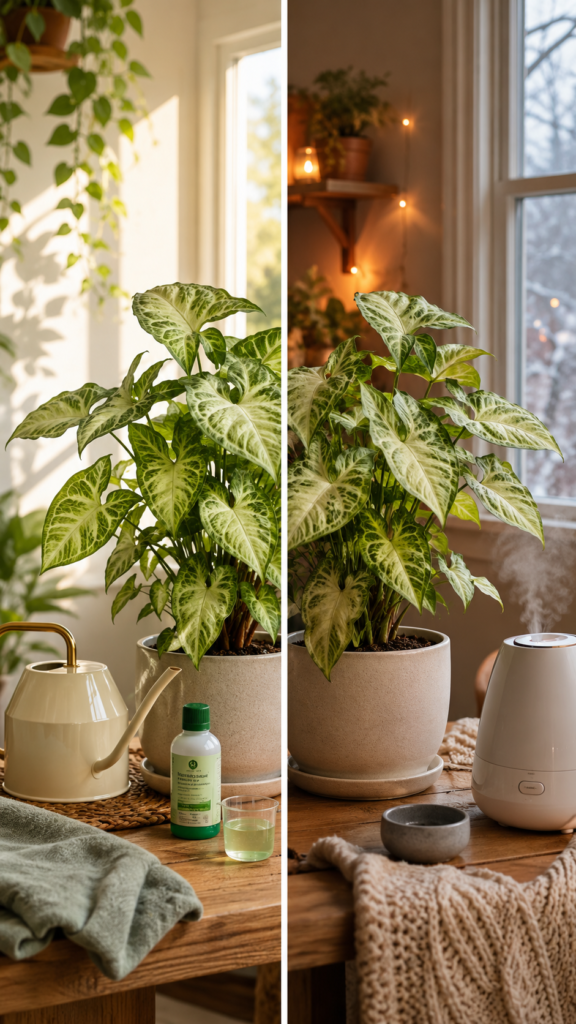
To keep your arrowhead plant thriving, adjust its care with the seasons. As seasons change, your plant’s needs shift. Providing the right conditions keeps it healthy and lush.
In spring and summer, your plant needs more water and food. Increased humidity and warmer temperatures help it grow. Give it plenty of indirect sunlight and keep the temperature between 65-75°F (18-24°C).
Spring and Summer Care
- Water your arrowhead plant every 7-10 days, or when the top 1-2 inches of soil feels dry to the touch
- Fertilize your plant with a balanced, water-soluble fertilizer every 2-3 weeks
- Prune your plant regularly to maintain its desired shape and promote new growth
Fall and Winter Adjustments
In fall and winter, your plant needs less water and food. Reduced humidity and cooler temperatures slow growth. Adjust your care routine to match.
Follow these seasonal care tips to keep your arrowhead plant thriving all year. Watch how it responds to the seasons and adjust its care as needed. This ensures it stays healthy and grows well.
👉 Adjust light, watering, humidity, and feeding as the seasons change.
📅 Plant Care Calendar: Indoor Plant Care Planner
💡 Winter Grow Light: Full Spectrum LED Grow Light
💨 Mini Humidifier: Small Cool Mist Humidifier for Plants
Decorative Uses and Styling Tips
The arrowhead plant is a versatile and attractive addition to any home or office. It offers a range of decorative uses. One of the most popular ways to showcase this plant is in hanging baskets. Here, its trailing stems can cascade down and create a beautiful display.

Another creative way to use the arrowhead plant is in terrariums. Here, its unique shape and texture can add visual interest to the arrangement. With proper care and maintenance, the arrowhead plant can thrive in a variety of environments. This makes it an ideal choice for decorative purposes.
Some other decorative uses for the arrowhead plant include:
- Tabletop arrangements, where the plant can be paired with other decorative elements to create a unique and eye-catching display
- Wall-mounted planters, where the arrowhead plant can be trained to climb up the wall and create a lush, green backdrop
- Seasonal arrangements, where the plant can be paired with other seasonal elements, such as flowers or branches, to create a festive and decorative display
By incorporating the arrowhead plant into your decorative arrangements, you can add a touch of natural beauty and elegance to your space. Its unique shape and versatile growth habits make it an ideal choice for a range of decorative uses. This includes hanging baskets to tabletop arrangements.
| Decorative Use | Description |
|---|---|
| Hanging Baskets | Arrowhead plant trails down, creating a beautiful display |
| Terrariums | Unique shape and texture add visual interest to the arrangement |
| Tabletop Arrangements | Paired with other decorative elements for a unique display |
Conclusion
Our journey into the Arrowhead Plant world shows its value. This plant is great for any indoor space. With the right care, it can make your home or office look and feel better.
The Arrowhead Plant is perfect for both new and experienced gardeners. It grows well in different light and helps clean the air. It’s a beautiful addition to any plant collection.
Following this guide will help you enjoy your Arrowhead Plant. With care and attention, it will grow and bring joy for many years.
FAQ
What is the Arrowhead Plant?
The Arrowhead Plant, also known as Syngonium podophyllum, is a houseplant from Central and South America. It has beautiful, arrowhead-shaped leaves and can grow up to 3-4 feet tall.
What are the essential light requirements for an arrowhead plant?
Arrowhead Plants need bright, indirect light. They can handle some direct sunlight in the morning or evening. But too much direct sunlight can burn the leaves. It’s important to provide the right light for your plant’s health.
How should I water my Arrowhead Plant?
Watering your arrowhead plant correctly is key. It likes moist soil but avoids too much water. Water when the top inch of soil feels dry. Use room temperature or cooler water. Don’t let the plant sit in water to prevent root rot.
What type of soil and potting mix is best for an Arrowhead Plant?
Arrowhead plants do well in well-draining, nutrient-rich soil. The soil should be slightly acidic, between 6.0 and 6.5 pH. Use a good potting mix or a mix of potting soil, perlite, and compost.
What temperature and humidity levels do arrowhead plants prefer?
They like warm temperatures, between 65°F and 80°F. They also prefer high humidity, between 50% and 70%. To keep humidity right, mist the leaves, use a pebble tray, or place the plant near a humidifier.
How do I propagate an arrowhead plant?
You can propagate arrowhead plants through stem cuttings, division, or layering. Take a stem cutting below a leaf node, remove the lower leaves, and plant it in moist potting mix or water. You can also divide the plant at the roots or lay a stem on the soil to encourage new growth.
What are some common pests and diseases that can affect Arrowhead Plants?
Arrowhead plants can get pests like spider mites, mealybugs, and aphids. They can also get diseases like root rot or fungal infections if the soil is too wet. Regularly check your plant and take steps to prevent these problems.
How can I troubleshoot growth issues with my arrowhead plant?
If your arrowhead plant isn’t growing right, it might be due to bad lighting, wrong watering, or not enough nutrients. Yellow leaves, droopy stems, or slow growth are signs of a problem. Check the plant’s environment and care to find and fix the issue.