Fuchsia Plant Care 101: How to Grow, Prune & Rebloom
This article may contain affiliate links. As an Amazon Associate, I earn from qualifying purchases at no extra cost to you.
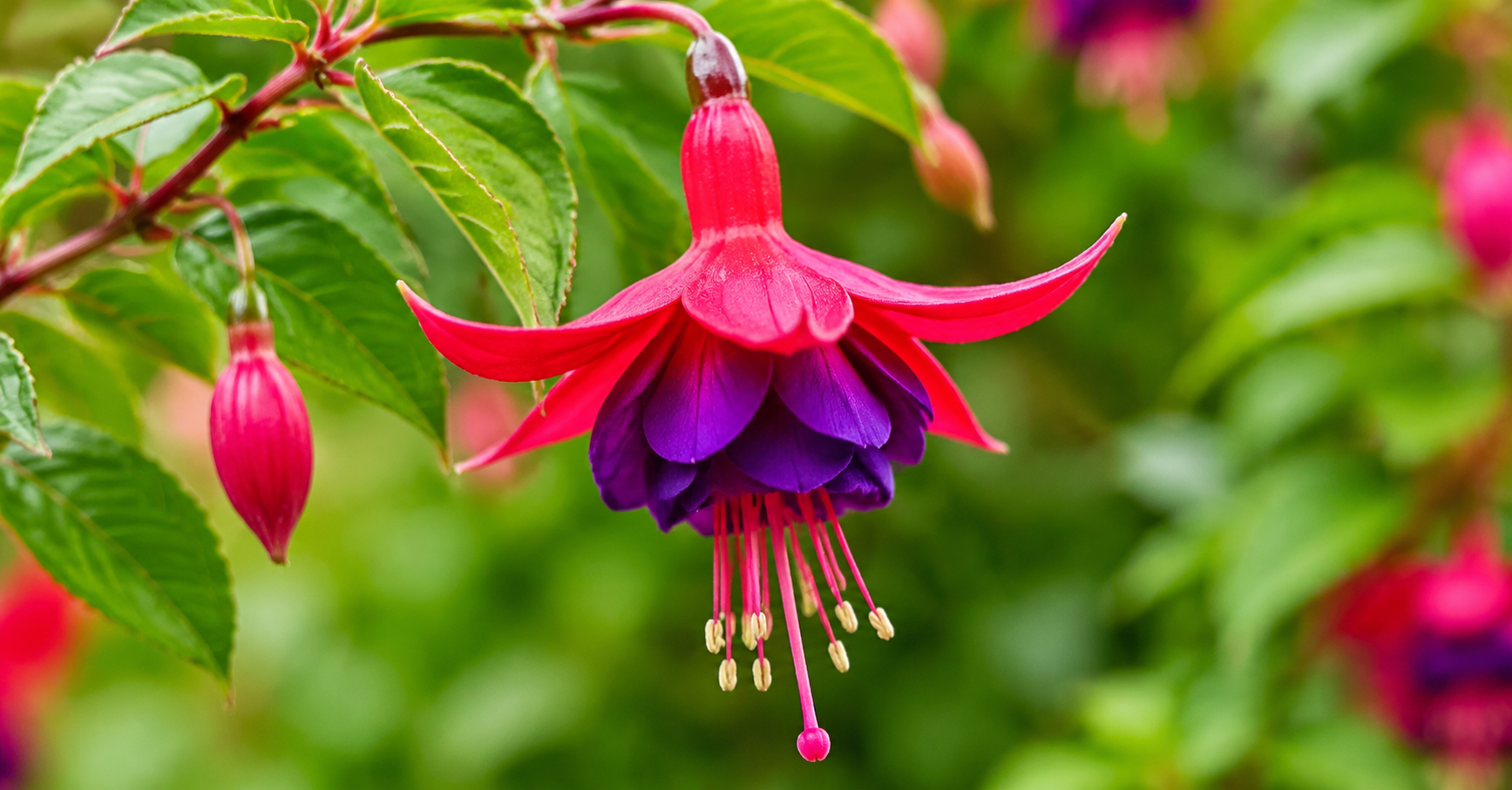
Fuchsias are shrubs and trailing plants known for dangling, two-toned flowers in pink, purple, red, and white, and hummingbirds visit them. Fuchsia plant care depends on the type: hardy fuchsias, mainly Fuchsia magellanica types can stay outdoors through winter in milder zones, while tender hybrids are grown in hanging baskets and pots and moved indoors where winters are cold. Most share the same basics: bright light without hot afternoon sun, evenly moist but well-drained soil, regular feeding, cool temperatures, and pinching or pruning for fuller growth. Heat is their main enemy. This guide covers watering, soil, feeding, pruning, getting more flowers, propagation, overwintering, pests, and pet safety. Fuchsias are generally considered non-toxic to dogs and cats.
Recommended Products for Getting Started With Fuchsia
- 🪴 Hanging Baskets or Pots with Drainage Holes—Check price on Amazon
- 🌱 Quality Potting Mix for Containers—Check price on Amazon
- 🌸 Water-Soluble Balanced Fertilizer—Check price on Amazon
Fuchsia Plant Care at a Glance
Fuchsia Care Requirements
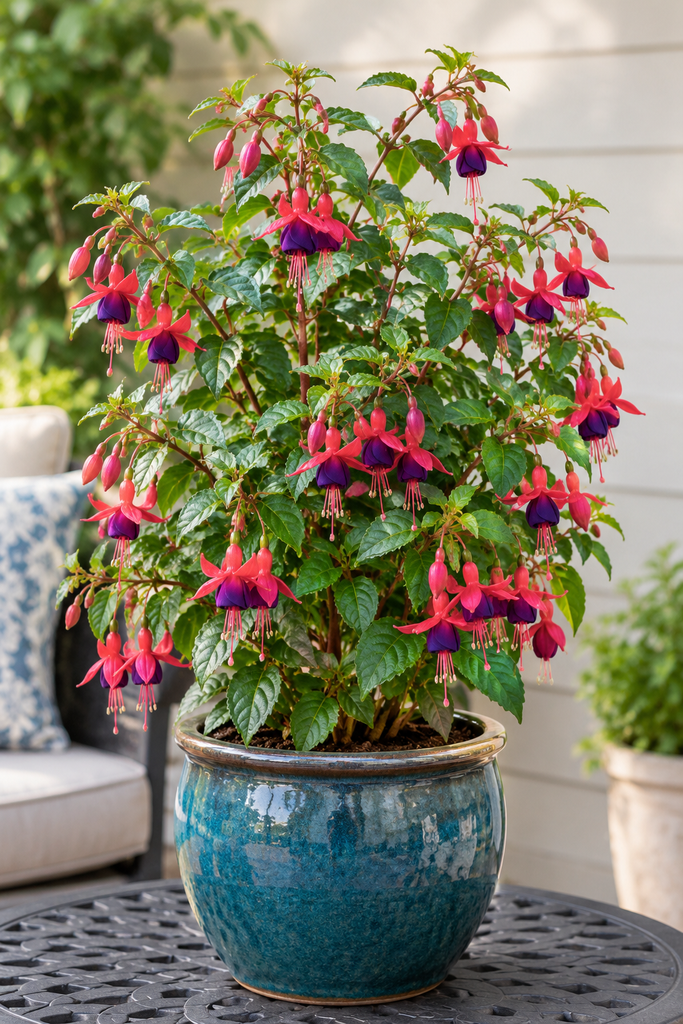
The table covers common garden and basket fuchsias. Check your plant tag, because hardiness and heat tolerance vary by cultivar.
| Factor | What it needs | Key detail |
|---|---|---|
| Light | Bright, filtered light or part shade; morning sun is best. | A hot afternoon sun scorches leaves and drops buds. |
| Watering | Keep evenly moist, never soggy, and never bone dry. | Baskets may need water daily in warm weather. |
| Soil | Rich, well-drained potting mix or amended soil | Drainage holes are essential. |
| Temperature | Cool to moderate, roughly 55–80°F (13–27°C) | Heat stress is the most common problem; tender types die in frost |
| Fertilizer | Regular light feeding in containers | Balanced liquid feed every couple of weeks during growth |
| Flowering | Blooms on new growth from spring to fall | Deadheading and pinching keep plants full |
Indoor vs. Outdoor Growing Conditions
Fuchsias are mainly outdoor plants for porches, shaded patios, borders, and hanging baskets. Indoors, they struggle with dry heating air and limited light, though they can be overwintered in a cool, bright spot. Hardy types can live outdoors year-round in suitable zones, while tender types are grown as annuals or brought inside.
How Difficult Is Fuchsia to Grow?
Fuchsias are moderately easy in cool, moist climates and more demanding in hot, dry ones. They need steady moisture, regular feeding, and protection from heat. Once you match the plant to the spot, they reward you with months of flowers.
1. What Is a Fuchsia Plant?
Botanical Background and Growth Habits
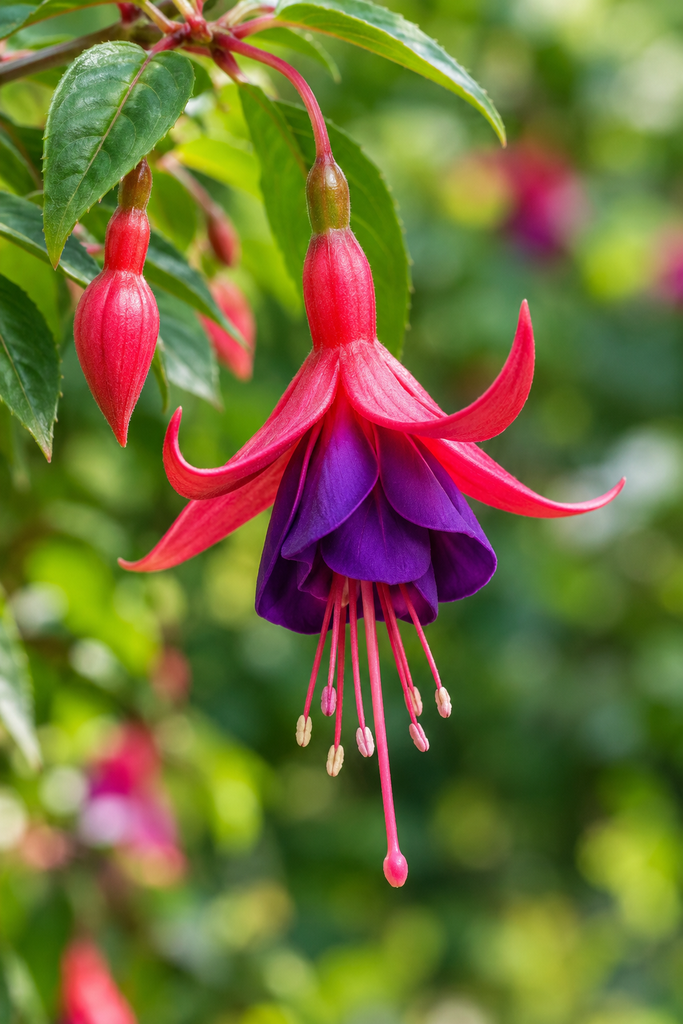
Fuchsia belongs to the evening primrose family (Onagraceae) and includes over a hundred species, many native to Central and South America and a few to New Zealand and Tahiti. The plants range from small shrubs to trailing forms. The pendant flowers have showy outer sepals and a ruffled inner skirt of petals, often in contrasting colors. Many bloom on new growth and later form small berries.
Why Fuchsia Is Popular as a Garden Plant
Fuchsias bring color to shade, work beautifully in hanging baskets, attract hummingbirds, and flower for months. Trailing types suit baskets and window boxes, upright types suit borders and patio pots, and some can be trained as standards or small tree forms.
How Long Can a Fuchsia Plant Live?
Hardy fuchsias can live for many years in the ground in suitable climates. Tender fuchsias can also last for years if they are overwintered and renewed from cuttings but are often treated as annuals. Lifespan depends on type, climate, and care.
2. How Much Sunlight Does Fuchsia Need?
The Best Light for Fuchsias
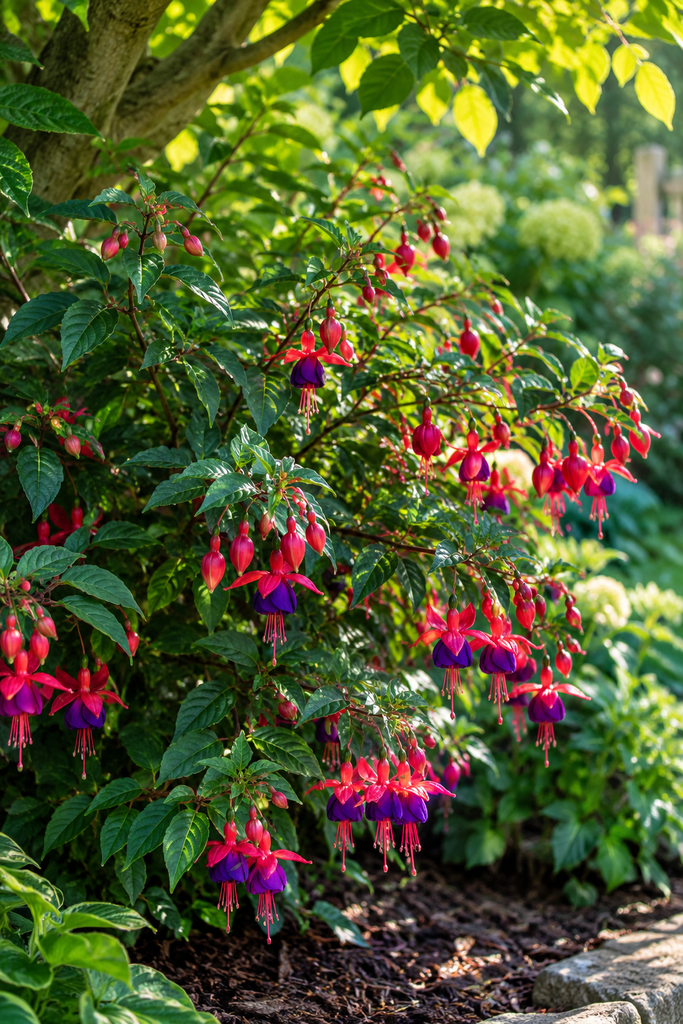
Fuchsias grow best in bright, filtered light or part shade. Morning sun with afternoon shade is ideal, especially in warmer regions. In cool coastal climates, they tolerate more sun, while in hot inland areas they need deeper shade and extra water.
Can Fuchsia Grow in Direct Sun?
Some can in cool climates, but most fuchsias dislike hot direct sun. Afternoon sun can scorch leaves, drop buds, and dry baskets out quickly. Heat-tolerant cultivars exist, but even they appreciate afternoon shade.
Signs of Too Much or Too Little Light
- Too much: Scorched, brown, crispy leaf edges; wilting by midday despite moist soil; flower and bud drop.
- Too little: Sparse flowering, stretched stems, and small pale leaves.
Where to Place Fuchsia in Your Garden or on a Patio
Hang baskets on a porch, under an eave, or beneath a tree where they get morning light and afternoon shade. Plant hardy types in borders with morning sun or dappled shade. Shelter them from strong wind, which dries them out and breaks brittle stems.
3. How Often Should You Water Fuchsia?
How to Tell When Your Fuchsia Needs Water
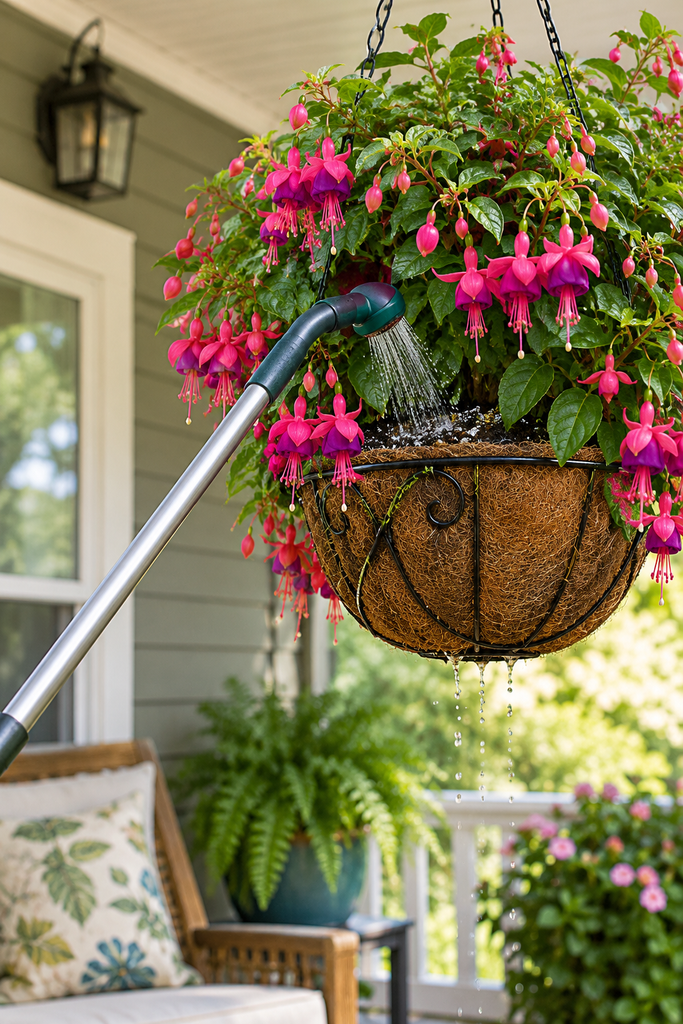
There is no fixed schedule. Fuchsias like consistently moist soil and wilt quickly when dry, but they dislike sitting in soggy soil. Push a finger an inch into the soil. If it is dry, water. In hanging baskets, lift the basket to judge weight, because baskets dry out much faster than ground soil, sometimes daily in hot weather.
The Best Way to Water Fuchsia
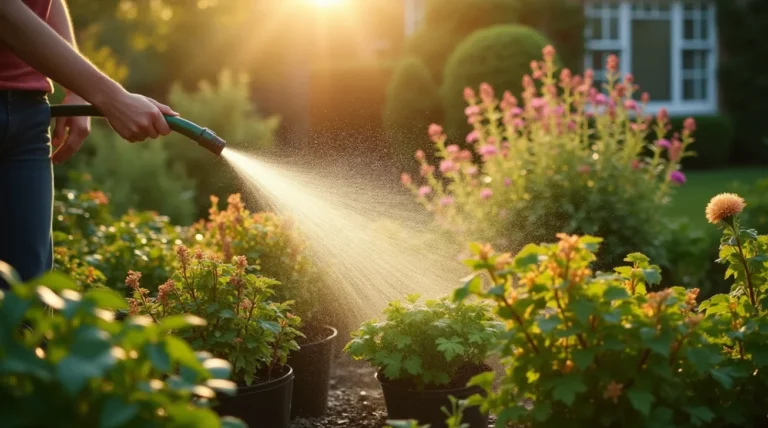
Water slowly at the soil level until it runs from the drainage holes, then let it drain. Avoid wetting the foliage and flowers late in the day, which can encourage fungal disease. If a basket has dried out completely, soak it in a bucket of water for 15–30 minutes to rehydrate the mix.
Fuchsia Watering in Summer and Winter
In warm weather, containers need frequent watering, and in hot spells even twice a day. In winter, plants that are overwintered indoors or dormant need far less water, just enough to keep the soil from drying out completely.
Signs of Overwatering and Underwatering
- Overwatering: Yellowing leaves, drooping stems on wet soil, leaf and bud drop, mold on the soil, and a soft stem base.
- Underwatering: Wilting that recovers after watering, dry crispy leaf edges, soil pulling away from the pot, and flower or bud drop.
How to Fix an Overwatered Fuchsia
- Stop watering until the top inch or two of soil is dry.
- Make sure the pot drains freely and the saucer is empty.
- Move the plant to a spot with better airflow, out of rain.
- If the plant keeps declining, slide it out and check the roots. Healthy roots are pale and firm. Brown, mushy roots are rotting. Trim them and repot in a fresh, well-drained mix.
Recommended Products for Watering Fuchsia
- 💧 Watering Wand for Hanging Baskets—Check price on Amazon
- 📏 Soil Moisture Meter (a rough guide only; confirm with your finger) — Check price on Amazon
4. What Is the Best Soil for Fuchsia?
Choosing a Well-Draining Soil Mix
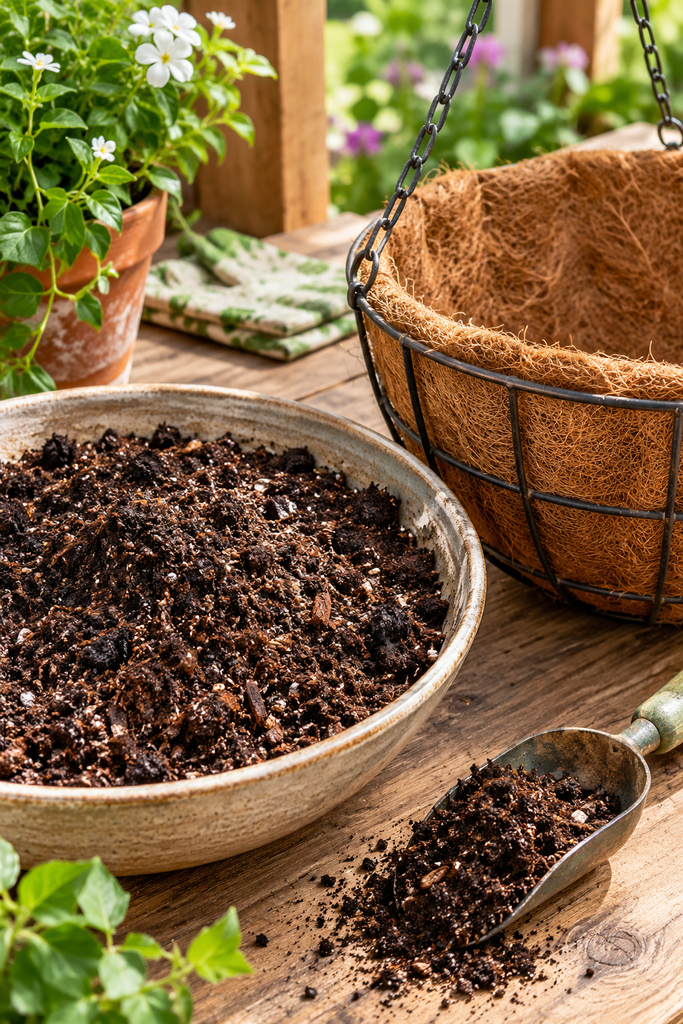
Fuchsias want rich, organic, well-drained soil that holds some moisture. In containers, use a quality potting mix with compost, and add perlite if it feels heavy. In the ground, amend poor or sandy soil with compost, and mulch to hold moisture and cool the roots.
A bagged quality potting mix for containers is a simple base for baskets and pots.
Can You Use Regular Garden Soil or Potting Soil?
Garden soil from the yard compacts in pots and drains poorly, so avoid it in containers. Standard potting mix works well for fuchsias as long as it drains freely. Do not use heavy clay soil without amending it.
Choosing the Right Pot and Drainage Holes
Choose a pot or basket with drainage holes. Larger baskets hold more water and are easier to keep evenly moist in summer. Plastic and glazed pots hold moisture longer than terracotta, which can dry out too fast for fuchsias in warm weather.
How to Prevent Root Rot
Use a free-draining mix, make sure water can leave the pot, avoid leaving it in standing water, and water only when the top of the soil begins to dry. Keep plants out of constant rain and give them airflow.
Recommended Products for Fuchsia Soil and Pots
- 🌱 Quality Potting Mix for Containers—Check price on Amazon
- 🪴 Hanging Baskets with Coco Liners or Pots with Drainage Holes—Check price on Amazon
5. Ideal Temperature and Humidity for Fuchsia
The Best Temperature Range
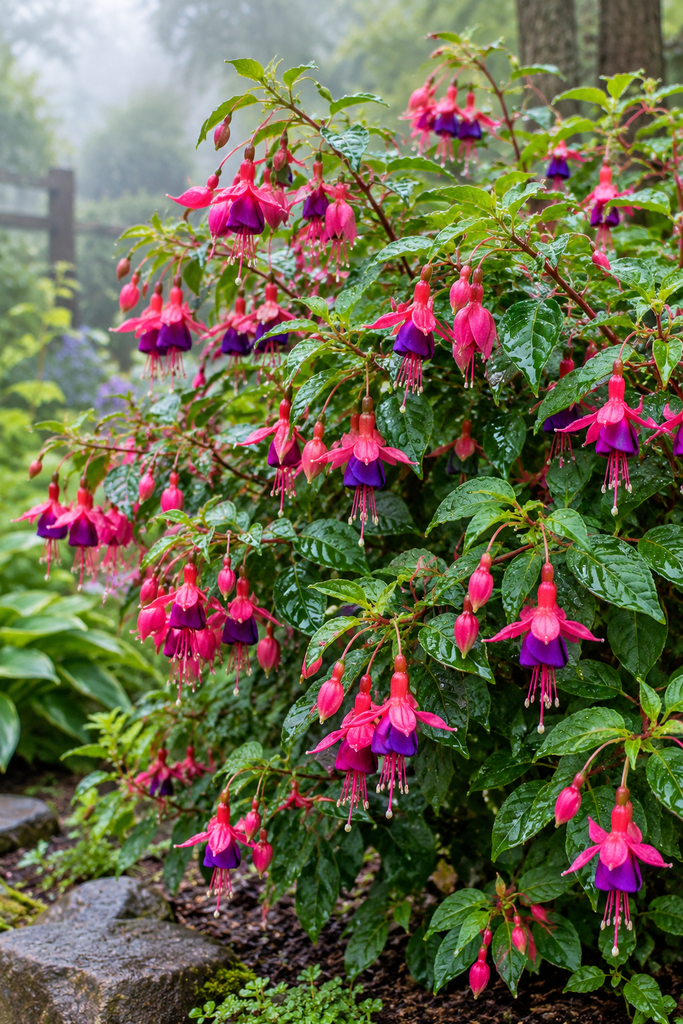
Fuchsias grow best in cool to moderate weather, roughly 55–80°F (13–27°C), and flower most freely in mild summers. When temperatures climb above that range, many fuchsias stop flowering, drop buds, and look stressed, although some cultivars are more heat tolerant. Check the plant tag if you live in a hot region.
Protecting Fuchsia From Cold and Frost
Tender fuchsias cannot survive frost and must be brought indoors or grown as annuals in cold regions. Hardy fuchsias can survive average winters in roughly zones 6–7 or higher, depending on the cultivar and winter, and they usually die back to the ground and regrow in spring. Mulch the base of hardy plants for extra protection in marginal zones.
Does Fuchsia Need High Humidity?
Fuchsias prefer moderate to high humidity and dislike hot, dry air. In dry climates, group plants together, keep soil evenly moist, and use shade to reduce water loss. Good airflow still matters, since stagnant, damp conditions encourage rust and botrytis.
Can You Grow Fuchsia Outdoors in the United States?
Yes, but the type and region matter. Fuchsias thrive in cool, moist regions such as the Pacific Northwest and coastal areas. They struggle in hot, dry inland climates and in the humid heat of the South, unless you pick heat-tolerant cultivars and give them shade and water. In cold regions, grow them as summer baskets and overwinter them indoors. Check with your local extension office for the best types for your area.
Recommended Products for Protecting Fuchsia From Heat
- 🌿 Shade Cloth for Garden Plants—Check price on Amazon
6. How and When to Fertilize Fuchsia
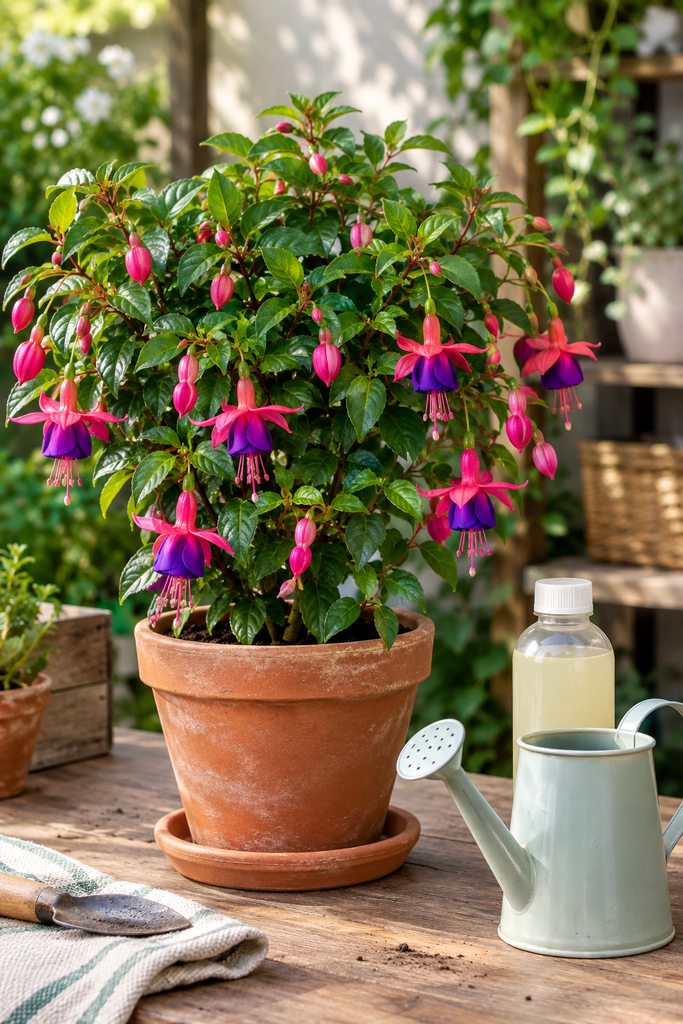
Choosing a Suitable Fertilizer
Container fuchsias are heavy feeders because frequent watering washes nutrients out. A balanced, water-soluble fertilizer works well, and some gardeners switch to a bloom-booster formula once flowering starts. Follow the label, and err on the side of weaker and more frequent feeding.
When to Feed Fuchsia During Active Growth
Feed container fuchsias every two to four weeks during the growing season, or more often at a weak dilution. Hardy fuchsias in borders may need feeding only once a year if growth is poor, plus a yearly mulch of compost. Feed when the soil is already moist, never when the plant is dry or stressed.
Fertilizing After Flowering
Fuchsias flower in repeated waves, so there is no single after-bloom feeding. After a trim, a light feed helps new growth. Reduce and stop feeding in late summer or fall as growth slows, and do not feed overwintering plants that are resting.
Common Fertilizing Mistakes
- Applying full-strength fertilizer, which can burn roots and leaf tips.
- Using too much nitrogen, which makes leafy growth and fewer flowers.
- Feeding dry or stressed plants.
- Letting salts build up in pots. Flush with plain water every few weeks and let it drain.
Recommended Products for Fertilizing Fuchsia
- 🌸 Water-Soluble Balanced or Bloom Fertilizer — Check price on Amazon
7. How to Make Fuchsia Bloom Again
Why Your Fuchsia Is Not Flowering
Common causes are heat, too little light, drying out, too much nitrogen, recent pinching or hard pruning, and pests such as gall mites or thrips distorting buds. Plants that are very young or still recovering from overwintering also take time to flower.
How Fuchsias Bloom: New Growth and Steady Care
Fuchsias flower on new growth. They do not need a special dark period or light trick. They need cool conditions, steady moisture, regular feeding, and fresh shoots. Pinching increases the number of flowering shoots but delays blooming, since it can take several weeks after the last pinch before flowers appear.
How to Encourage More Blooms
- Keep plants in bright shade or morning sun, out of hot afternoon sun.
- Water consistently and never let the root ball dry out.
- Feed lightly and regularly, and avoid heavy nitrogen.
- Deadhead spent flowers and berries.
- Pinch young plants early in the season, then stop pinching to let buds form.
- Check for pests, especially gall mites, which twist new growth.
How Long Does Fuchsia Take to Rebloom?
It varies with the cultivar, temperature, and pinching. After a trim or final pinch, new flowering shoots often take several weeks to bloom. There is no guaranteed date, and heat can delay blooming.
What to Do After the Flowers Fade
Remove faded flowers and developing berries, trim leggy stems, and continue watering and light feeding. New shoots will produce another wave of flowers. In fall, stop feeding and prepare to overwinter tender plants.
8. How to Prune Fuchsia for Healthy Growth
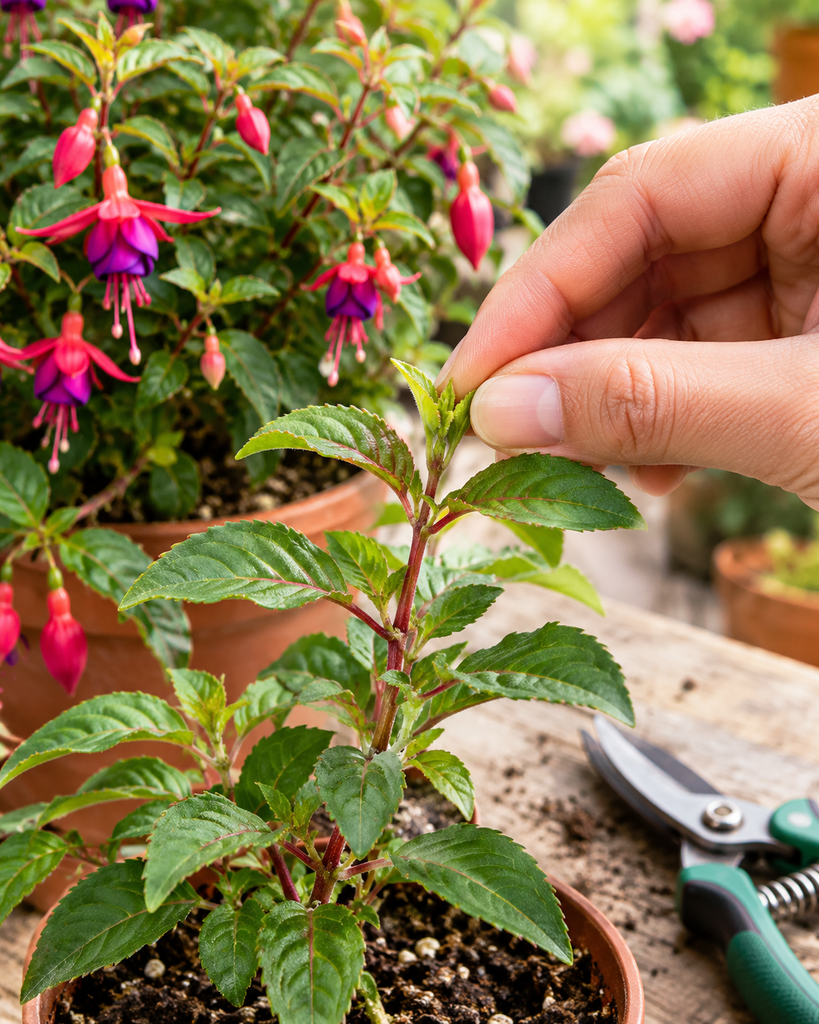
When to Prune Fuchsia
Prune hardy fuchsias in spring once new growth starts, rather than in fall, since the old stems help protect the crown over winter. Tender fuchsias can be trimmed in spring, or lightly before overwintering. Pinch young plants during early growth to make them bushier, and remove spent flowers any time.
How to Remove Spent Flowers
Pinch or snip off faded flowers along with the small developing berry beneath them, which directs energy into new blooms. Regular deadheading keeps baskets tidy and flowering.
Sharp, precision pruning snips make clean cuts on slender stems, and wiping the blades between plants helps prevent spreading disease.
How to Fix a Leggy Fuchsia
Leggy growth usually means too little light or no pinching. Move the plant to brighter shade, and cut stems back just above a pair of leaves so new side shoots form. Repeat light pinching on new growth until the plant is full, then let it flower.
Should You Cut Back Fuchsia After Flowering?
For tender fuchsias, trim lightly after a flowering wave to refresh growth, and cut back more firmly in late winter or early spring. Hardy fuchsias are usually left standing through winter and cut back in spring. Avoid cutting all the way into bare old wood, since that can stress the plant.
Recommended Products for Pruning Fuchsia
- ✂️ Precision Pruning Snips — Check price on Amazon
9. How to Propagate Fuchsia at Home
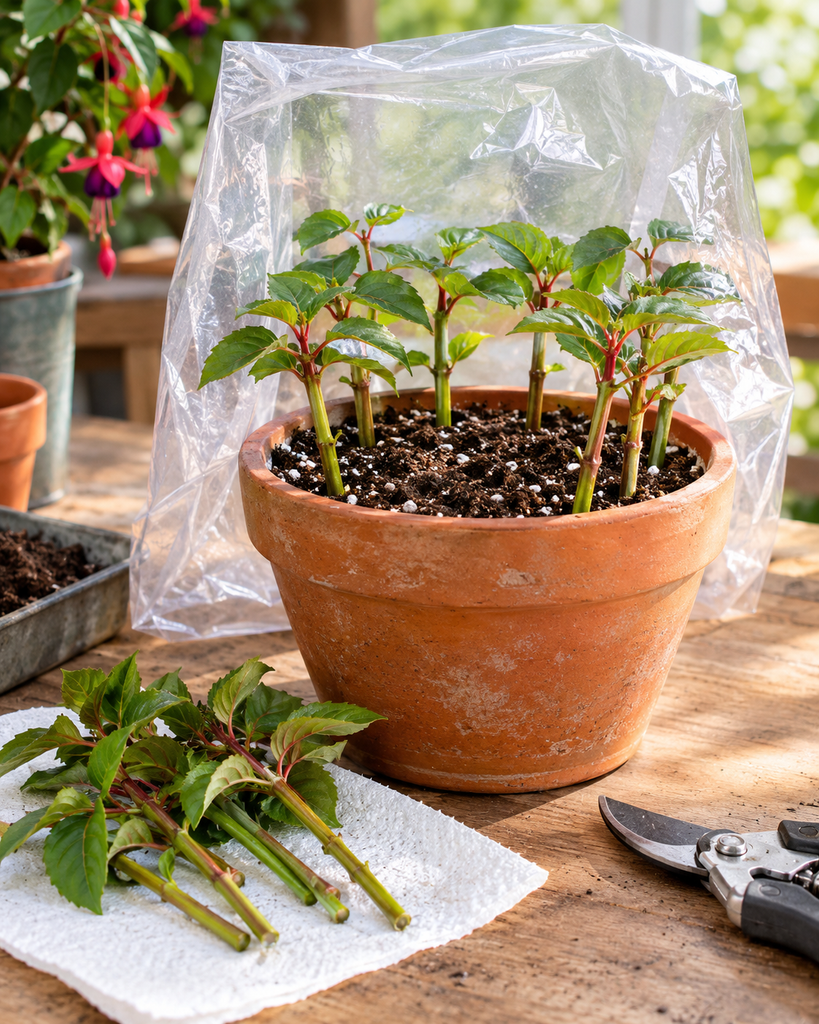
How to Propagate Fuchsia From Softwood Cuttings
Softwood cuttings are the easiest method, and they copy the parent plant exactly.
- In spring or summer, choose a healthy non-flowering shoot tip about 3–4 inches long.
- Cut just below a pair of leaves with clean snips.
- Remove the lower leaves, and pinch off any flower buds.
- Optionally dip the cut end in rooting hormone.
How to Root Fuchsia Cuttings in Soil
Plant cuttings in moist, free-draining potting mix, firm the mix around the stem, and place them in bright, indirect light out of direct sun. Cover loosely with a clear bag or dome to hold humidity, and ventilate it daily. Roots often form in a few weeks, but timing varies with temperature and the cultivar.
Can You Propagate Fuchsia From a Leaf?
Not reliably. A leaf without a node usually will not form a new plant. Use stem cuttings.
Can You Grow Fuchsia From Seed?
Yes, but seedlings of hybrid fuchsias vary and may not match the parent. Cuttings are better for keeping a favorite plant.
How to Care for Newly Propagated Plants
Keep new plants in bright shade and keep the mix moist, not wet. Pot them up as roots fill the container, pinch the tips to encourage bushiness, and avoid strong fertilizer until growth is established.
Recommended Products for Propagating Fuchsia
- 🌿 Rooting Hormone Powder — Check price on Amazon
- 🪴 Small Nursery Pots or Propagation Trays with Humidity Dome — Check price on Amazon
10. When and How to Repot Fuchsia
Signs Your Fuchsia Needs a Bigger Pot
- Roots growing out of the drainage holes or circling the surface.
- Soil that dries out within hours on warm days.
- Growth that has slowed in spite of regular feeding.
- Water that runs straight through the pot without soaking in.
Step-by-Step Repotting Instructions
- Choose a pot with drainage holes one size larger than the current one.
- Add fresh potting mix to the bottom.
- Slide the plant out, loosen circling roots, and trim any dead or rotten ones.
- Set it at the same depth as before and fill in with mix.
- Water thoroughly and let it drain.
The Best Time of Year to Repot
Spring, as growth begins, is ideal. Avoid repotting during hot weather or while the plant is in heavy bloom.
Aftercare to Reduce Transplant Stress
Keep the plant in bright shade, water regularly, and hold off on fertilizer for a few weeks. Some leaf drop right after repotting can be normal.
Recommended Products for Repotting Fuchsia
- 🧰 Hand Trowel — Check price on Amazon
11. Popular Fuchsia Varieties to Grow at Home
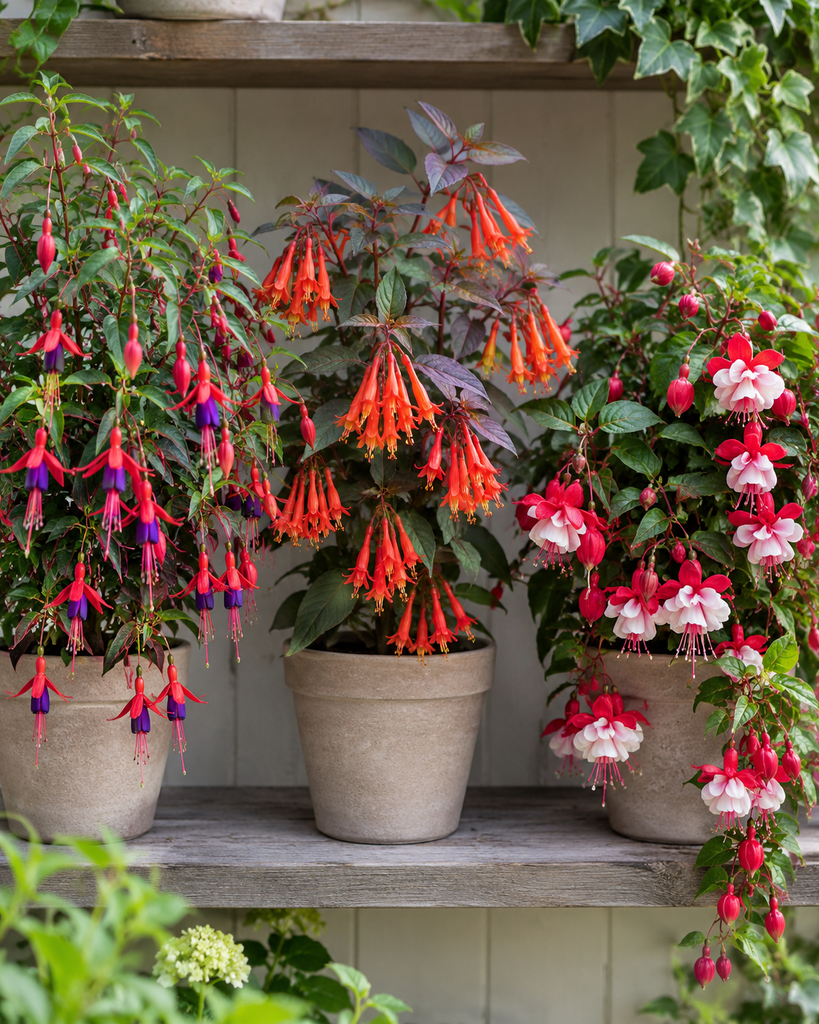
Hardy Fuchsia (Fuchsia magellanica)
One of the hardiest species, with slender red-and-purple flowers on arching stems. It is often sold as the hardy fuchsia for gardens and is reported to survive winter in roughly zones 6 or 7 and warmer, depending on the source and the winter. It typically dies back and regrows in spring.
Golden Hardy Fuchsia (Fuchsia magellanica ‘Aurea’)
A form of hardy fuchsia with golden-yellow leaves that can turn greener in shade. It adds foliage color to shady borders.
‘Tom Thumb’ (Dwarf Hardy Fuchsia)
A compact fuchsia often sold as hardy and suited to small beds and pots. Hardiness is commonly cited for the milder end of the hardy range, so check local advice before leaving it outdoors in winter.
‘Mrs Popple’ (Hardy Fuchsia)
A widely grown hardy fuchsia with red-and-violet flowers, described by UK sources as dependable. Check hardiness for your US zone before planting.
Honeysuckle Fuchsia (Fuchsia triphylla)
A tender species with clusters of long, narrow, orange-red flowers and darker foliage. Its hybrids are often reported to tolerate heat better than typical basket fuchsias, but check the plant tag. The ASPCA lists it as non-toxic to dogs, cats, and horses.
‘Gartenmeister Bonstedt’ (Triphylla-Type Fuchsia)
A popular triphylla-type hybrid with orange-red tubular flowers, often grown for hummingbirds and for relatively better heat tolerance. It is tender and needs overwintering in cold regions.
Trailing Hybrid Fuchsias (Fuchsia × hybrida)
The classic hanging-basket fuchsias, with large single or double flowers in combinations of red, pink, purple, and white. ‘Swingtime’ is one example. They are tender, prefer cool, shaded conditions, and are usually overwintered or replaced.
Upright and Standard Fuchsias
Upright fuchsias can be trained into tree-like standards, with a single stem and a rounded head of flowers, for patios and porches. These are tender and need winter protection.
How to Choose the Right Fuchsia for Your Garden
Choose hardy types if you want a perennial for a milder-winter garden, trailing hybrids for hanging baskets, and triphylla-type fuchsias if heat is your main challenge. Check the plant tag for hardiness and heat tolerance, and match the plant to your climate before you buy.
| Common name | Botanical name | Appearance | Mature size (approximate) | Light needs | Growing considerations |
|---|---|---|---|---|---|
| Hardy fuchsia | F. magellanica | Slender red-purple pendant flowers | Shrub, often several feet | Part shade | Dies back in cold; hardiest type |
| Golden hardy fuchsia | F. magellanica ‘Aurea’ | Golden foliage, red-purple flowers | Medium shrub | Part shade | Foliage color varies with light |
| ‘Tom Thumb’ | F. hardy dwarf | Compact, small red-purple flowers | Small, compact | Part shade | Check local hardiness |
| ‘Mrs Popple’ | F. hardy hybrid | Red and violet flowers | Medium shrub | Part shade | Reported dependable; check US zone |
| Honeysuckle fuchsia | F. triphylla | Orange-red tubular flower clusters | Small shrub | Bright shade to part sun | Tender; more heat tolerant; non-toxic per ASPCA |
| ‘Gartenmeister Bonstedt’ | F. triphylla-type hybrid | Orange-red tubular flowers | Small shrub | Bright shade to part sun | Tender; hummingbird favorite |
| Trailing hybrid | F. × hybrida | Large single or double flowers | Trailing | Bright shade | Tender; sensitive to heat |
| Upright or standard | F. × hybrida | Pendant flowers on upright stems | Varies | Bright shade | Tender; needs winter protection |
Sizes and hardiness are approximate and vary with cultivar and region. Check each plant tag.
Recommended Products for Growing Fuchsia Varieties
- 🏷️ Reusable Plant Labels — Check price on Amazon
12. Common Fuchsia Problems and How to Fix Them
Why Are My Fuchsia Leaves Turning Yellow?
Yellow leaves can mean overwatering, poor drainage, underfeeding, cold nights, or simply shedding of old lower leaves. Check soil moisture and roots first, and look under leaves for pests.
Why Are the Leaves Wilted, Soft, or Mushy?
Wilting with dry soil means thirst, and fuchsias wilt fast in warm weather. Wilting or soft, dark stems with wet soil point to root rot. Check the soil before watering again.
Why Is My Fuchsia Dropping Leaves and Buds?
Bud and leaf drop is commonly linked to heat, drying out, overwatering, sudden changes in position, or pests. Move the plant to cooler shade, keep moisture even, and avoid shocks. Some leaf loss in fall as plants go dormant is normal.
Why Is My Fuchsia Growing Tall and Leggy?
Usually too little light or not enough pinching. Move it to brighter shade and pinch or cut stems back to just above a pair of leaves.
Brown Leaf Edges and Sunburn
Brown, crispy edges or scorched patches come from hot sun, wind, dry soil, or fertilizer burn. Move the plant to shade, water deeply, and avoid feeding a dry or stressed plant.
Common Fuchsia Pests and Diseases and How to Manage Them
Watch for whiteflies, aphids, spider mites, thrips, and fuchsia gall mites, which cause thick, twisted, distorted growth at shoot tips. Fuchsia rust shows up as orange spots under leaves, and botrytis (gray mold) appears on damp, crowded growth. Rinse pests off with water, remove distorted or diseased growth, improve airflow, and use insecticidal soap or another labeled product if needed, following the label. A broad insecticide can also kill beneficial insects that help control aphids.
How to Tell Whether Your Fuchsia Can Be Saved
Scratch a stem with a fingernail. Green underneath means it is alive. Tender fuchsias hit by frost may regrow from the base. A plant with a soft, black base and rotten roots is unlikely to recover, but healthy shoot tips can often be rooted as cuttings.
| Symptom | Possible cause | How to confirm | Recommended solution |
|---|---|---|---|
| Yellow lower leaves, drooping | Overwatering or poor drainage | Soil is wet; roots dark and soft | Stop watering; improve drainage; repot if needed |
| Wilting leaves, dry soil | Underwatering or heat stress | Soil is dry; basket feels light | Water deeply; move to shade; soak dried baskets |
| Bud and leaf drop | Heat, drying out, or sudden change | Hot spell, dry soil, recent move | Cool and shade; keep moisture even |
| Few or no flowers | Heat, low light, or too much nitrogen | Hot site; dense leafy growth | Move to bright shade; feed lightly; be patient |
| Leggy growth | Low light or no pinching | Long gaps between leaves | Brighter shade; pinch or trim |
| Brown crispy edges | Sun scorch or dry soil | Damage on sun-facing leaves | Move to shade; water deeply |
| Tiny white insects fly up when disturbed | Whiteflies | Check leaf undersides | Rinse; insecticidal soap; sticky traps |
| Twisted, thickened shoot tips | Fuchsia gall mite | Distorted new growth, swollen tips | Remove affected growth; consult local extension |
| Orange spots under leaves | Fuchsia rust | Orange pustules on undersides | Remove affected leaves; improve airflow; keep leaves dry |
| Gray fuzzy mold on flowers or leaves | Botrytis | Damp, crowded growth | Remove affected parts; improve airflow |
Recommended Products for Fuchsia Problems
- 🧴 Insecticidal Soap for Plants — Check price on Amazon
- 🪰 Yellow Sticky Traps — Check price on Amazon
13. Is Fuchsia Toxic to Cats and Dogs?
What Pet Owners Should Know About Fuchsia
Good news for pet owners: the ASPCA lists fuchsia (Fuchsia spp., including honeysuckle fuchsia) as non-toxic to dogs, cats, and horses. That makes it a reasonable choice for pet households. Even so, eating any plant can cause mild stomach upset such as vomiting or diarrhea, especially if a pet eats a lot, and the ASPCA’s lists are not all-inclusive.
How to Keep Fuchsia and Pets Safe Together
The bigger risks are often what is on the plant. Keep fertilizers, slug bait, systemic or other pesticides, and treated plants away from pets, and read labels before using any product around animals. Avoid letting pets dig in pots or chew heavily on plants. Hanging baskets also keep plants out of reach.
What to Do if a Pet Eats Fuchsia
A small nibble of fuchsia is generally not a concern, but watch for vomiting, diarrhea, or lethargy. If your pet eats a lot, shows symptoms, or may have eaten a treated plant or fertilizer, call your veterinarian or the ASPCA Animal Poison Control Center at (888) 426-4435 (a consultation fee may apply). Mention the plant and anything applied to it.
14. Seasonal Fuchsia Care Calendar
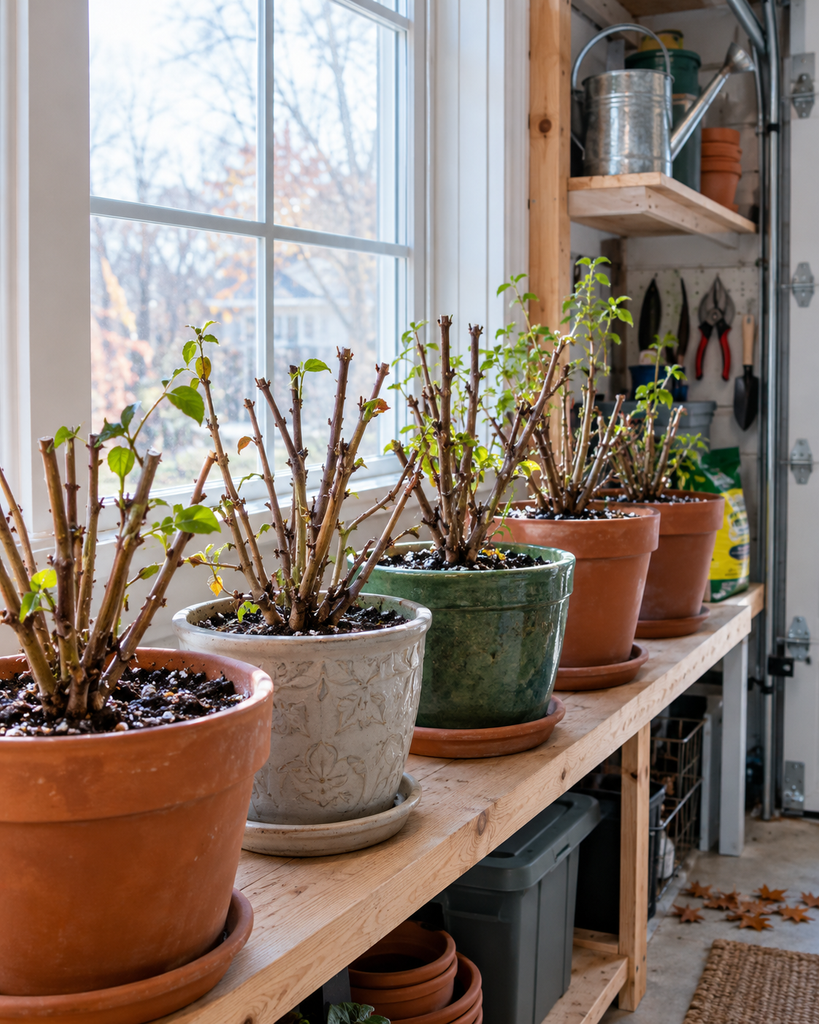
Timings below are general for US gardens. Regional climate, the fuchsia type, and your hardiness zone change the schedule.
Spring: Encourage New Growth
Plant outdoors after frost danger has passed, in cool weather if possible. Prune hardy types as new growth starts, repot, begin light feeding, and pinch young plants. Move overwintered plants outside gradually.
Summer: Manage Sunlight and Watering
Provide shade from hot afternoon sun, water consistently, feed lightly, and deadhead. Watch for whiteflies, mites, and gall mites. Take softwood cuttings.
Fall: Prepare for Winter
Stop feeding and reduce watering as nights cool. Before frost, bring tender plants into a bright, cool, frost-free spot, such as a garage, porch, or basement with some light, and take cuttings of favorites. Leave hardy types in place and mulch the base in marginal zones.
Winter: Protect the Plant and Support Dormancy
Water overwintering plants only enough to keep the soil from drying out completely, and keep them cool and frost-free. Dormant plants lose leaves, which is normal. Resume watering and light feeding as new growth appears in late winter or spring.
15. Frequently Asked Questions About Fuchsia Plant Care
Is Fuchsia an Indoor or Outdoor Plant?
Mostly outdoor. Fuchsias grow best on shaded porches, in baskets, and in garden beds. Indoors they struggle with dry air and low light, though they can be overwintered inside in a cool, bright spot.
How Often Should You Water a Fuchsia?
Water when the top inch of soil starts to dry. In warm weather, baskets and pots may need water daily or even twice a day, while in winter dormant plants need very little. Keep the soil evenly moist but never soggy.
Does Fuchsia Need Direct Sunlight?
Not much. Fuchsias prefer bright shade or morning sun. Hot afternoon sun scorches leaves and drops buds, especially in warm regions.
Can Fuchsia Bloom More Than Once?
Yes. Fuchsias bloom in waves on new growth from spring to fall. Deadheading, light feeding, and trimming keep new flowers coming, though heat can pause blooming.
Should You Remove Dead Fuchsia Flowers?
Yes. Pinch off faded flowers and the berries beneath them to encourage new blooms and keep the plant tidy.
Can Fuchsia Survive Winter?
Hardy fuchsias can survive winter outdoors in roughly zones 6–7 and warmer, depending on the type and winter. Tender fuchsias need to be brought indoors to a cool, frost-free spot or grown as annuals.
Can You Grow Fuchsia From Cuttings?
Yes. Softwood cuttings 3–4 inches long root readily in moist, well-drained mix in bright, indirect light, usually within a few weeks, and they copy the parent plant.
Why Is My Fuchsia Healthy but Not Blooming?
Usually heat, too little light, dry spells, too much nitrogen, or a recent pinch. Move it to cooler, brighter shade, feed lightly, keep moisture even, and give it several weeks.
Final Thoughts on Growing a Healthy Fuchsia
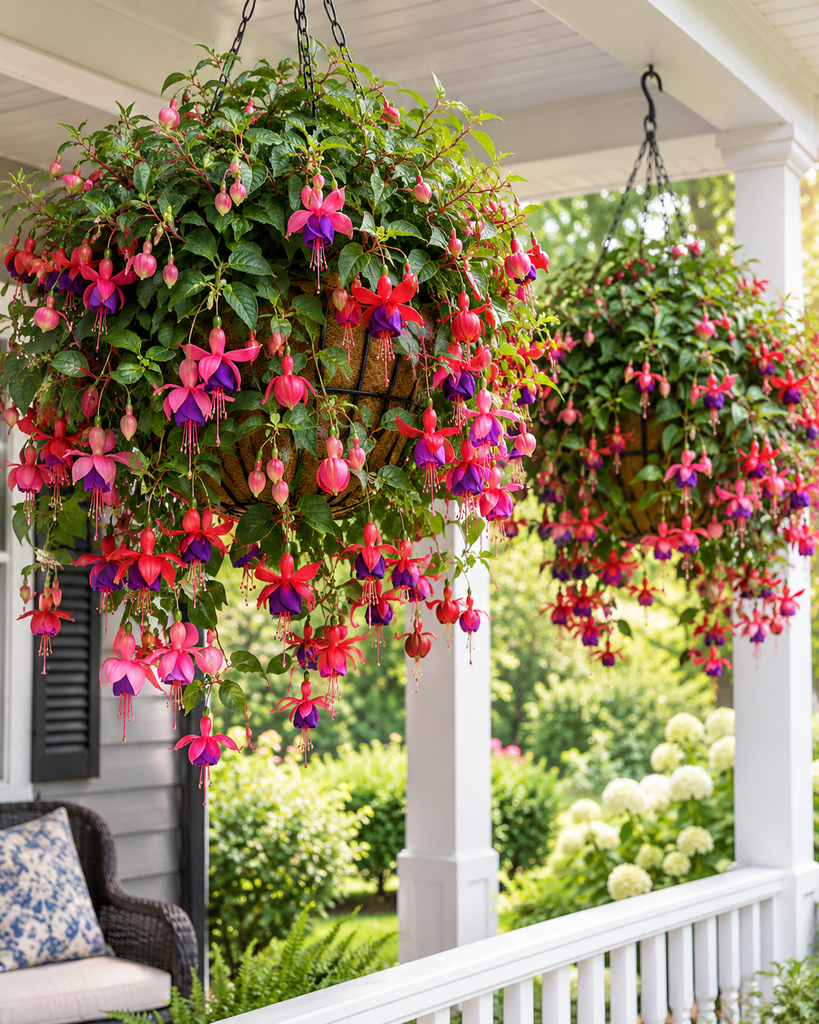
Healthy fuchsias need bright shade, evenly moist but well-drained soil, regular light feeding, cool temperatures, and regular pinching and deadheading. Protect them from heat and frost, choose a hardy type if you want a perennial, and overwinter tender types in a cool, frost-free spot. Fuchsias are considered non-toxic to dogs and cats, but keep chemicals and fertilizers out of reach. Start by checking where your plant gets afternoon sun and whether the pot drains, because those two things solve most fuchsia problems.