Flowering Cactus Growing Guide: How to Get Stunning Blooms
This article may contain affiliate links. If you purchase through these links, I may earn a small commission at no extra cost to you.
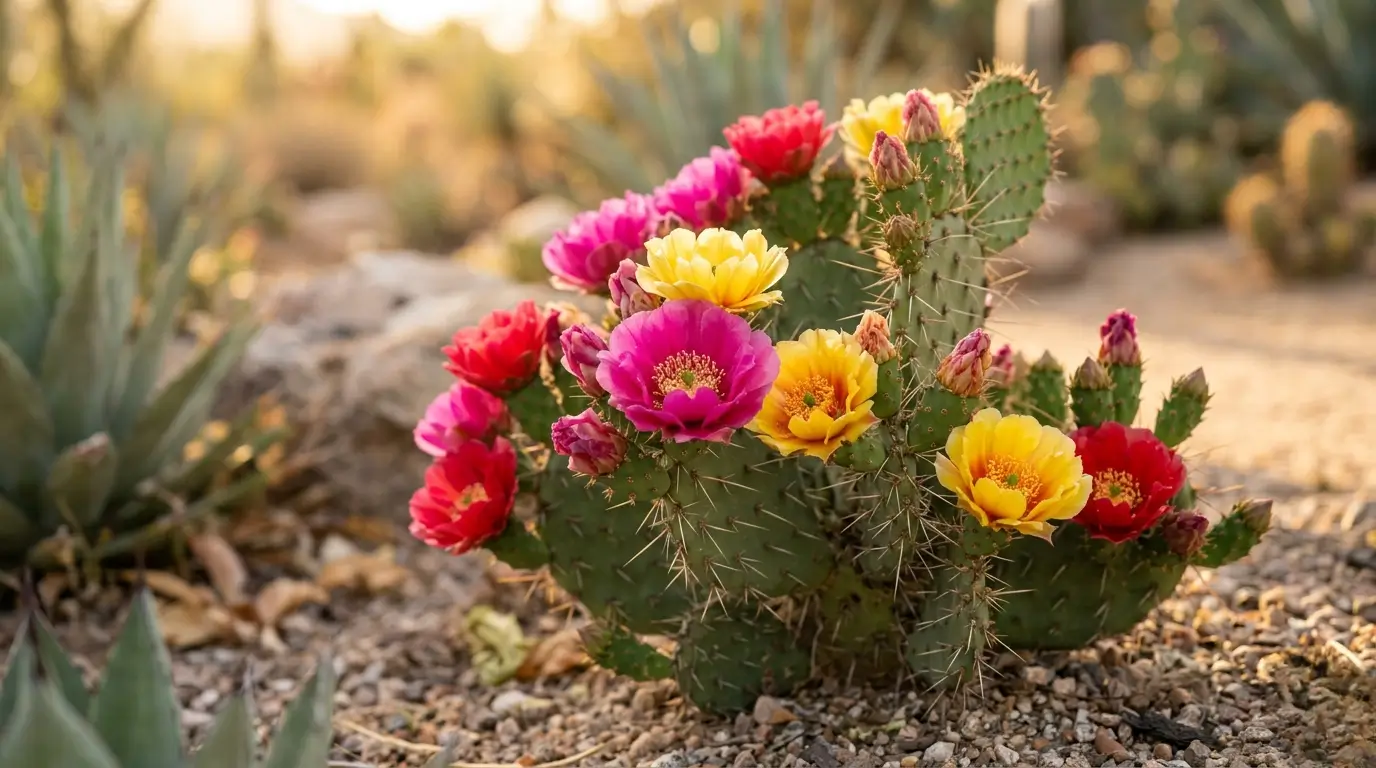
Cacti are known for their spines and thorns, but wide varieties produce vibrant flowers that can be real showstoppers. The variety in cactus flower shapes, sizes, and colors is quite astonishing.
Growing flowering cacti can be a rewarding experience, offering spectacular blooms with minimal maintenance. This guide will walk you through the process of selecting, growing, and encouraging your cacti to produce stunning flowers, covering the science behind cactus blooming and essential care techniques.
👉 Flowering cacti grow best when given the right balance of sunlight, well-draining soil, and proper watering techniques.
- 🌱 Cactus & succulent soil mix
- 🪴 Terracotta breathable pots
- 💧 Moisture meter for plants🌸 Understanding Flowering Cacti
🌸 Understanding Flowering Cacti
Key Takeaways
- Understand the unique needs of flowering cacti for abundant blooming.
- Learn how to select the right cacti for your garden or collection.
- Discover essential care techniques to trigger blooms in every season.
- Improve your success with cactus blooming, whether you’re a beginner or an experienced gardener.
- Enjoy your cacti and their extraordinary flowers year after year.
Understanding Flowering Cacti
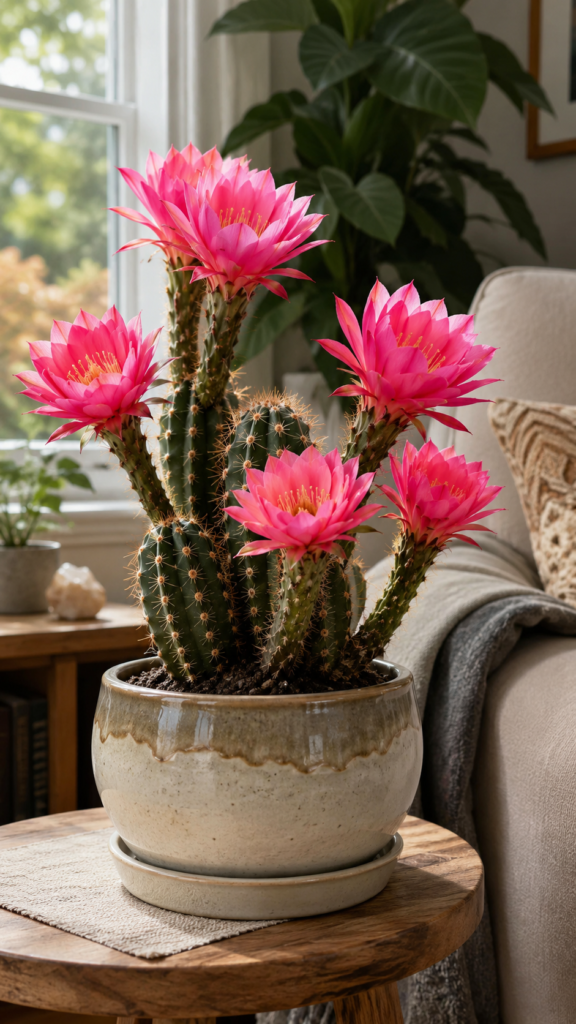
As spring awakens, many cactus species burst into bloom, creating a spectacular display. This seasonal transformation is not limited to spring, as different species bloom at various times throughout the year.
What Makes Cacti Bloom
Cacti bloom as part of their reproductive cycle, producing flowers that attract pollinators such as bees, moths, and bats. The timing of these blooms is often triggered by environmental factors, including changes in day length, temperature fluctuations, and seasonal shifts.
Bloom Cycles and Patterns
The bloom cycles of cacti vary significantly among species. Some cacti bloom annually for a brief period, while others may flower multiple times throughout the year. Desert cacti typically flower in spring and summer, whereas forest cacti, like Christmas and Easter varieties, often bloom in winter or early spring. The age of a cactus collection also influences flowering, with many species requiring 3-4 years to mature before they begin their regular blooming cycles.
Bloom patterns among cacti species are diverse, with some producing a crown of flowers at the top of the plant, others blooming along the edges of pads, and some creating spectacular night-blooming flowers that last for just one evening.
👉 Cacti bloom when they reach maturity and receive the right environmental triggers like light changes and temperature shifts.
Popular Flowering Cactus Varieties
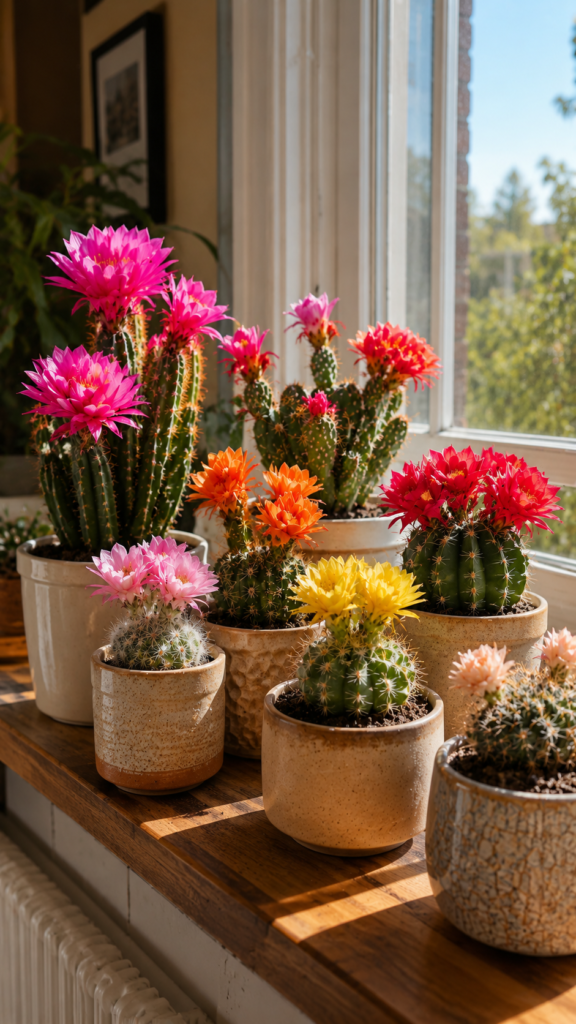
Among the diverse world of cacti, certain species stand out for their stunning flowers, offering a beautiful contrast to their often prickly exteriors. These flowering cacti not only add a splash of color to indoor and outdoor spaces but also come in a variety of shapes and sizes, catering to different tastes and preferences.
Holiday Cacti (Christmas, Easter, Thanksgiving)
Holiday cacti, including Christmas cactus (Schlumbergera bridgesii), Easter cactus (Rhipsalidopsis gaertneri), and Thanksgiving cactus (Schlumbergera truncata), are popular for their vibrant blooms around their respective holidays. They require bright indirect light and a period of darkness to set buds.
Desert Flowering Cacti
Desert flowering cacti, such as the Rainbow Hedgehog Cactus (Echinocereus rigidissimus) and the Old Lady Cactus (Mammillaria hahniana), showcase vibrant flowers. These cacti are perfect for those looking for unique additions to their collection.
Hedgehog and Pincushion Varieties
Pincushion cacti (Mammillaria species) are compact, form attractive clusters, and produce colorful flowers. They are ideal for beginners. The Orchid Cactus (Epiphyllum) produces dramatic, orchid-like flowers, while the Ric Rac Cactus (Epiphyllum anguliger) features zigzag stems and night-blooming flowers.
When selecting flowering cacti for your collection, consider the bloom season to ensure a continuous display of flowers throughout the year.
👉 Build a colorful cactus collection with varieties known for spectacular blooms.
Essential Growing Conditions
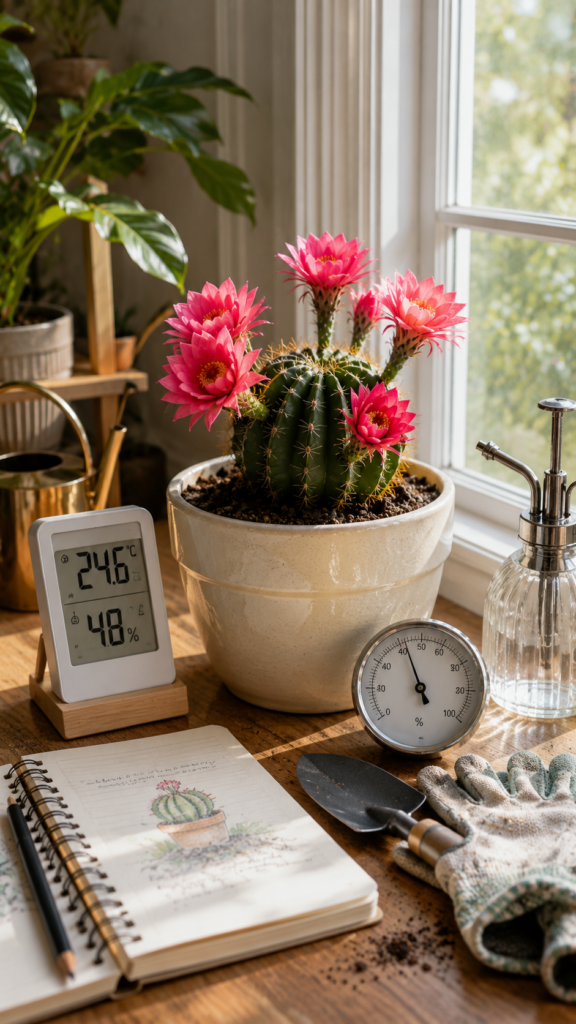
Cacti are known for their resilience, but to encourage flowering, they need precise growing conditions. According to Master of Horticulture Colin Skelly, “There are cacti that can be grown to match most situations, from windowsill to conservatory to outdoors in the summer months.”
Light Requirements
Most flowering cacti require bright, indirect light with at least 4-6 hours of sunlight daily. The exact light requirements vary by species; for instance, desert cacti typically need full sun, while forest cacti prefer filtered light or partial shade.
| Cactus Type | Light Requirement |
|---|---|
| Desert Cacti | Full Sun |
| Forest Cacti | Filtered Light/Partial Shade |
Temperature Considerations
Temperature is crucial for triggering blooms in cacti. Most desert cacti prefer daytime temperatures between 70-90°F (21-32°C) during the growing season and cooler nights around 50-60°F (10-15°C).
Humidity Levels
Humidity requirements differ significantly between desert and forest cacti. Desert varieties thrive in dry conditions (10-30% humidity), while tropical forest cacti, like Christmas cactus, prefer higher humidity levels (40-60%). Adjusting humidity levels according to the type of cactus in your collection is essential for promoting healthy growth and flowering throughout the year.
Creating the right microclimate may require adjusting the placement of your cacti throughout the year, moving them outdoors during summer months and bringing them inside during cold seasons. Consistent growing conditions help establish healthy growth patterns, but strategic environmental changes are often necessary to stimulate flowering.
👉 Healthy cactus flowers depend on strong light, low humidity, and stable temperatures.
Soil and Potting for Flowering Cacti
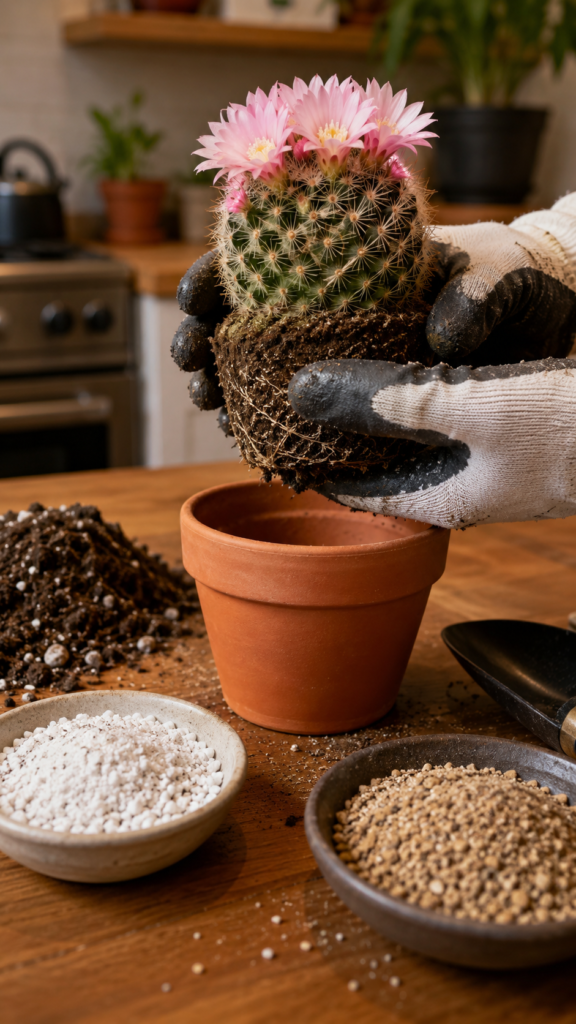
Understanding the soil and potting needs of your flowering cacti is vital for their overall health and blooming success. The right combination of soil and container can significantly impact the plant’s ability to thrive and produce flowers.
Ideal Soil Composition
The ideal soil for flowering cacti should be extremely well-draining. A mix consisting of 50-70% mineral material such as pumice, perlite, or coarse sand, combined with standard potting soil, can prevent root rot while providing essential nutrients.
Choosing the Right Container
Container selection is crucial for flowering cacti. Unglazed terra cotta pots are ideal as they allow excess moisture to evaporate and provide stability for top-heavy plants. The size of the container should be only 1-2 inches larger than the plant’s root ball to encourage flowering.
Repotting Guidelines
Repotting should be done sparingly, typically every 2-3 years or when the plant has outgrown its container. Handle the plant carefully during repotting to avoid damaging the roots and spines, and wait at least two weeks before watering to allow any damaged roots to heal.
👉 Well-draining soil prevents root problems and supports flowering.
Watering Your Flowering Cactus
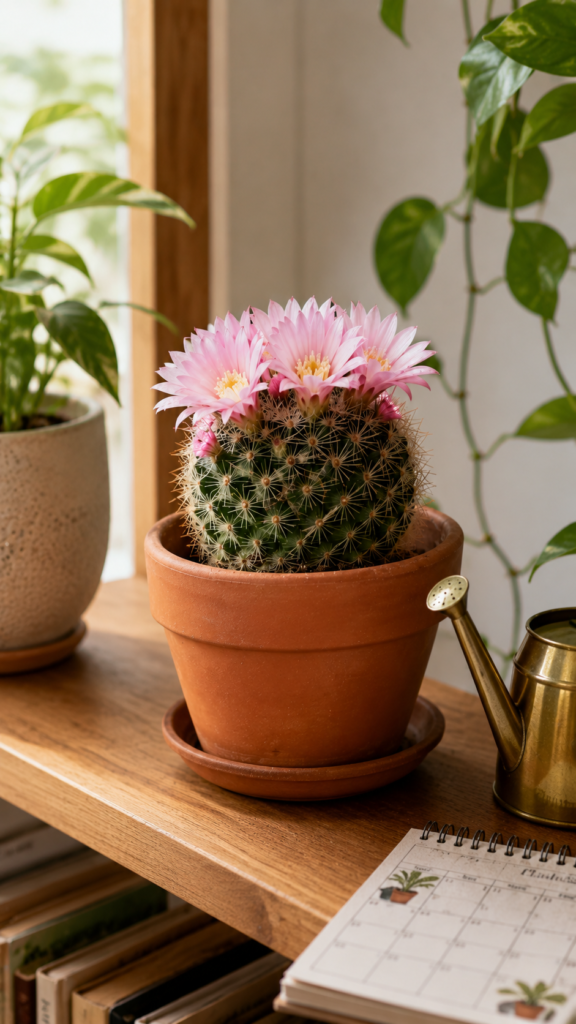
To keep your flowering cactus healthy and blooming, understanding its watering needs is essential. Flowering cacti have specific watering requirements that vary by season, and meeting these needs is crucial for their overall health and flowering capability.
Seasonal Watering Schedule
During the active growing season, typically spring and summer, your cactus will need more frequent watering. Water your cactus thoroughly when the soil has completely dried out, which could be once every 1-2 weeks, depending on your climate and the size of the pot.
In contrast, during the fall and winter months, when most flowering cacti enter a dormant period, they require significantly less water. For desert varieties, you might only need to water once every 3-4 weeks, while forest cacti may still need moisture every 2-3 weeks.
Signs of Over and Under-Watering
It’s crucial to monitor your cactus for signs of over- or underwatering. Overwatering can lead to yellowing or translucent segments, soft or mushy stems, and black spots at the base of the plant. On the other hand, underwatered cacti may appear shriveled, wrinkled, or have stunted growth.
Water Quality Considerations
The quality of water used for your flowering cactus also matters. Most cacti prefer slightly acidic to neutral water, with a pH between 6.0 and 7.0. Many are sensitive to fluoride and chlorine found in tap water, so using filtered, distilled, or collected rainwater can be beneficial.
When watering, make sure to water at the soil level rather than from above to keep the plant’s crown dry and prevent rot, especially for species with dense spines or wool that can trap moisture.
- Water thoroughly during the growing season (spring and summer) when the soil is dry.
- Reduce watering in fall and winter, adjusting based on the cactus type.
- Be mindful of the signs of over- and underwatering to adjust your watering schedule accordingly.
- Use water that is slightly acidic to neutral and avoid tap water if it’s high in fluoride and chlorine.
👉 Overwatering is the mistake; cacti prefer dry cycles between watering.
Fertilizing for Optimal Blooms
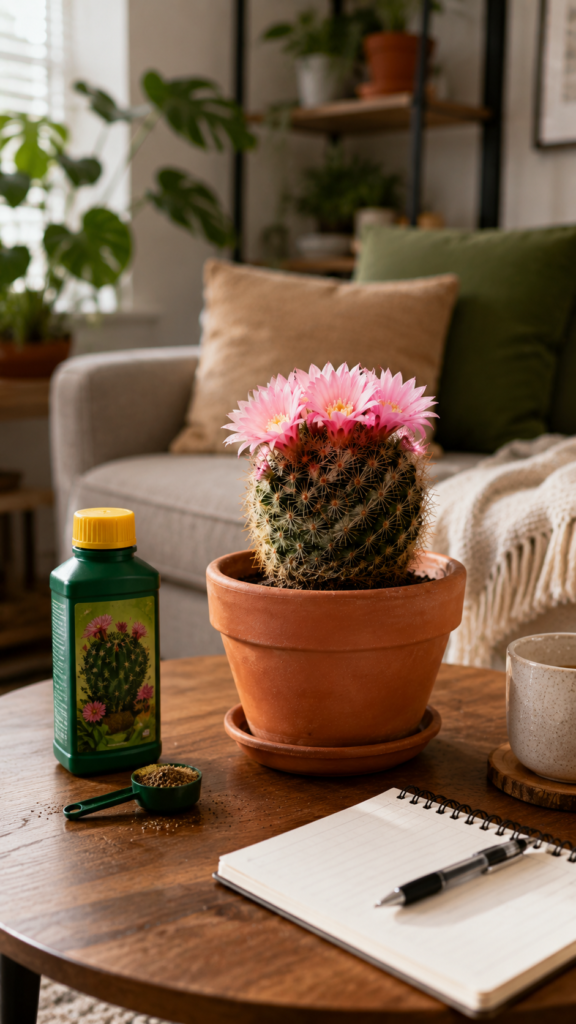
The key to unlocking your flowering cactus’s full blooming potential lies in proper fertilization techniques, including selecting the appropriate fertilizer and timing its application correctly.
Types of Fertilizers for Cacti
Flowering cacti benefit significantly from specialized fertilization that supports bloom production. A low-nitrogen, phosphorus-rich formula, such as 5-10-5 or 2-7-7, is typically recommended as it encourages flowering rather than just vegetative growth.
Commercial cactus fertilizers are ideal for this purpose, but general-purpose fertilizers can also be used at quarter to half strength, provided they are lower in nitrogen than phosphorus and potassium.
Fertilizing Schedule
The optimal fertilizing schedule for most flowering cacti involves feeding them lightly during their active growing season, which spans from spring through early fall. Fertilization should occur once every 4-6 weeks during this period, and it is advisable to stop completely during the dormant winter period.
For many desert cacti, applying a specialized bloom-boosting fertilizer about 4-6 weeks before their typical flowering season can maximize flower production.
Common Fertilizing Mistakes
Common mistakes include over-fertilizing, which can cause salt buildup and burn roots, applying fertilizer to dry soil, which concentrates the solution and damages roots, and fertilizing during dormancy when plants cannot effectively use the nutrients.
For a more natural approach, some cactus enthusiasts opt for diluted compost tea or worm castings as a gentle organic fertilizer that provides micronutrients supporting healthy flowering without the risk of chemical burns.
👉 Use low-nitrogen fertilizer to encourage flowers instead of only green growth.
Seasonal Care for Flowering Cactus
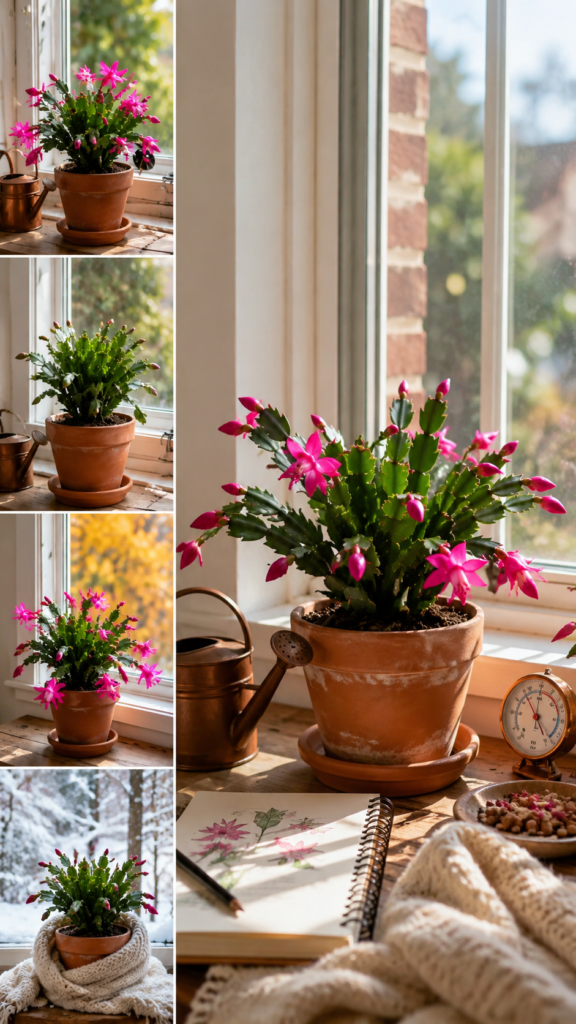
Understanding the seasonal needs of your flowering cactus is crucial for its health and blooming success. As the seasons change, so do the requirements for optimal care.
Spring and Summer Care
During spring, flowering cacti awaken from their dormancy, and growth resumes. It’s essential to gradually increase watering as temperatures rise and days lengthen. Regular fertilization should also resume to support the development of flower buds. In the summer, continue to provide adequate water, but avoid overwatering. Consider providing light shade for sensitive species during the hottest part of the day.
Fall and Winter Maintenance
As fall approaches, many flowering cacti begin to prepare for dormancy. Gradually reduce watering and stop fertilizing as temperatures drop. For holiday cacti, this is the time to start manipulating light exposure to trigger winter blooms.
Dormancy Periods
Desert cacti require a cool, dry period during winter to rest and prepare for spring flowering. Keep them at 40-50°F (4-10°C) and almost completely dry. Forest cacti, like Christmas and Easter varieties, need some moisture and slightly warmer temperatures during their winter flowering period.
| Season | Watering | Fertilization | Temperature |
|---|---|---|---|
| Spring/Summer | Gradually increase | Regular | Warm |
| Fall/Winter | Reduce | Stop | Cool |
👉 Seasonal maintenance keeps cacti healthy and productive all year.
Triggering Blooms in Your Cactus
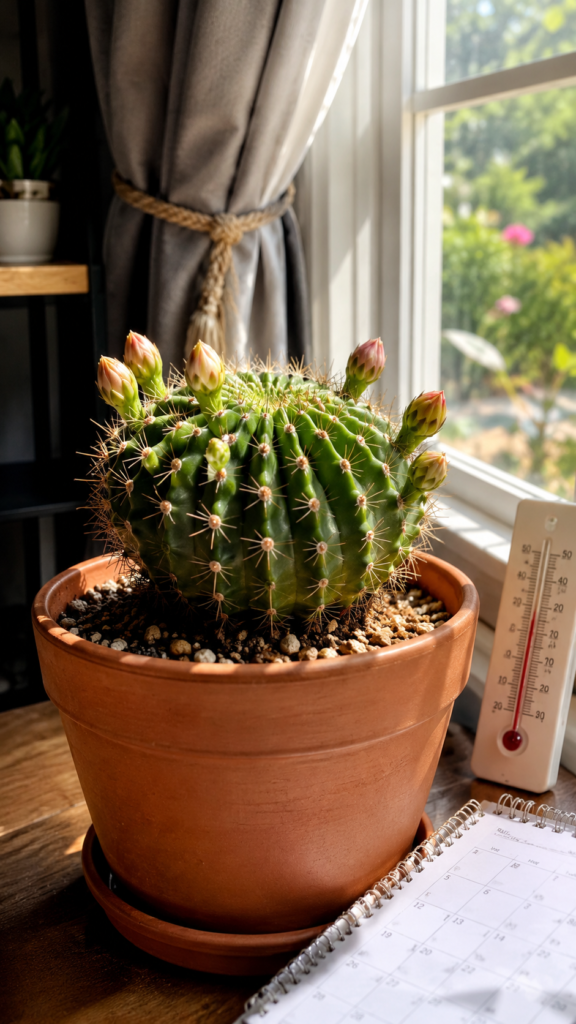
Triggering blooms in cacti involves manipulating environmental factors to mimic natural conditions. To encourage flowering, it’s essential to understand the specific needs of your cactus species.
Light Manipulation Techniques
Many flowering cacti, especially holiday varieties, require specific light conditions to bloom. For instance, Christmas and Thanksgiving cacti need 12-14 hours of complete darkness each night for 6-8 weeks to trigger blooming. Providing the right light exposure is crucial for flower production.
Temperature Fluctuation Methods
For desert cacti like the hedgehog cactus, a period of cooler night temperatures (50-55°F) while maintaining warmer days can trigger flower bud formation. This temperature differential mimics natural desert conditions, encouraging the cactus to bloom.
Rest Period Requirements
A rest period is crucial for most flowering cacti. Reducing watering and maintaining cooler temperatures for 2-3 months simulates the natural desert winter, signaling the plant to prepare for flowering.
| Technique | Description | Benefit |
|---|---|---|
| Light Manipulation | Adjusting light exposure to mimic natural conditions | Triggers blooming in holiday cacti |
| Temperature Fluctuation | Creating a temperature differential between day and night | Encourages flower bud formation in desert cacti |
| Rest Period | Reducing watering and cooler temperatures | Simulates natural desert winter, promoting flowering |
By applying these techniques, you can encourage your cactus to produce stunning flowers. For example, the “Lace Hedgehog Cactus” produces large blooms when kept in nearly full sunlight.
👉 Encourage more flowers by recreating natural seasonal conditions.
Propagating Flowering Cacti
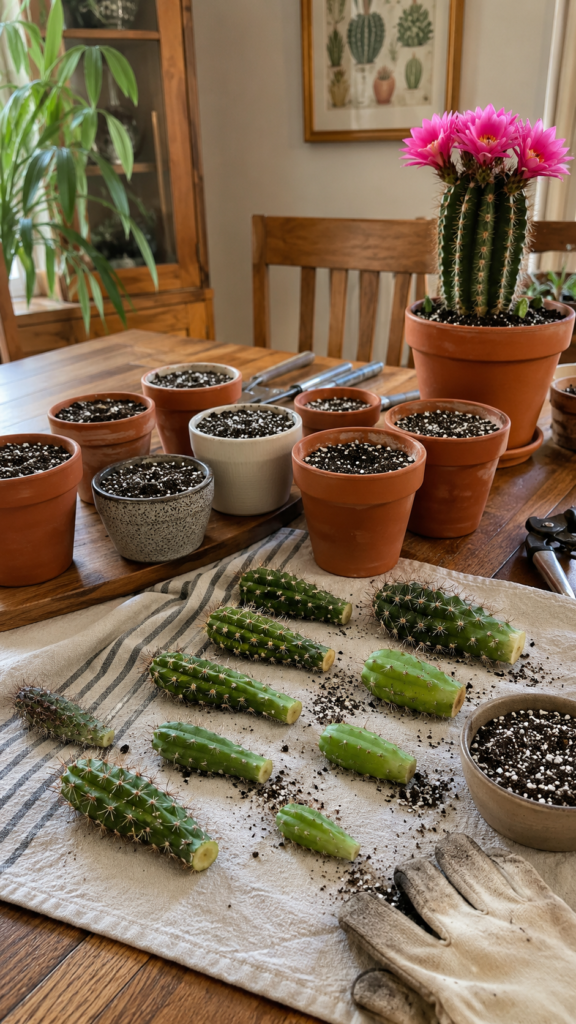
One of the joys of growing flowering cacti is the ability to propagate them, creating new plants for your collection or to share with others. This process not only expands your collection but also allows you to share these beautiful plants.
Propagation from Cuttings
Most flowering cacti species can be easily reproduced through stem cuttings or offsets. To propagate, select healthy, mature segments and allow the cut end to callus for 1-2 weeks. Then, plant them in slightly moist cactus soil, where roots typically develop within 4-6 weeks.
Seed Propagation Methods
For those interested in seed propagation, it’s essential to collect seeds from ripe fruits, clean them thoroughly, and sow them in sterile, fine-grained cactus mix. Keep the soil slightly moist until germination occurs.
Caring for Young Plants
Young cacti require attentive care, including more frequent but lighter watering, protection from direct sunlight, and dilute fertilizer to support healthy development. Most propagated cacti won’t bloom until they reach maturity, which can take 2-5 years.
👉 Expand your collection by propagating healthy cactus plants.
Common Pests and Diseases
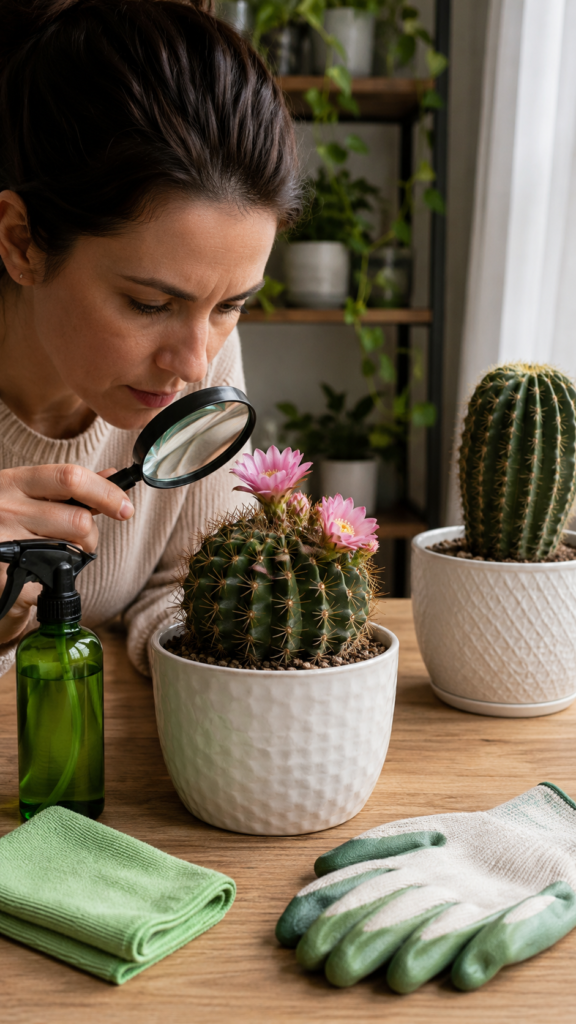
While generally resilient, flowering cacti are not immune to pests and diseases that can threaten their well-being and flowering potential. Regular inspection and proper care are crucial in maintaining the health of your cactus collection.
Identifying Pest Infestations
Flowering cacti can be susceptible to mealybugs, scale insects, spider mites, and fungus gnats, particularly when grown indoors or in humid conditions. Mealybugs appear as white, cotton-like clusters often hiding in crevices between spines or at the base of flowers. Scale insects form hard, immobile bumps on stems that can be brown, tan, or white.
Early detection is crucial for effective pest management. Regularly inspect your cactus collection, paying special attention to the undersides of pads, around areoles (where spines emerge), and any crevices where pests might hide.
Disease Prevention and Treatment
Fungal and bacterial infections often appear as discolored spots on stems, unusual growths, or corky patches. These typically indicate environmental issues like excessive humidity, poor air circulation, or water splashing on the plant during irrigation. Ensuring proper care and environmental conditions can prevent many of these issues.
Root Rot Prevention
Root rot is the most common disease affecting flowering cacti, caused by overwatering and poor drainage. Prevention through proper watering practices and well-draining soil is far easier than treatment. Ensure your cacti are planted in a well-draining mix, and avoid overwatering, especially during the dormant season.
👉 Protect your flowering cacti from insects and fungal problems.
Troubleshooting Bloom Problems
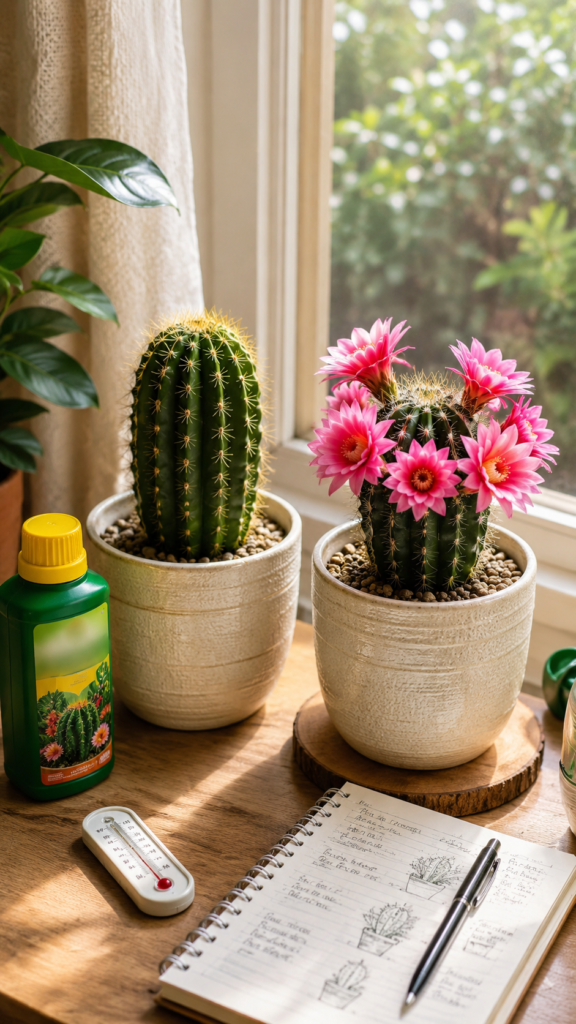
Cacti blooms are a beautiful sight, but when they fail to appear, it’s time to troubleshoot. Several factors can contribute to a cactus’s failure to bloom, and understanding these can help you address the issue.
Common Causes of Non-Blooming
The most common reason cacti fail to bloom is insufficient light. Even species that can tolerate some shade for growth often need full sun or very bright light to produce flowers. Gradually increasing light exposure can help if your plant isn’t flowering.
Age is another significant factor; many species won’t flower until they reach maturity at 3-7 years old. Young plants may be perfectly healthy but simply not mature enough to bloom yet.
Reviving a Non-Blooming Cactus
For non-blooming mature plants, try the “tough love” approach. Slightly stress the plant with reduced watering for several weeks, increase phosphorus with a bloom-boosting fertilizer, and ensure dramatic day/night temperature differences.
| Method | Description | Benefit |
|---|---|---|
| Reduced Watering | Stress the plant by reducing water for several weeks | Stimulates flowering |
| Bloom-Boosting Fertilizer | Increase phosphorus to promote blooming | Enhances flower production |
| Temperature Fluctuation | Ensure dramatic day/night temperature differences | Triggers flowering cycle |
Extending Bloom Duration
To extend bloom duration once flowers appear, keep the plant out of direct sun and hot drafts, maintain slightly cooler temperatures, and for some species, hand-pollinate flowers with a small paintbrush to encourage them to remain open longer.
Different cactus species have different blooming requirements, so research your specific variety’s needs. Some flower in response to day length, others to temperature changes, and still others require a combination of triggers.
👉 Solve common flowering issues and enjoy more blooms.
Displaying Your Flowering Cactus
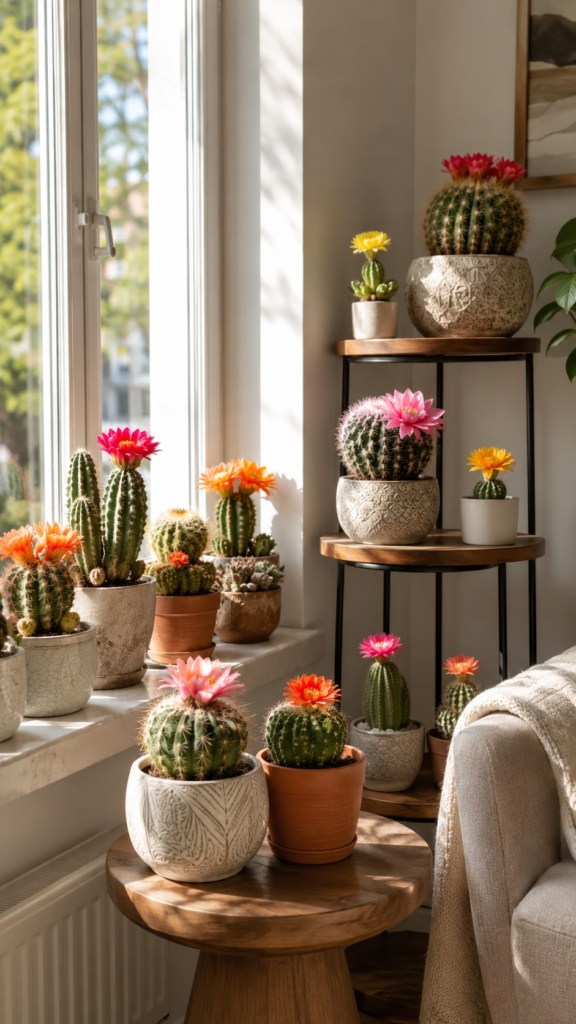
Flowering cacti make stunning additions to both indoor and outdoor spaces, with their architectural stems and vibrant blooms creating dramatic visual interest in any garden setting.
Indoor Display Ideas
For indoor displays, consider grouping cacti of varying heights and forms to create an evolving display where different species take the spotlight throughout the year. This approach allows you to appreciate the unique characteristics of each cactus.
Outdoor Arrangements
Outdoor cactus gardens work best when species are grouped by their water and light needs. Create raised beds or mounded areas with extremely well-draining soil, positioning taller species toward the back or center and smaller varieties at the edges.
Complementary Plants
Pair flowering cacti with other drought-tolerant species like agaves, sedums, and certain ornamental grasses to add textural contrast without competing for resources. Consider the mature size of the plants to avoid overwhelming smaller companions.
Conclusion
Flowering cacti offer a unique blend of beauty and resilience, making them a fascinating choice for plant enthusiasts. By understanding their unique needs and providing the right care, you can enjoy their stunning blooms throughout the year. Whether you’re growing desert cacti or varieties like Christmas cactus, proper care will result in a beautiful display of cactus flowers.
FAQ
What is the ideal soil composition for a flowering cactus?
The ideal soil composition for a flowering cactus is well-draining and slightly acidic, typically a mix of potting soil, perlite, and sand.
How often should I water my flowering cactus during the spring and summer months?
During the spring and summer, water your flowering cactus when the top inch of soil feels dry to the touch, usually every 7-10 days, depending on the temperature and humidity.
What are the common mistakes to avoid when fertilizing a flowering cactus?
Common fertilizing mistakes include over-fertilizing, using the wrong type of fertilizer, and fertilizing during the dormant period, which can cause damage to the plant.
How can I trigger blooms in my cactus?
To trigger blooms, provide your cactus with sufficient sunlight, cooler nighttime temperatures, and a period of dormancy, typically during the fall and winter months.
What are the signs of over-watering in a flowering cactus?
Signs of over-watering include soft, mushy stems, discoloration, and root rot, which can be detrimental to the plant’s health.
Can flowering cacti be grown in shade?
While some flowering cacti can tolerate partial shade, most require full sun to produce blooms, so it’s essential to choose a variety that suits your garden’s conditions.
How long do flowering cacti blooms typically last?
The duration of blooms varies depending on the species, but typically lasts several weeks to a few months, with some varieties blooming multiple times a year.
What is the best way to propagate a flowering cactus?
The best method of propagation is through cuttings, which involves allowing the cut ends to dry before planting them in well-draining soil, or through seed propagation.