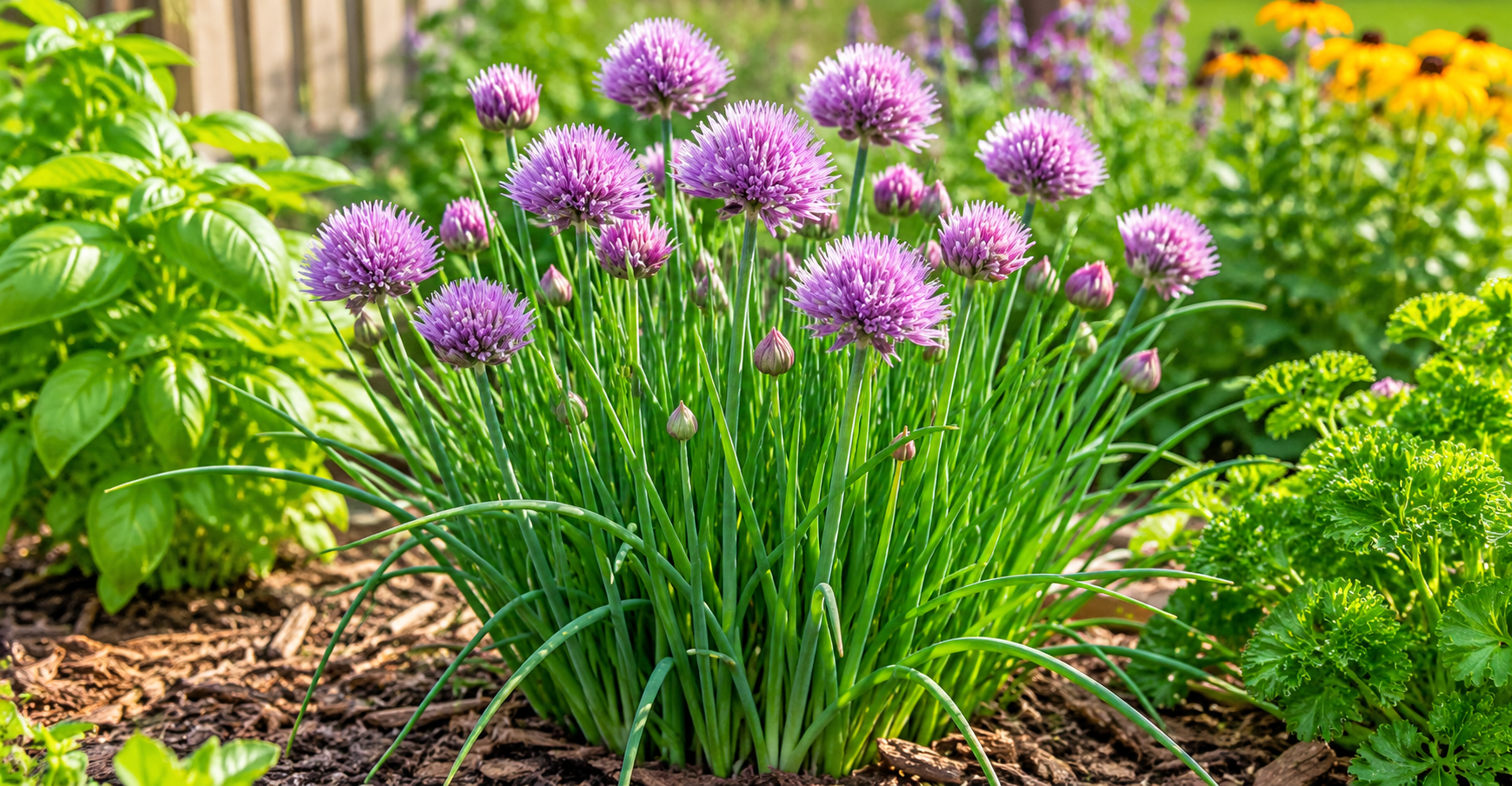
Chives Plant Care 101: How to Grow the Best Chives
This article may contain affiliate links. As an Amazon Associate, I earn from qualifying purchases at no extra cost to you.
Chives are hardy, grass-like herbs in the onion family, grown for their mild, onion-flavored leaves and edible purple flowers. They are among the easiest herbs to grow, and they come back year after year in the garden. Chives plant care comes down to a few basics: plenty of sun, well-drained soil that stays evenly moist, regular harvesting, and dividing crowded clumps every few years. They grow just as well in pots on a patio or in a sunny window as they do in the ground. One caution for pet owners: chives are toxic to dogs and cats, so where you plant them matters. This guide covers growing, harvesting, dividing, problems, and pet safety.
Recommended Products for Getting Started With Chives
- 🪴 Pots with Drainage Holes and Saucers—Check price on Amazon
- 🌱 Quality Potting Mix for Herbs and Vegetables—Check price on Amazon
- ✂️ Herb Scissors or Kitchen Snips—Check price on Amazon
Chives Plant Care at a Glance
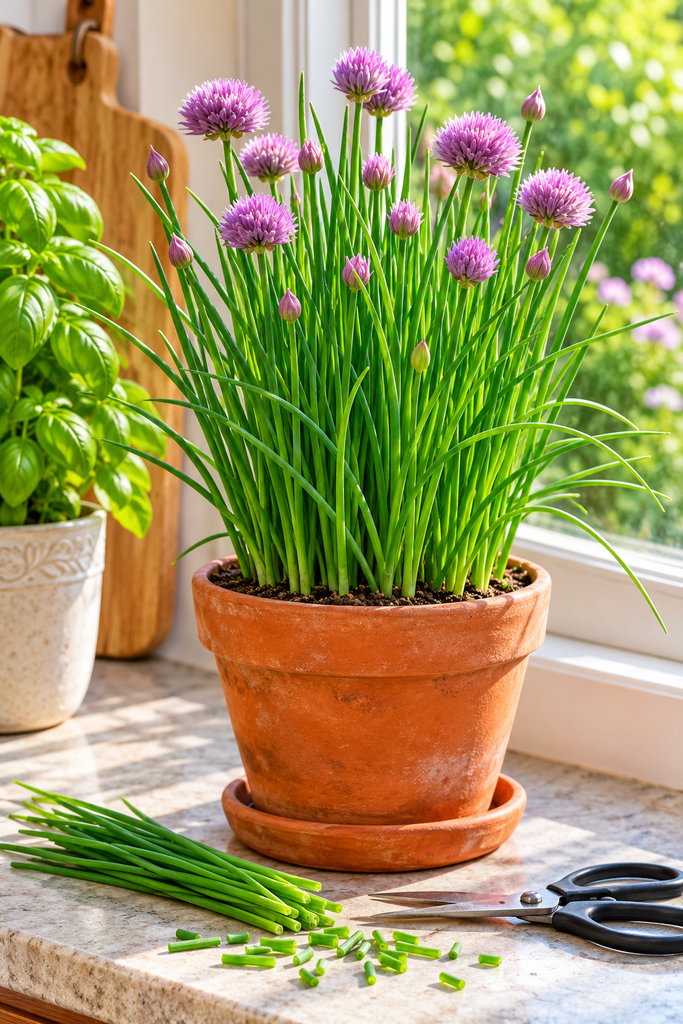
Chives Care Requirements
The table covers common chives (Allium schoenoprasum). Garlic chives and other types differ slightly.
| Factor | What it needs | Key detail |
|---|---|---|
| Light | Full sun (6–8 hours is best); tolerates light or partial shade | Indoors, give a sunny window or a grow light. |
| Watering | Evenly moist, well-drained soil | Consistent watering gives better yields. |
| Soil | Well-drained, rich in organic matter, pH about 6–7 | Pots need drainage holes. |
| Temperature | Cold-hardy; grows in roughly zones 3–9 | Dies back in cold winters and regrows in spring |
| Fertilizer | Light feeding | Compost, or half-strength liquid feed every 4–6 weeks in pots |
| Flowering/harvest | Flowers in late spring to early summer; harvest all season | Cut back after flowering to refresh the leaves |
Indoor vs. Outdoor Growing Conditions
Chives work in both places. Outdoors, they grow as hardy perennials in beds, borders, and containers. Indoors, they do well on a sunny windowsill if they get plenty of light, though they grow more slowly than outdoor plants. A common approach is to dig and divide a clump in fall, pot it up for the winter, and replant it outdoors in spring.
How Difficult Are Chives to Grow?
Chives are very easy. They tolerate a range of conditions and forgive occasional neglect. The most common problems are too little light, soggy soil, overcrowded clumps, and harvesting too hard without letting the plant recover.
1. What Is a Chive Plant?
Botanical Background and Growth Habits
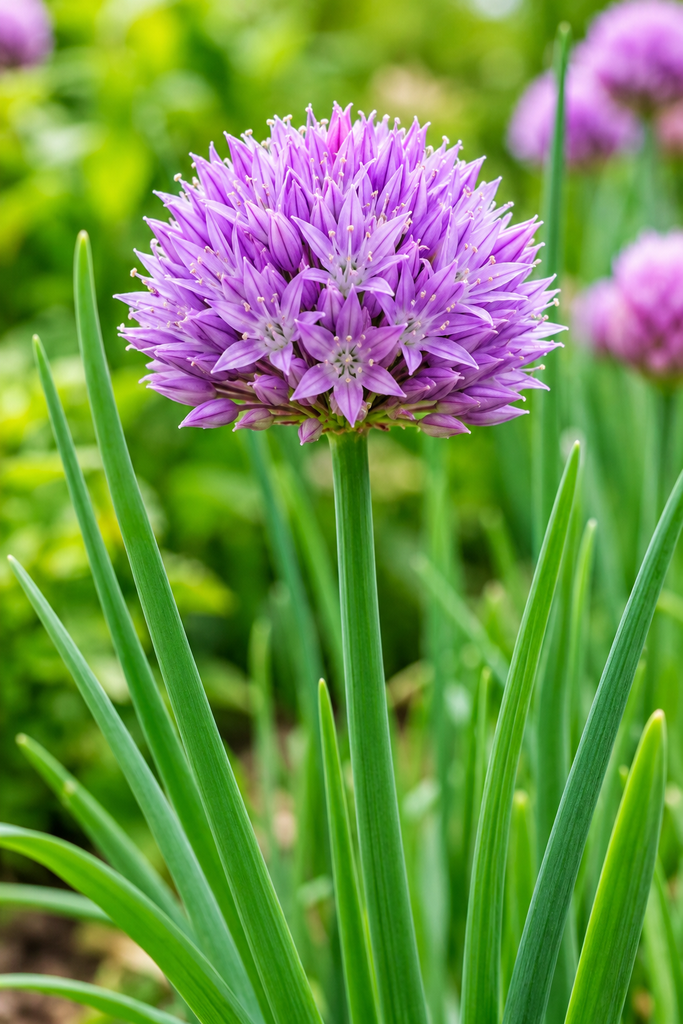
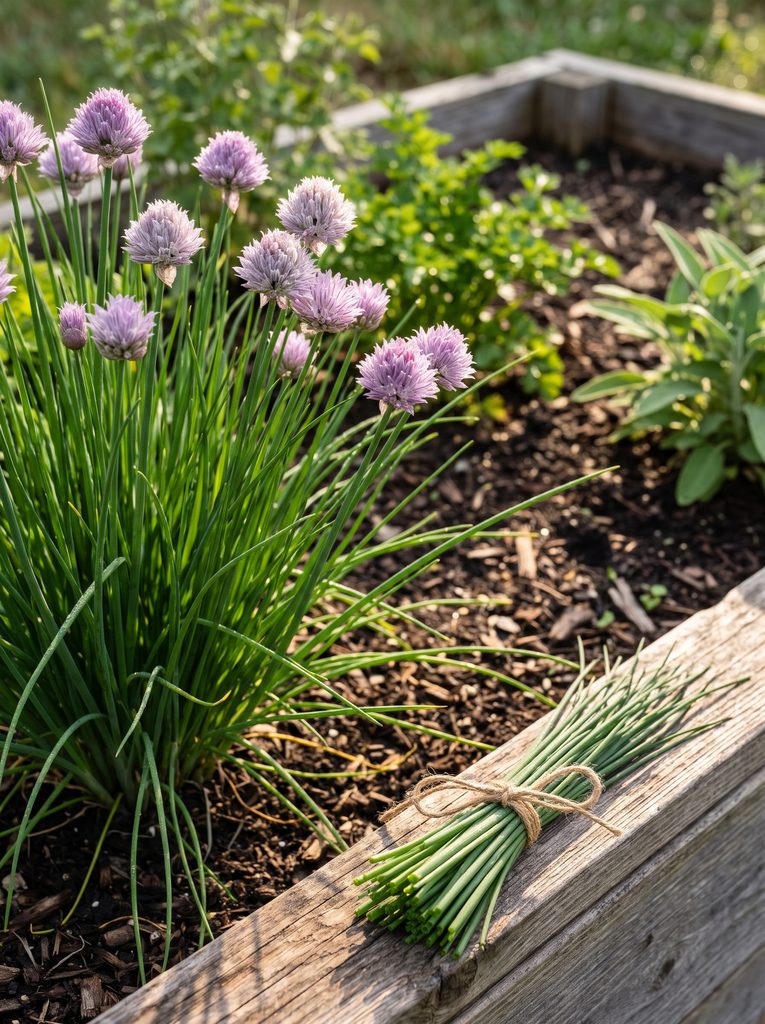
Chives (Allium schoenoprasum) belong to the onion family, Amaryllidaceae, alongside onions, garlic, and leeks. They grow in dense clumps of small bulbs with slender, hollow, tubular leaves, typically 12 to 24 inches tall. In late spring to early summer, they send up round, pom-pom flower heads in pale purple. Chives are native to parts of Europe, Asia, and North America and have been cultivated for a very long time.
Do not confuse them with garlic chives (Allium tuberosum), which have flat leaves, white flowers, and a garlicky flavor and which can self-seed freely.
Why Chives Are Popular as a Garden Plant
Chives are easy, cold-hardy, and productive, and they supply a mild onion flavor for eggs, potatoes, salads, and dips. The flowers are attractive in borders and loved by bees. According to the University of Wisconsin Extension, chives are also not favored by deer or rabbits.
How Long Can a Chive Plant Live?
Chives are perennials that can persist for many years when divided regularly. Extension sources recommend dividing clumps every two to four years to keep them vigorous. Lifespan depends on climate and care.
2. How Much Sunlight Do Chives Need?
The Best Light for Chives
Chives thrive in full sun, and the University of Minnesota Extension notes they do best in full sun and well-drained soil. Six to eight hours of direct light is ideal. They tolerate partial shade, though growth will be slower.
Can Chives Grow in Direct Sun?
Yes. In very hot climates, a little afternoon shade or shade fabric can help keep leaves tender and prevent stress.
Signs of Too Much or Too Little Light
- Too little: Thin, floppy, pale leaves, slow growth, and few flowers.
- Too much (with dry soil): Yellow or brown leaf tips, wilting, and tough leaves.
Where to Place Chives in Your Garden or on a Windowsill
Plant chives in a sunny bed, along a path, or in a pot near the kitchen door. Indoors, choose a south- or west-facing window, or use a grow light for several hours a day. Keep pets away from the plants (see the pet safety section).
Recommended Products for Growing Chives Indoors
- 💡 Full-Spectrum LED Grow Light for Herbs—Check price on Amazon
3. How Often Should You Water Chives?
How to Tell When Your Chives Need Water
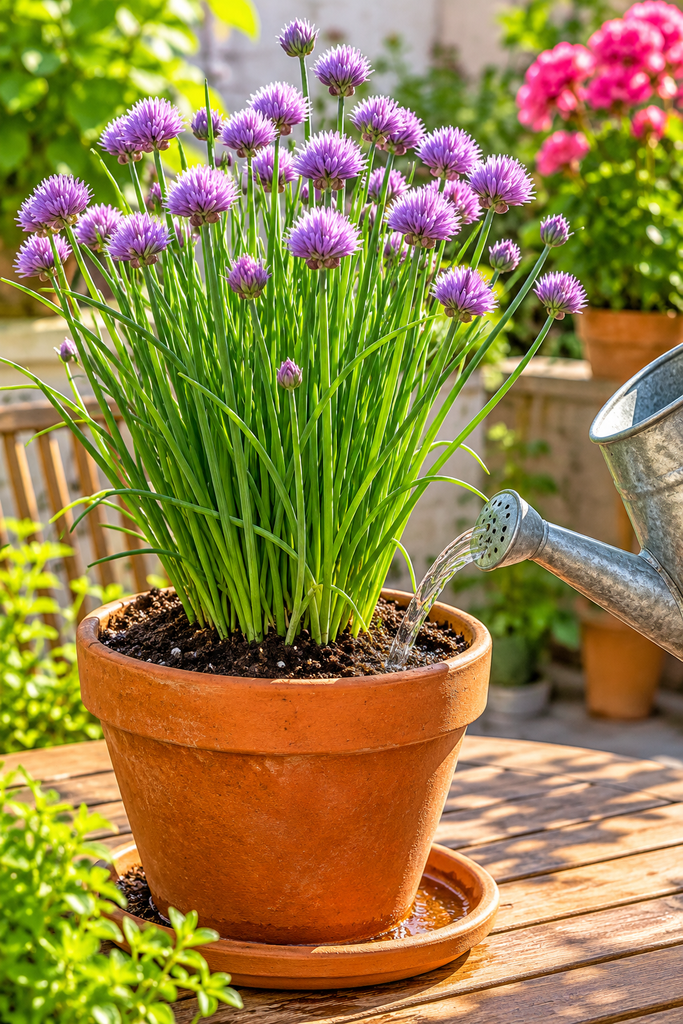
There is no fixed schedule. Check the soil with a finger. If the top inch is dry, water. Chives prefer steady moisture, and consistent watering gives better yields. Pots dry out much faster than garden beds, especially in hot weather.
The Best Way to Water Chives
Water at the base until it drains from the pot or soaks the root zone, and avoid leaving pots in standing water. Water in the morning where possible so leaves can dry.
Chives Watering in Summer and Winter
In warm weather, water more often, especially potted plants. In winter, outdoor chives go dormant and need little water, while indoor chives need water only when the top of the soil is dry.
Signs of Overwatering and Underwatering
- Overwatering: Yellowing leaves, a soft or mushy base, soggy soil, and mold on the soil surface.
- Underwatering: Wilting, brown tips, thin leaves, and slow regrowth after cutting.
How to Fix Overwatered Chives
- Let the soil dry until the top inch is dry before watering again.
- Make sure the pot has drainage holes and empty the saucer.
- Move outdoor pots out of heavy rain, or improve drainage in the bed.
- If the bulbs are soft, lift the clump, trim rotten parts, and replant in fresh, well-drained soil.
Recommended Products for Watering Chives
- 💧 Small Watering Can with a Narrow Spout—Check price on Amazon
4. What Is the Best Soil for Chives?
Choosing a Well-Draining Soil
Chives like well-drained soil rich in organic matter. Mix aged compost into garden beds before planting, and use a quality potting mix in containers. A soil pH of roughly 6 to 7 suits most gardens.
Can You Use Regular Garden Soil or Potting Soil?
Garden soil is fine in beds if it drains. Avoid using it in pots, where it compacts, and use potting mix instead.
Choosing the Right Pot and Drainage Holes
Choose a pot at least six inches deep, with drainage holes. Wider pots hold a fuller clump, and several pots let you rotate harvests.
How to Prevent Rot
Use well-drained soil, avoid overwatering, and keep mulch from piling against the base of the plants. Space plants so air can move through the clump.
Recommended Products for Chives Soil and Pots
- 🌱 Quality Potting Mix for Herbs and Vegetables—Check price on Amazon
- 🪴 Pots with Drainage Holes and Saucers—Check price on Amazon
5. Ideal Temperature and Humidity for Chives
The Best Temperature Range
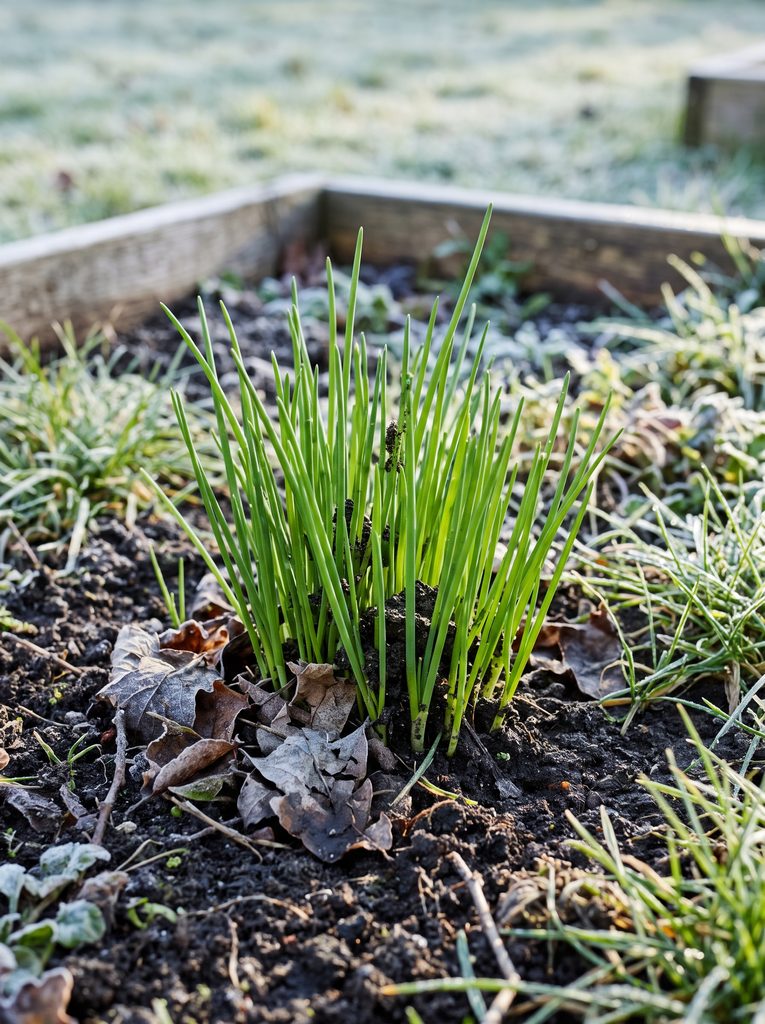
Chives are a cool-season herb and tolerate a wide range of temperatures. They grow well in spring and fall, slow in extreme summer heat, and handle cold winters easily. In hot regions, afternoon shade helps.
Protecting Chives From Cold and Frost
Chives are very cold-hardy. Sources describe them as growing in roughly zones 3 to 9, and some extend that range higher. In cold winters, the leaves die back after hard frosts and the bulbs resprout in spring. In mild climates, chives can stay evergreen. Mulch lightly in very cold regions if you wish, and trim old foliage back before new growth.
Do Chives Need High Humidity?
No. Chives are fine in normal household and garden humidity. Good airflow reduces fungal problems, especially for indoor plants and crowded clumps.
Can You Grow Chives Outdoors in the United States?
Yes, in nearly every region. Chives grow as hardy perennials in cold climates and as perennials or semi-evergreen herbs in mild ones. In hot, humid regions, give them some afternoon shade and good drainage. Check with your local extension office for timing in your area.
6. How and When to Fertilize Chives
Choosing a Suitable Fertilizer
Chives do not need much. Compost worked into the soil, or a balanced fertilizer applied once or twice a year, is often enough in the garden. University of Minnesota Extension suggests a liquid fertilizer at half the label strength every four to six weeks for chives in containers or on a sunny windowsill.
When to Feed Chives During Active Growth
Feed in spring as growth starts, and again in early summer if leaves look pale or you harvest heavily. Potted chives, which lose nutrients through frequent watering, benefit from regular light feeding.
Fertilizing After Flowering or Cutting Back
After you cut a clump back, a light feed can help new leaves come in faster. Stop feeding in fall as growth slows.
Common Fertilizing Mistakes
- Using full-strength fertilizer, which can burn leaf tips.
- Over-fertilizing, which gives soft, floppy leaves.
- Fertilizing dry soil without watering it in.
- Feeding in winter when plants are dormant.
Recommended Products for Fertilizing Chives
- 🌿 Liquid Fertilizer for Herbs and Vegetables—Check price on Amazon
7. How to Make Chives Regrow and Bloom Again
Why Your Chives Are Not Flowering or Growing Well
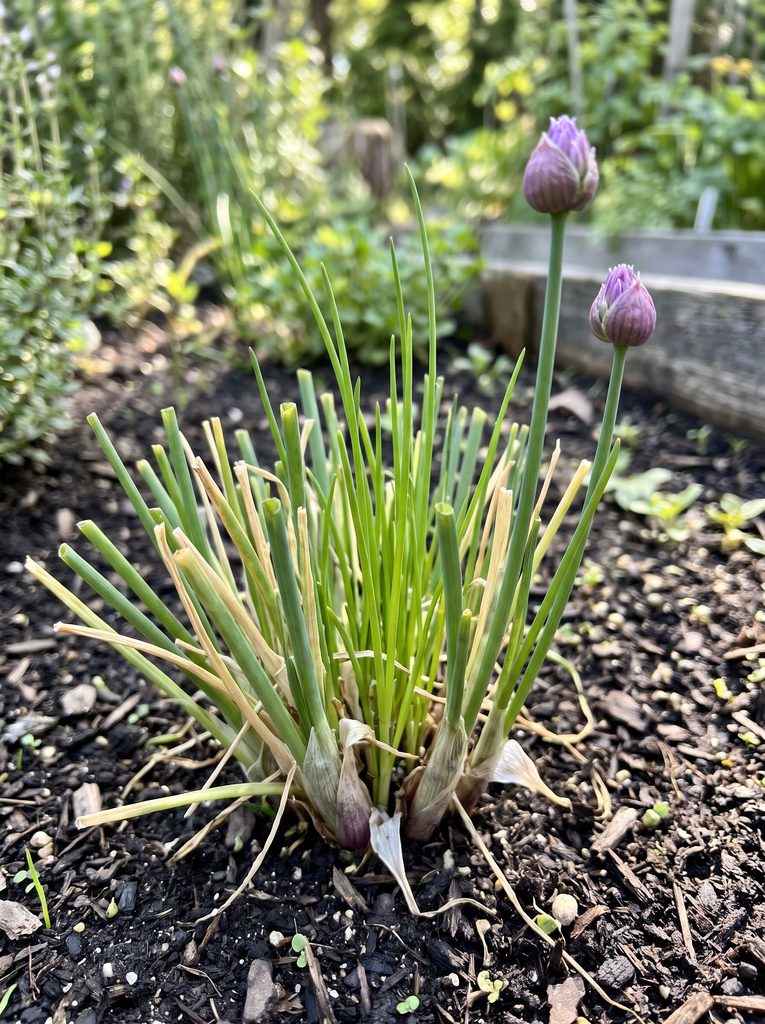
Common causes are too little sun, crowded clumps that need dividing, a young plant, or heavy harvesting that prevents flowering. Chives usually flower in late spring to early summer, so a plant that has been cut regularly may not flower at all, which is fine if you grow them for leaves.
How Chives Flower and Regrow: A Seasonal Cycle
Chives are cool-season perennials. They flower in late spring or early summer, and the flower stalks are tough. After flowering, leaf quality can decline, so cutting the clump back encourages fresh, tender leaves. There is no special light trigger. Healthy plants flower on their own timing once established.
How to Encourage Fresh Growth and More Flowers
- Give chives full sun and evenly moist soil.
- Divide crowded clumps every two to four years.
- Harvest regularly, cutting about an inch or two above the soil.
- After flowering, cut the whole clump back to a couple of inches to refresh the leaves.
- Feed lightly, and avoid heavy nitrogen.
- Let some flowers bloom if you want the blooms or seed, and deadhead the rest to prevent self-seeding.
How Long Do Chives Take to Regrow After Cutting?
It varies with weather and the plant. If you cut a whole clump back, University of Wisconsin Extension notes that it takes several weeks for the leaves to regrow. Harvesting from the outer leaves gives a continuous supply. Chives can be harvested as early as about 30 days after transplanting or 60 days after seeding, according to Utah State University Extension.
What to Do After the Flowers Fade
Cut the spent flower stalks back to the base, or cut the whole clump back to about two to three inches to force a flush of new leaves. Water and feed lightly, and the clump will fill back in.
8. How to Prune and Harvest Chives for Healthy Growth
When to Harvest and Prune Chives
Start harvesting once the leaves are about six inches long. Utah State University Extension notes that plants can be harvested 3 to 4 times in the first year and monthly in later years. Prune off damaged or yellow leaves any time.
How to Harvest Chives
Use scissors or a sharp knife to cut leaves about one to two inches above the soil, starting with the outer leaves so the center keeps growing. Cut the leaves, not just the tips, because cut tips turn brown. Take only part of the clump at one time so the plant can recover.
Sharp herb scissors or kitchen snips make clean cuts, and wiping the blades between plants helps prevent spreading disease.
How to Fix Thin, Floppy, or Overgrown Chives
Overgrown, floppy chives usually need a cut back and, if the clump is old, division. Cut the clump back to a couple of inches, water, and feed lightly. Make sure it gets enough sun.
Should You Cut Chives Back to the Ground?
Yes, occasionally. A hard cut back to about one to three inches after flowering or in midsummer forces new, tender growth. In late fall or early spring, remove dead leaves from last season before new shoots appear.
What About the Flowers?
Chive flowers are edible and attractive in salads, and the flower stalks are tough and best discarded. Remove spent flower heads before they set seed if you do not want chives to spread.
Recommended Products for Harvesting Chives
- ✂️ Herb Scissors or Kitchen Snips — Check price on Amazon
9. How to Propagate Chives at Home
How to Propagate Chives by Division
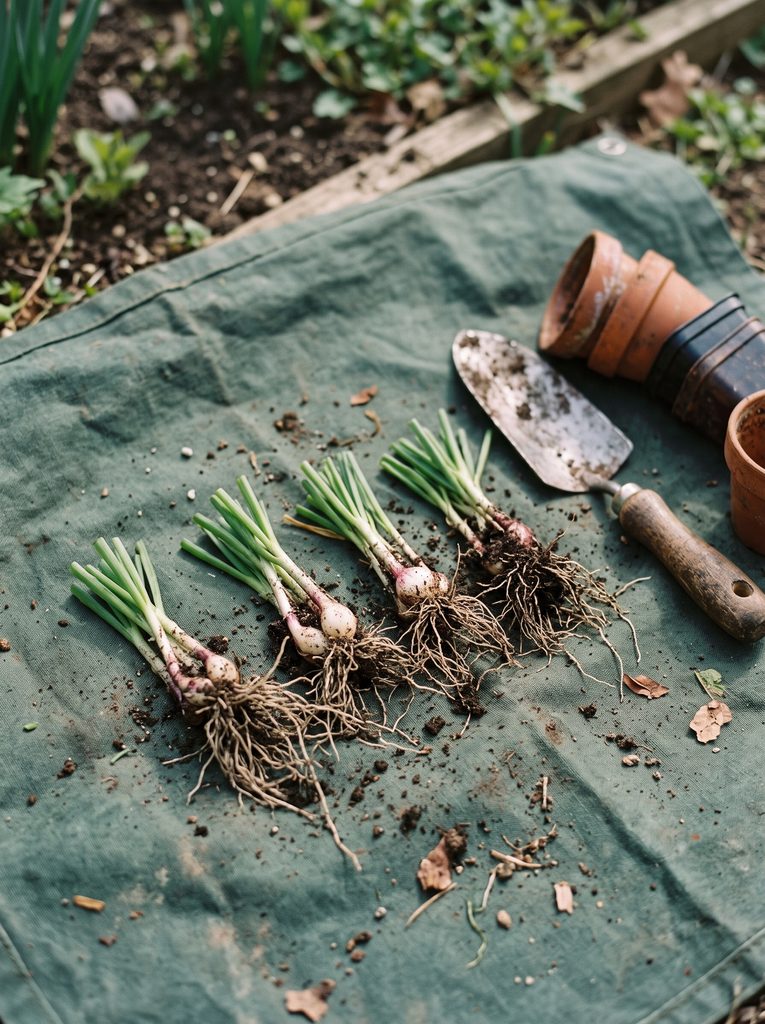
Division is the easiest and fastest method, and it keeps the plant vigorous.
- In spring, water the clump a day ahead and dig it up.
- Trim the tops back to about two inches and the roots to about three inches.
- Pull or cut the clump into sections of about four to six bulbs each.
- Replant at the same depth, and keep the soil moist while the divisions settle.
How to Grow Chives From Seed
Seed takes longer, but it is inexpensive. Sow seed in spring, a couple of weeks before the last frost outdoors, or start it indoors earlier. Chives may be harvested about 60 days after seeding. Utah State University Extension recommends spacing plants about four to six inches apart.
Can You Propagate Chives From a Cutting or Leaf?
No. Cut leaves will not root into a new plant. Use division or seed.
How to Care for Newly Propagated Plants
Keep divisions and seedlings evenly moist, in bright light, and let them establish for several weeks before harvesting. Avoid heavy feeding until they are growing well.
Recommended Products for Propagating Chives
- 🌱 Seed Starting Trays with Humidity Dome — Check price on Amazon
10. When and How to Repot or Divide Chives
Signs Your Chives Need Dividing or a Bigger Pot
- A crowded clump with a dead or thin center.
- Roots growing out of the drainage holes.
- Fewer, thinner leaves and slow regrowth.
- Soil that dries out very quickly.
Step-by-Step Dividing and Repotting Instructions
- Divide in early spring, or in fall if you want to pot some up for indoors.
- Lift the clump, trim the tops, and divide it into sections of four to six bulbs.
- Replant divisions about eight to twelve inches apart in the garden, or place a few sections in a pot with fresh mix.
- Water thoroughly and keep the soil moist.
The Best Time of Year to Divide or Repot
Spring is best, as growth begins. Extension sources recommend dividing every two to four years. A fall division can be potted for winter use and replanted outdoors in spring.
Aftercare to Reduce Transplant Stress
Water regularly, protect from hot afternoon sun for a few days, and wait several weeks before harvesting heavily.
Recommended Products for Repotting Chives
- 🧰 Small Hand Trowel — Check price on Amazon
11. Popular Chives Varieties to Grow at Home
Common Chives (Allium schoenoprasum)
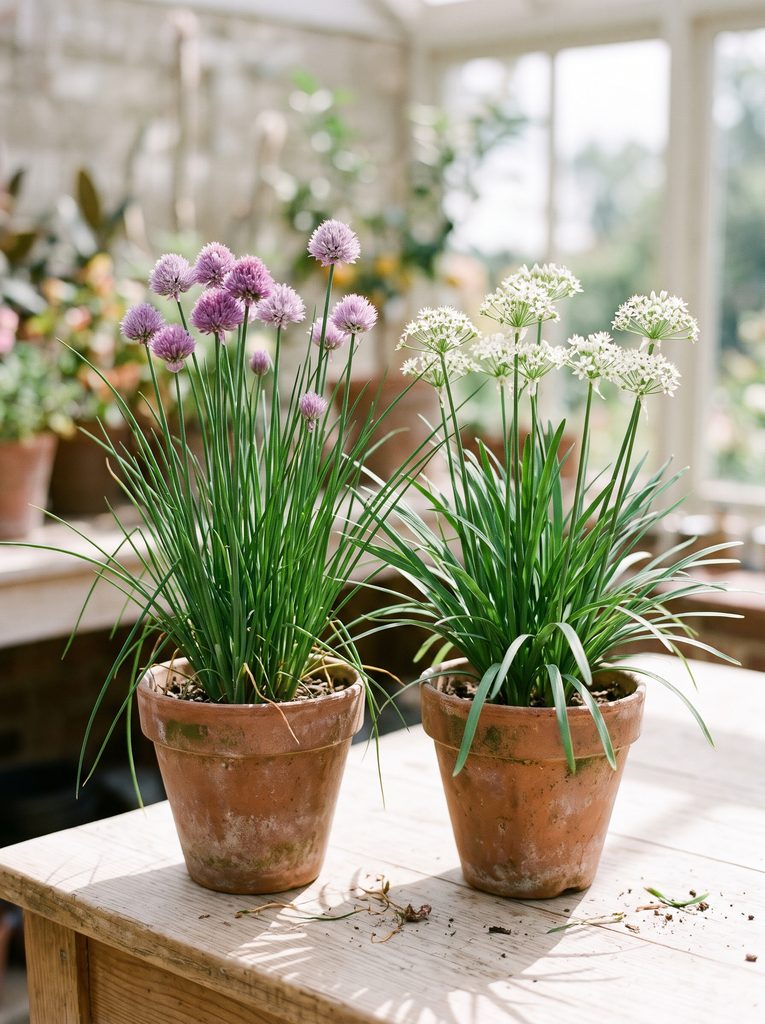
The standard garden chive, with slender, hollow leaves, mild onion flavor, and round pale purple flowers. It is hardy, easy, and grows 12 to 24 inches tall.
Garlic Chives (Allium tuberosum)
A related herb with flat, strap-like leaves, white flowers, and a garlic-like flavor. It is also hardy, but it can self-seed freely, so deadhead flowers if you do not want it to spread.
Giant Siberian Chives
Larger, coarser chives sold under names such as Siberian or giant chives, often with a stronger flavor and bigger plants. Check the tag, because different species are sold under these names.
‘Staro’
A cultivar sold for upright, vigorous growth and good leaf production. Check seed catalogs for current descriptions, since availability varies.
‘Polyvert’
A chive cultivar sold for a large, fast-growing, leafy plant. Check seed catalogs for details.
‘Forescate’
A chive cultivar grown for its pink to rose-colored flowers, popular as an edible ornamental. Check seed catalogs for current descriptions.
White-Flowered Chives
Selections of common chives with white flowers, used as an edible ornamental and as a contrast in herb beds. Names and availability vary, so check the plant tag.
Chive Seed Mixes and Blends
Seed packets labeled simply as chives are usually common chives. For the leaf flavor you want, choose a named type and note the days to harvest.
How to Choose the Right Chives for Your Garden
Choose common chives for the classic mild onion flavor, garlic chives for a garlicky taste, and pink- or white-flowered selections for ornamental beds. If you do not want a plant to self-seed, deadhead garlic chives promptly. Check labels, because common names are used loosely.
| Common name | Botanical name | Appearance | Mature size (approximate) | Light needs | Growing considerations |
|---|---|---|---|---|---|
| Common chives | A. schoenoprasum | Round hollow leaves, purple flowers | About 12–24 in. | Full sun to part shade | Hardy; mild onion flavor |
| Garlic chives | A. tuberosum | Flat leaves, white flowers | About 12–24 in. | Full sun | Garlic flavor; self-seeds freely |
| Giant Siberian chives | Allium sp. (check tag) | Larger, coarser leaves | Check tag | Full sun | Stronger flavor; names vary |
| ‘Staro’ | A. schoenoprasum cultivar | Upright, vigorous leaves | Check tag | Full sun | Check current catalog notes |
| ‘Polyvert’ | A. schoenoprasum cultivar | Large, leafy plant | Check tag | Full sun | Check current catalog notes |
| ‘Forescate’ | A. schoenoprasum cultivar | Pink to rose flowers | Check tag | Full sun | Ornamental and edible |
| White-flowered chives | A. schoenoprasum selections | White flowers | Check tag | Full sun | Names vary |
Sizes are approximate and vary with climate and variety. Check each seed packet or plant tag.
Recommended Products for Growing Chives Varieties
- 🏷️ Reusable Plant Labels — Check price on Amazon
12. Common Chives Problems and How to Fix Them
Why Are My Chives Turning Yellow?
Yellow leaves can come from overwatering, poor drainage, too little light, underfeeding, or natural aging of older leaves. Check soil moisture, sun, and whether the clump is overcrowded.
Why Are the Leaves Soft, Floppy, or Mushy?
Floppy, thin leaves usually mean too little light, overfeeding, or a crowded clump. Soft, mushy bulbs and bases point to rot from wet soil.
Why Are My Chives Dying Back?
In cold regions, chives die back after hard frost, which is normal. They also slow in extreme summer heat. Dieback during the growing season suggests rot, drought, or crowding.
Why Are My Chives Growing Thin or Slowly?
Usually crowding, poor light, low fertility, or repeated close cutting. Divide the clump, give it more sun, and feed lightly.
Brown Leaf Tips and Sunburn
Brown tips can come from cutting just the tips, drought, heat, or fertilizer burn. Cut leaves lower down, water regularly, and avoid over-fertilizing.
Common Chives Pests and Diseases and How to Manage Them
Chives are generally trouble-free, and the University of Wisconsin Extension notes they have no significant insect or disease problems. Occasional problems can include aphids, onion thrips, and fungal problems such as rust or mildew in damp, crowded conditions. Rinse pests off with water, improve airflow, remove affected leaves, and avoid overhead watering. If you use a treatment, make sure it is labeled for edible herbs and follow the label.
How to Tell Whether Your Chives Can Be Saved
Check the bulbs. Firm, white or pale bulbs mean the plant can regrow, even if the leaves are damaged. Soft, brown, smelly bulbs are rotting, so divide and replant the healthy ones in fresh soil.
| Symptom | Possible cause | How to confirm | Recommended solution |
|---|---|---|---|
| Yellow leaves, wet soil | Overwatering or poor drainage | Soil is soggy; bulbs soft | Reduce watering; improve drainage; replant healthy bulbs |
| Yellow or brown tips | Underwatering, heat, or cut tips | Dry soil; tips cut straight across | Water regularly; cut leaves lower down |
| Thin, floppy leaves | Low light or crowded clump | Little sun; dense or dead center | Add sun; divide clump |
| Leaves die back in winter | Normal dormancy | Cold weather; bulbs firm | Wait for spring regrowth |
| No flowers | Frequent cutting, shade, or young plant | Cut often; low light | Let some stalks flower; add sun; be patient |
| Tough, strong-tasting leaves | Old leaves or hot weather | Older leaves; hot spell | Cut back; harvest younger leaves |
| Tiny insects on leaves | Aphids or thrips | Look closely at leaves | Rinse off; improve airflow; use an edible-safe treatment if needed |
| Orange or white spots on leaves | Rust or mildew | Spots on leaves in damp weather | Remove affected leaves; improve airflow; avoid wetting leaves |
| Slow regrowth after cutting | Hard cut, low fertility, or heat | Recent heavy cut | Wait several weeks; feed lightly |
Recommended Products for Chives Problems
- 🧴 Insecticidal Soap Labeled for Edible Plants — Check price on Amazon
13. Are Chives Toxic to Cats and Dogs?
What Pet Owners Should Know About Chives
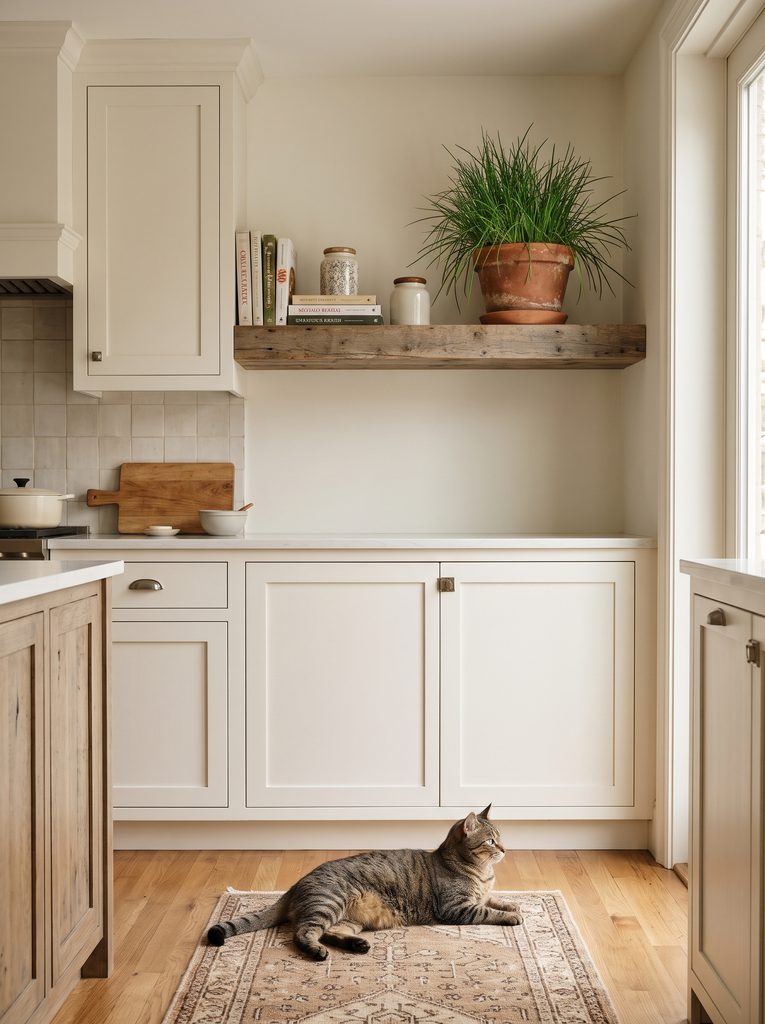
Yes. The ASPCA lists chives (Allium schoenoprasum) as toxic to dogs, cats, and horses. The toxic principle listed is N-propyl disulfide. Clinical signs listed by the ASPCA include vomiting, breakdown of red blood cells (hemolytic anemia), blood in urine, weakness, a high heart rate, and panting. Chives belong to the same family as onions, garlic, and leeks, and veterinary sources note that cats and some dog breeds, such as Japanese breeds like Akita and Shiba Inu, are more sensitive. Cooking and drying do not remove the risk, so chives in foods such as dips, baked potatoes, and sauces are a concern too.
How to Keep Chives Away From Pets
Grow chives where pets cannot reach them: in fenced raised beds, on high shelves, or in hanging pots. Windowsill pots can be tempting for cats, so keep them out of reach. Do not feed pets table scraps that contain chives, onion, or garlic, and keep cut chives off low counters.
What to Do if a Pet Eats Chives
Call your veterinarian or the ASPCA Animal Poison Control Center at (888) 426-4435, or the Pet Poison Helpline at (855) 764-7661, right away (consultation fees may apply). Tell them how much was eaten, what type of pet it is, and when. Signs may take a day or more to appear, so do not wait for symptoms, and do not induce vomiting unless a veterinarian tells you to.
14. Seasonal Chives Care Calendar
Timings below are general for US gardens. Regional climate and the type of chives change the schedule.
Spring: Encourage New Growth
Watch for new shoots as the soil warms. Divide old clumps, plant seedlings after frost danger has passed, top-dress with compost, and begin harvesting once leaves are about six inches long.
Summer: Manage Sunlight and Watering
Water consistently, harvest regularly, and cut back clumps after flowering to refresh the leaves. Provide afternoon shade in very hot climates, and deadhead to prevent self-seeding.
Fall: Prepare for Winter
After the first hard frost, leaves die back. Cut off dead foliage, mulch lightly in very cold regions, and dig and divide a clump to pot up for winter use if you like.
Winter: Rest and Windowsill Chives
Outdoor chives are dormant and need little care. Indoor pots need bright light and water only when the top of the soil is dry. Plan for spring division.
15. Frequently Asked Questions About Chives Plant Care
Are Chives an Indoor or Outdoor Plant?
Both. Chives are hardy outdoor perennials that also grow in pots on a sunny windowsill, though indoor plants grow more slowly and need plenty of light.
How Often Should You Water Chives?
Water when the top inch of soil is dry, keeping it evenly moist but not soggy. Pots need water more often than garden beds, especially in hot weather.
Do Chives Need Direct Sunlight?
Chives grow best in full sun, about six to eight hours a day, but tolerate partial shade with slower growth. Indoors, give them a sunny window or a grow light.
Can Chives Come Back Every Year?
Yes. Chives are perennials that die back in cold winters and regrow from their bulbs in spring. Dividing clumps every few years keeps them vigorous.
Should You Remove Chive Flowers?
It depends. The flowers are edible and attract bees, but the stalks are tough. Remove spent flowers if you want to prevent self-seeding or refresh the leaves.
Can Chives Survive Winter?
Yes. Chives are very cold-hardy and survive winters in roughly zones 3 to 9. The leaves die back, and new shoots appear in spring.
Can You Grow Chives From Cuttings or Scraps?
Not from cut leaves. Divide a clump or sow seed instead.
Why Are My Chives Healthy but Not Flowering?
Usually frequent cutting, too much shade, or a young plant. Let some plants grow undisturbed, add sun, and be patient. If you grow chives for leaves, flowering is optional.
Final Thoughts on Growing Healthy Chives
Healthy chives need full sun, well-drained soil, steady moisture, light feeding, regular harvesting, and division every few years. Cut back after flowering for fresh leaves, and keep the plants out of reach of pets, since chives are toxic to dogs and cats. Start by dividing any crowded clump this spring, because that single step refreshes the plant and gives you more of it.