Bougainvillea Colors: 15 Stunning Shades and Beautiful Varieties
This article may contain affiliate links. As an Amazon Associate, I earn from qualifying purchases at no extra cost to you.
Introduction
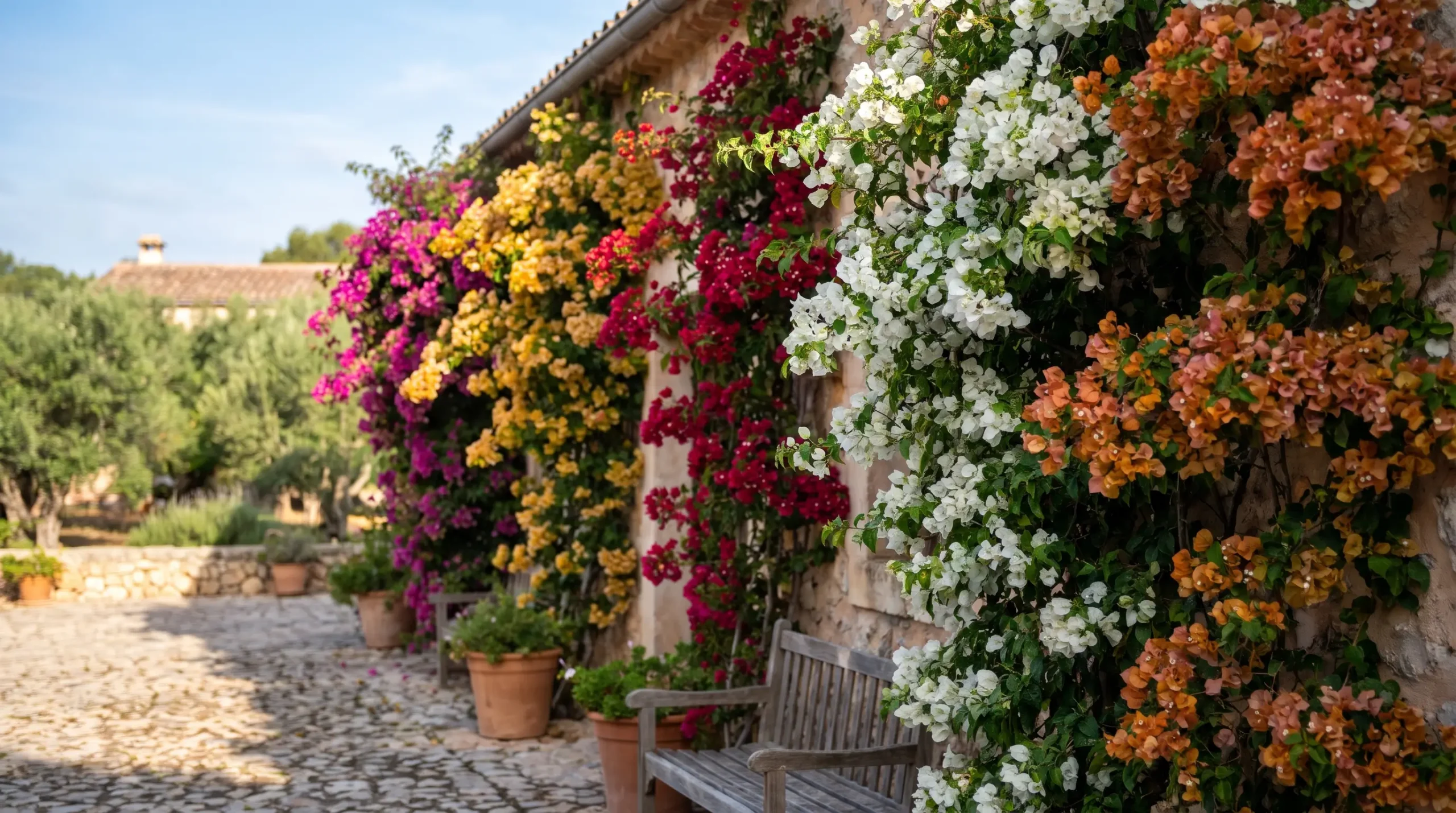
Few climbing plants match the color of a bougainvillea in full bloom. A single plant can cover a wall in hot magenta, glow in sunset orange, or look like fresh snow on a pergola.
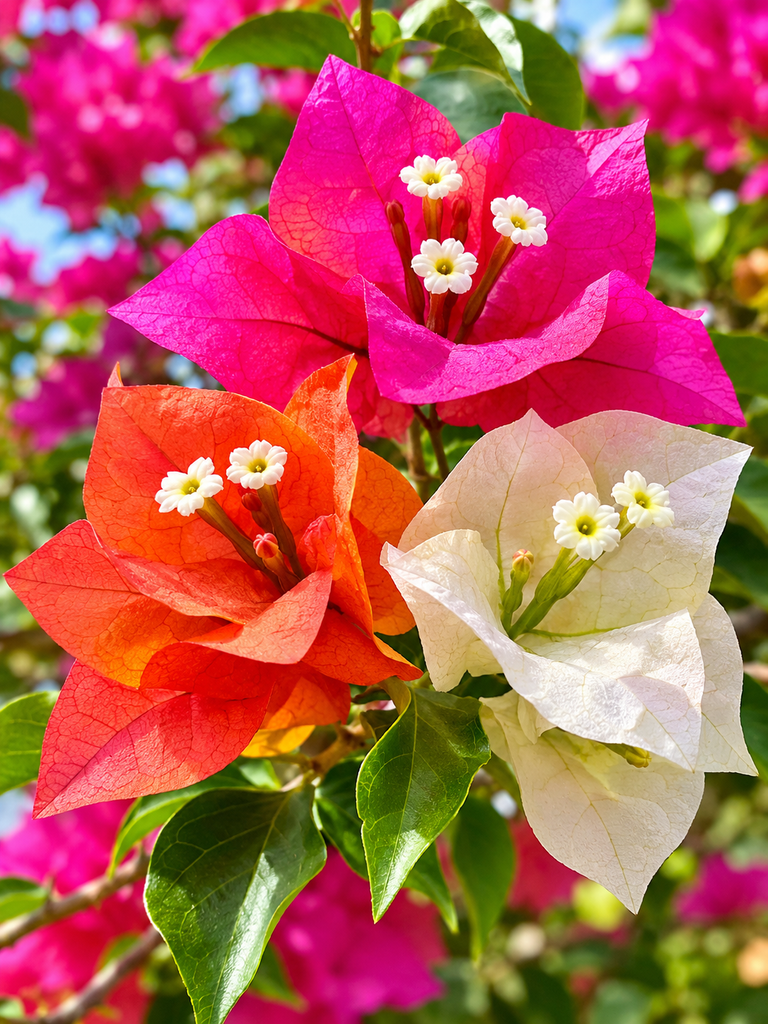
The color doesn’t come from the flowers. The true flowers are small, tubular, and cream or white, and they sit in the center of three large, papery bracts, which are modified leaves. The bracts provide the color and last for weeks, which is why bougainvillea looks “in bloom” for so much of the year.
Pink, magenta, purple, and red are the most familiar colors. Orange, gold, peach, and white cultivars are widely sold too, and bicolor types are the most unusual. This guide covers 15 color groups, the best-known varieties in each, the rarest colors, the truth about “blue” and “black” bougainvillea, and how to choose a color for your garden.
Help Your Bougainvillea Grow Faster and Bloom Beautifully!
Give your bougainvillea the right care with these helpful gardening essentials:
- 🌸 High-Phosphorus Bloom Booster Fertilizer—Check price on Amazon
- ✂️ Bypass Hand Pruners or Garden Shears—Check price on Amazon
- 🪴 Large Terracotta Pots with Drainage Holes—Check price on Amazon
What Colors Do Bougainvillea Come In?
Bougainvillea comes in a wide range of warm and cool hues: pink, magenta, purple, red, orange, yellow, gold, white, and cream, plus soft in-between shades such as coral, peach, salmon, and lavender.
- Most common: magenta, pink, purple, and red. These come from the original wild species (Bougainvillea glabra, B. spectabilis, B. peruviana) and the early hybrids built on them.
- Less common: orange, gold, yellow, peach, and white, which became widely available through selective breeding and natural mutations (“sports”).
- Bract colors in practice: They are pigmented with betalains, the same family of pigments that colors beets. Betacyanins give reds, magentas, and purples. Betaxanthins give yellows and oranges. The mix of the two explains the many in-between shades.
- Are all colors natural? Yes, every color is a natural pigment expression. But most orange, gold, peach, and bicolor plants are cultivated selections or hybrids, not wild forms. Wild plants are mostly magenta to purple.
- 🧤 Thorn-Proof Gardening Gloves—Check price on Amazon
- 🌿 Garden Trellis for Climbing Plants—Check price on Amazon
- 🌱 Bougainvillea Potting Mix (Well-Draining)—Check price on Amazon
15 Beautiful Bougainvillea Colors and Their Varieties
1. Pink Bougainvillea
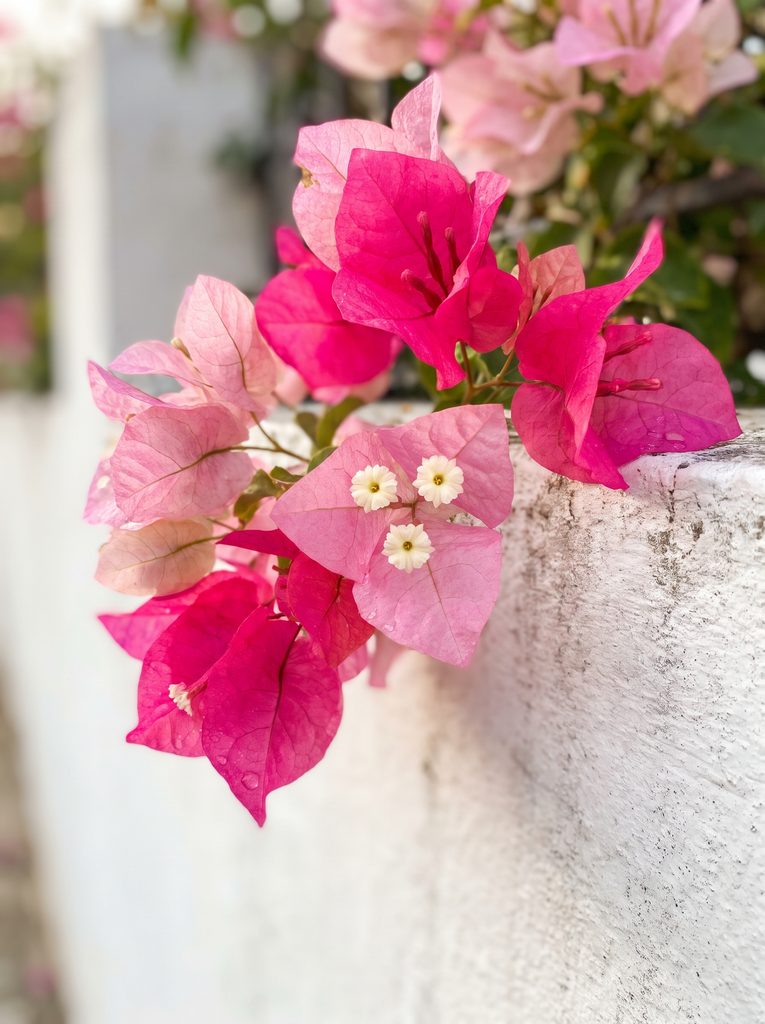
Pink is the most popular choice, and it covers a wide range: light pink (soft, powdery), hot pink (strong and eye-catching), and deep pink (almost rosy-red).
- Popular cultivars: ‘Singapore Pink’, ‘Texas Dawn’, ‘Helen Johnson’ (a compact pink often used in pots), and ‘Pink Pixie’ (dwarf).
- What makes it unique: Pink blends easily with almost any garden palette and is one of the most forgiving shades. It looks good against green foliage, white walls, and terracotta.
2. Purple Bougainvillea
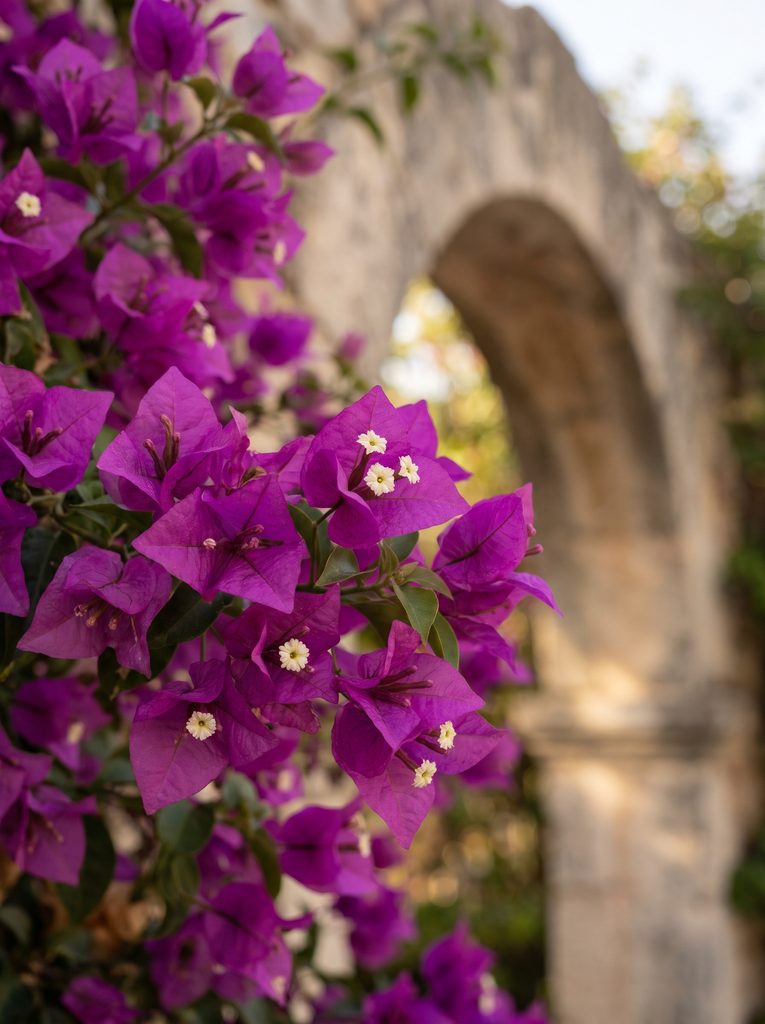
Purple ranges from violet and royal purple to deep, wine-toned purple.
- Popular cultivars: ‘Sanderiana’ (a classic, vigorous purple with a long history in cultivation), ‘Vera Deep Purple’, and ‘Alexandra’ (lilac-purple).
- Purple vs. magenta: Purple leans blue and cool. Magenta leans red and warm. In garden practice, many plants labeled “purple” are really a purple-magenta, so judge by bloom photos taken in daylight.
3. Magenta Bougainvillea
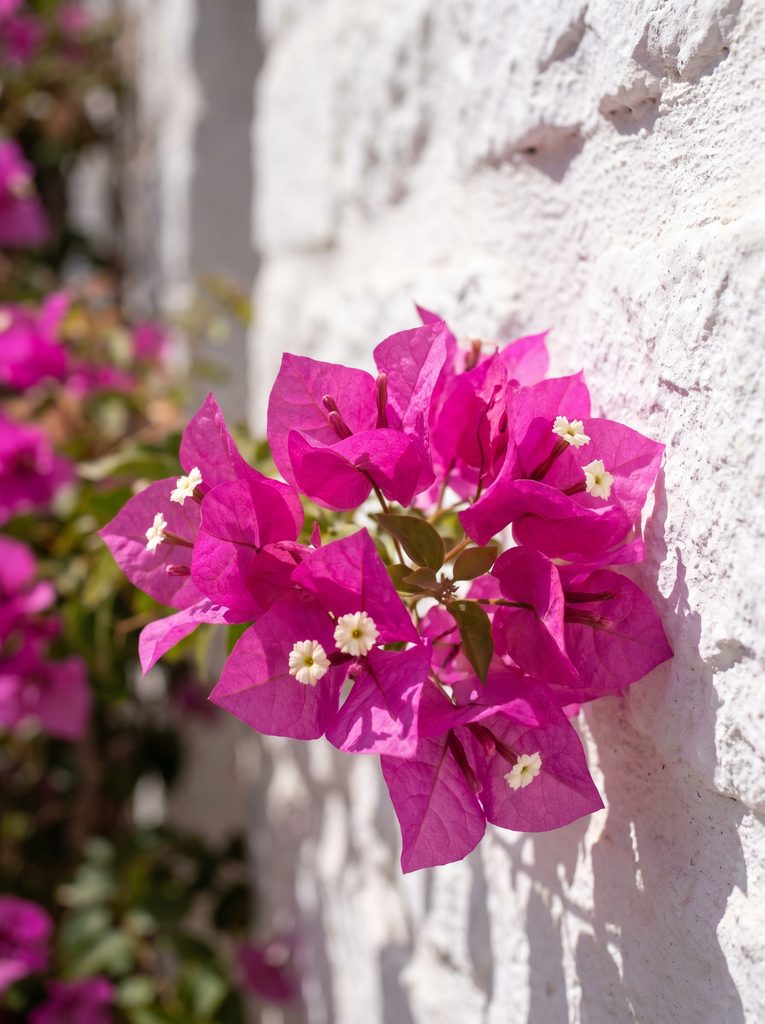
Magenta is the signature bougainvillea color: a vivid, electric reddish-purple that is hard to miss.
- Characteristics: Intense, saturated bracts that hold well in full sun.
- Popular cultivars: ‘Torch Glow’ and a number of vigorous hybrids sold simply as “magenta”.
- Magenta vs. pink and purple: Magenta is deeper and more saturated than pink and warmer than purple. It sits between the two.
4. White Bougainvillea
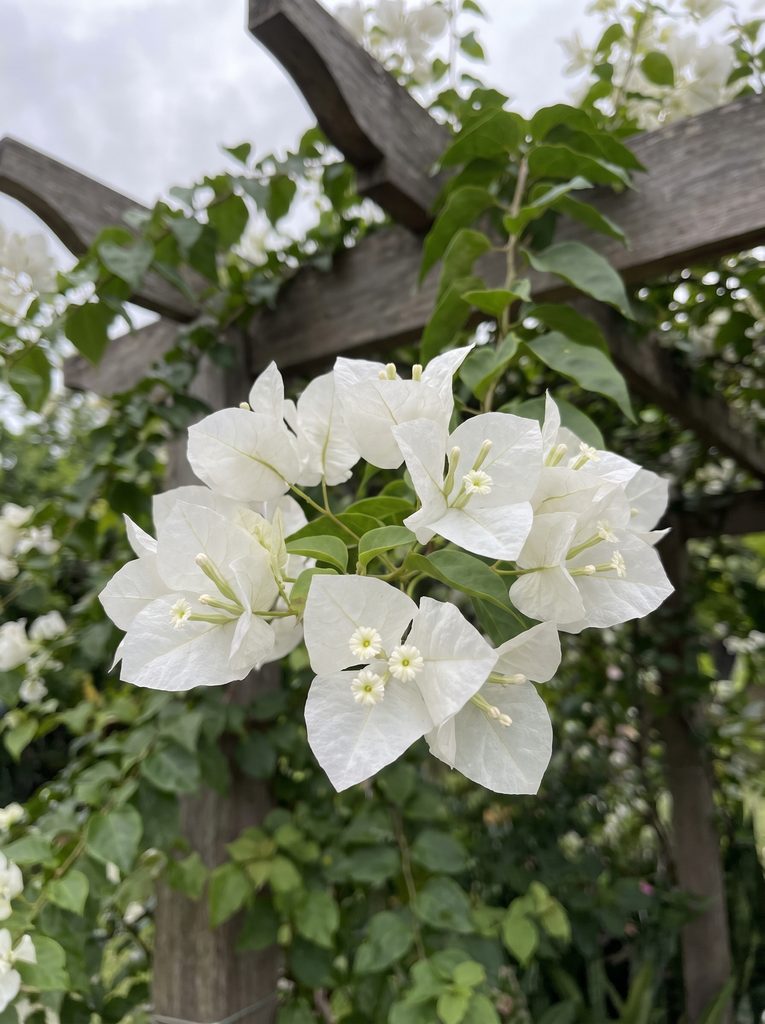
White bougainvillea is clean, bright, and elegant.
- Popular cultivars: ‘White Madonna’, ‘Jamaica White’, ‘Miss Alice’.
- Pure white vs. creamy-white: Some selections open with a faint green or cream cast and turn whiter as bracts mature.
- Why it stands out: White shows up well at dusk and brings relief to color-heavy gardens. The cultivars are also often paired with colored plants for contrast.
5. Red Bougainvillea
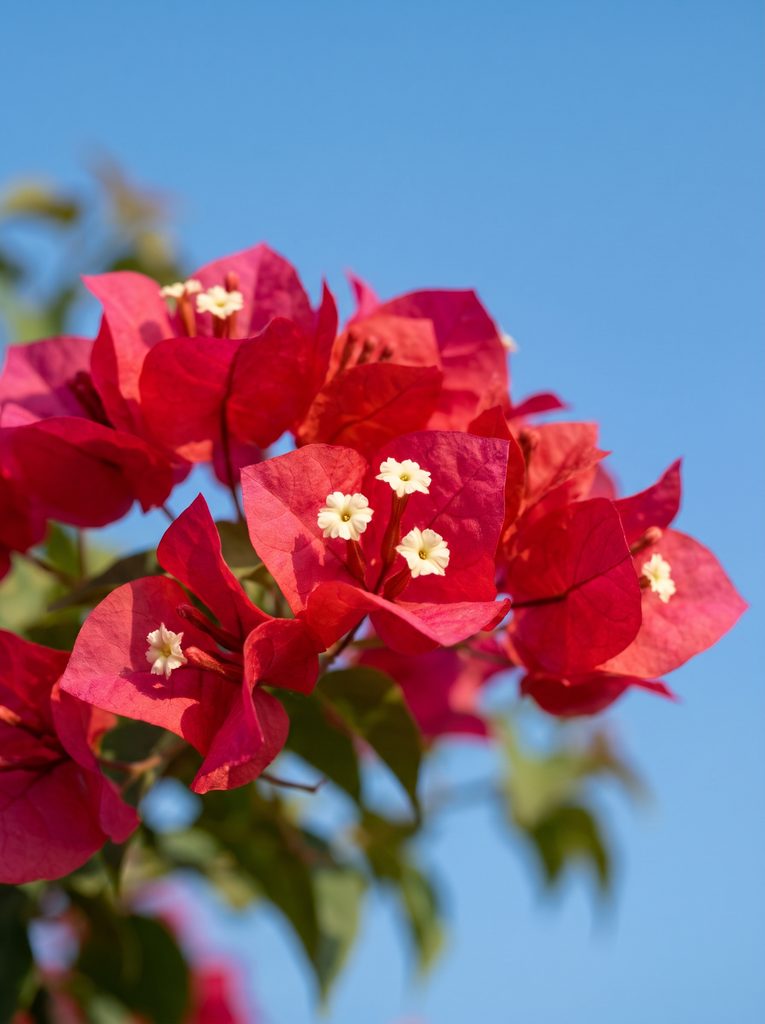
True red is a vivid, bright red, crimson, or scarlet.
- Popular cultivars: ‘Barbara Karst’ (the best-known “red,” though it leans magenta-red), ‘San Diego Red’, ‘Mrs. Butt,’ and ‘Crimson Jewel’ (a compact option).
- Red vs. pink: Red cultivars usually have deeper bract pigments and a warmer tone. Even so, many “red” bougainvilleas lean magenta, so a truly orange-red or scarlet is uncommon.
6. Orange Bougainvillea
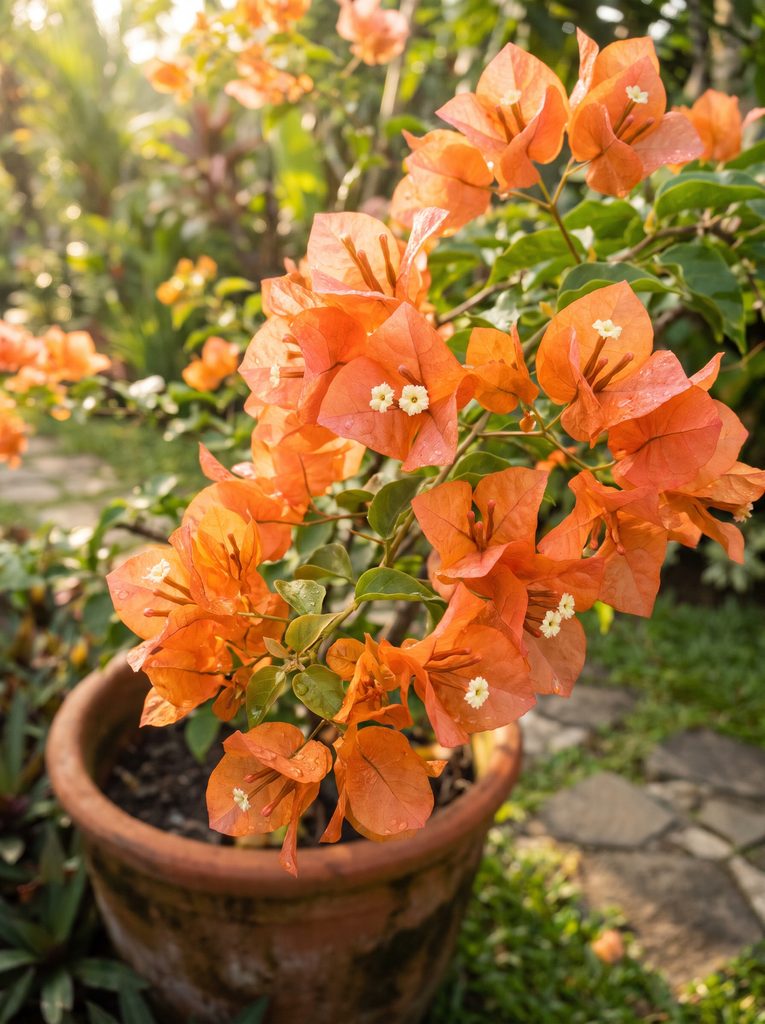
Orange brings a warm, tropical feel, from bright orange to burnt orange.
- Popular cultivars: ‘Afterglow,’ ‘Orange King,’ ‘Sundown.’
- In the landscape: Orange suits tropical and Mediterranean schemes and looks striking against blue walls, white stucco, or dark foliage. The color shifts with age, often fading toward pink or coral as the bracts mature.
7. Yellow Bougainvillea
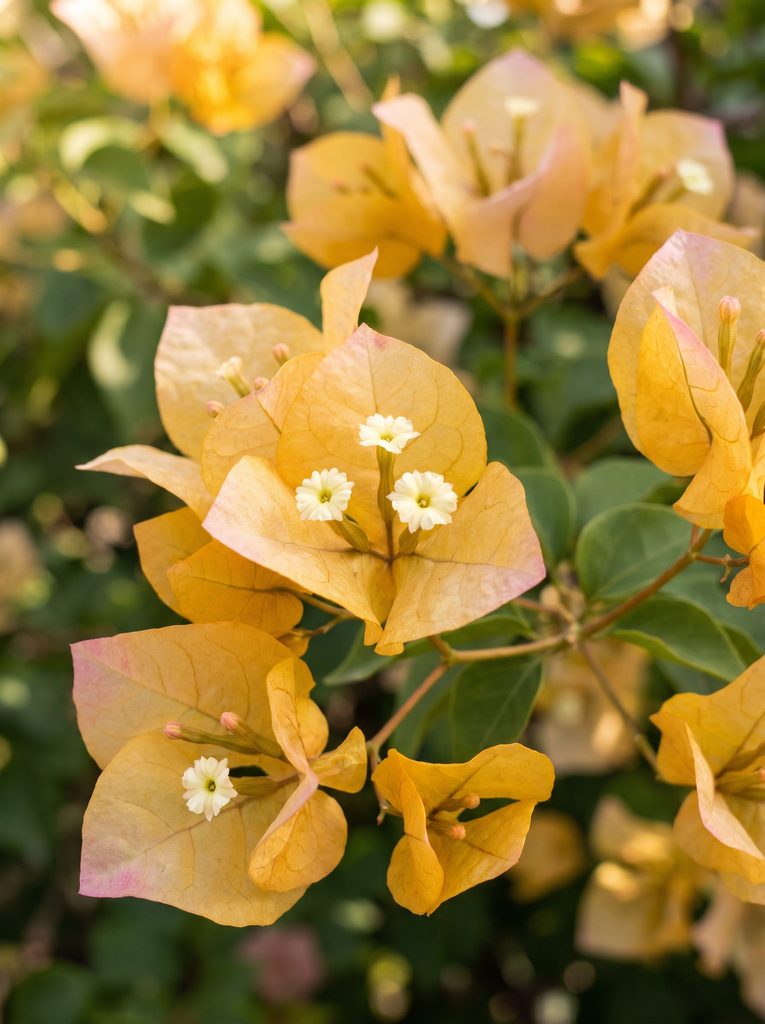
Yellow bougainvillea ranges from pale, buttery yellow to rich golden-yellow.
- Popular cultivars: ‘California Gold’, ‘Thai Gold’, and ‘Delta Dawn’ (yellow-orange tones).
- What makes it distinctive: Yellow comes from betaxanthin pigments and is less common than magenta or pink. Many yellow cultivars change color as the bracts age, often turning pinkish or peachy. Cool temperatures and strong light influence how intense the yellow is.
8. Coral Bougainvillea
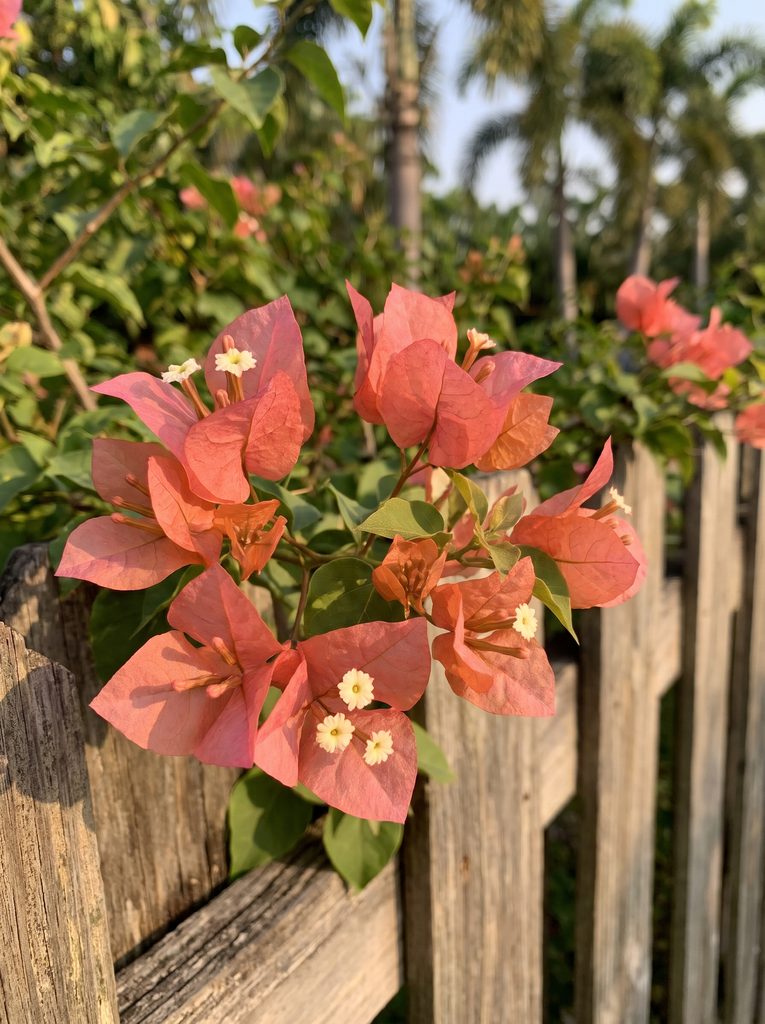
Coral sits between pink and orange, in a coral-pink or coral-orange range.
- Popular selections: Several “Coral” and sunset-toned hybrids are sold under varied names. Names vary between nurseries.
- Coral vs. salmon: Coral is brighter and more saturated. Salmon is softer and more muted.
9. Peach Bougainvillea
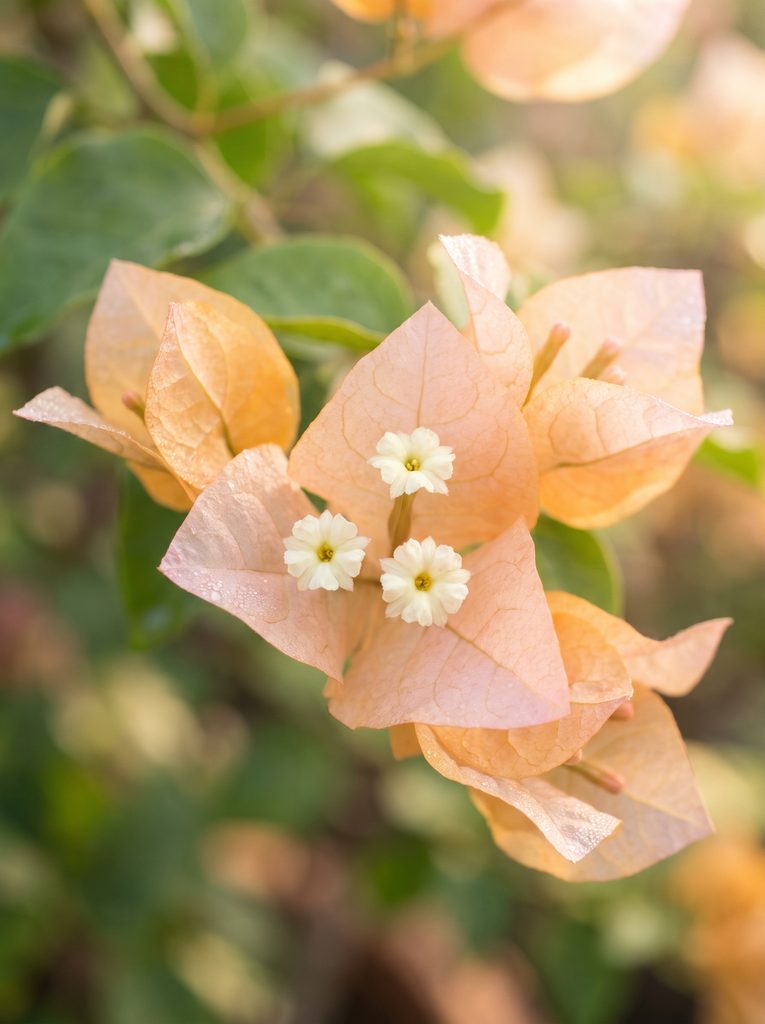
Peach is a gentle, warm blend of pink, orange, and cream, including apricot tones.
- Popular selections: ‘Sundown’ and similar hybrids sold as “peach” or “apricot”.
- Characteristics: Peach shades are often transitional. A bract that opens peach may deepen to pink or fade to cream as it ages, so a plant can show several tones at once.
10. Salmon Bougainvillea
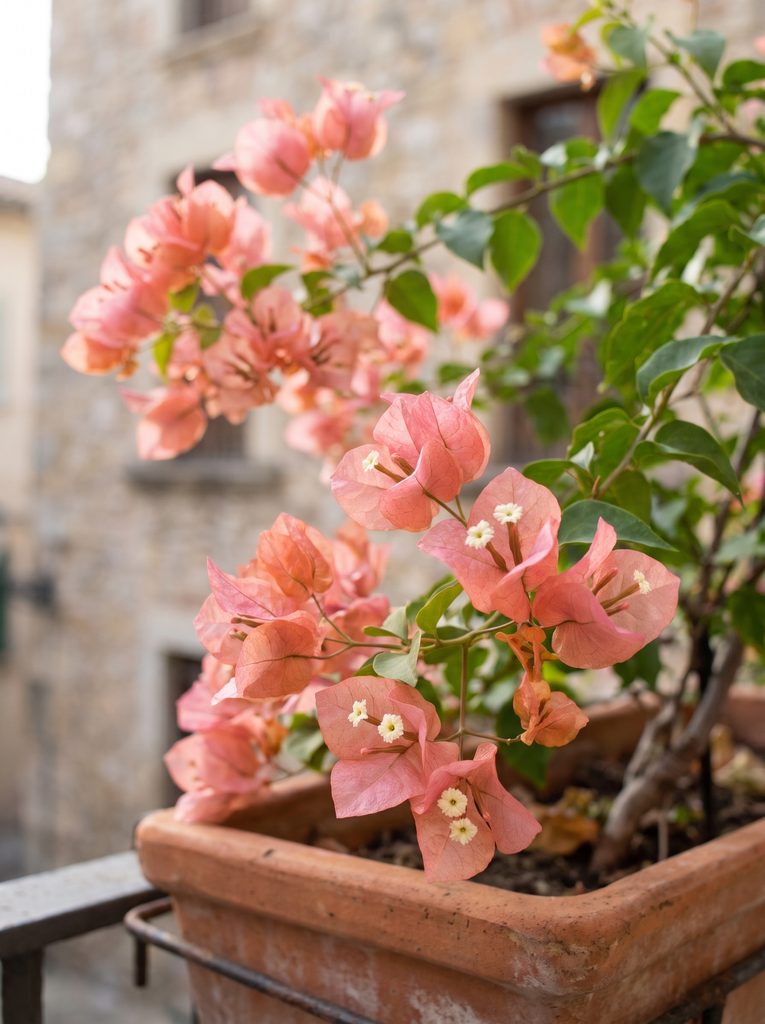
Salmon is a warm, orange-tinged pink, softer than coral and pinker than peach.
- Salmon vs. peach vs. coral: Peach has more yellow and cream, coral is more saturated and vibrant, and salmon sits between them with a pink-orange cast.
- Popular cultivars: Salmon shades often appear in hybrids and sports sold by the color name.
11. Lavender Bougainvillea
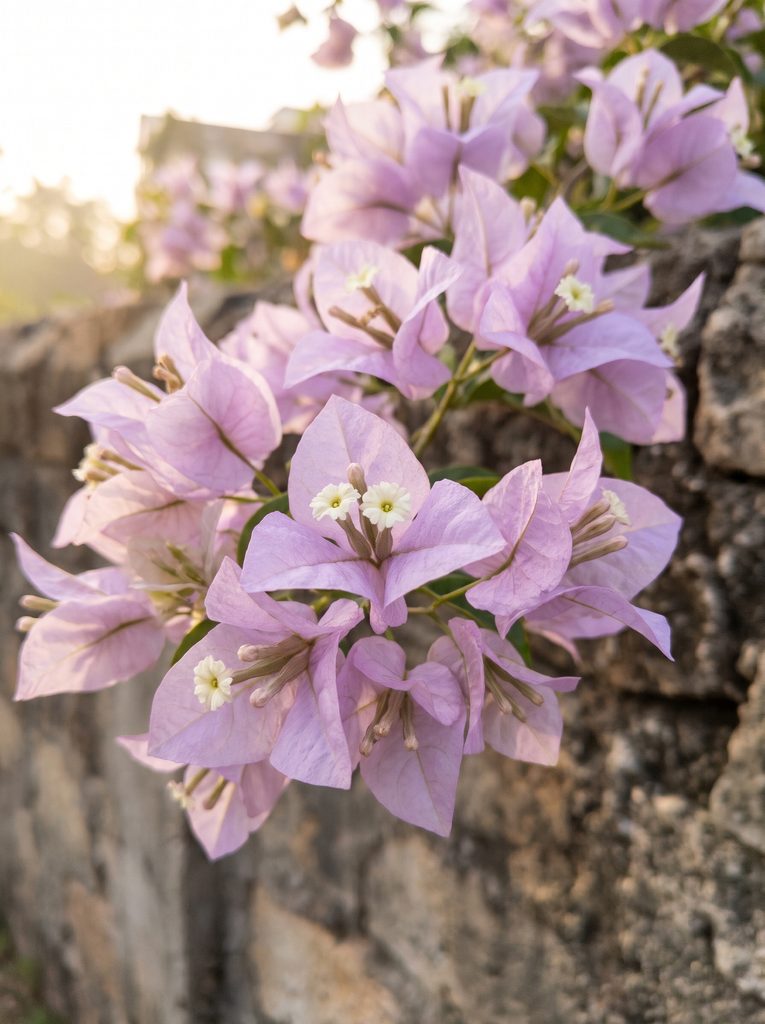
Lavender is a light lilac or pale violet, much softer than true purple.
- Lavender vs. purple: Lavender is paler and cooler, with less saturation.
- Popular selections: ‘Alexandra’ is often described this way, though its color varies with light and temperature.
12. Fuchsia Bougainvillea
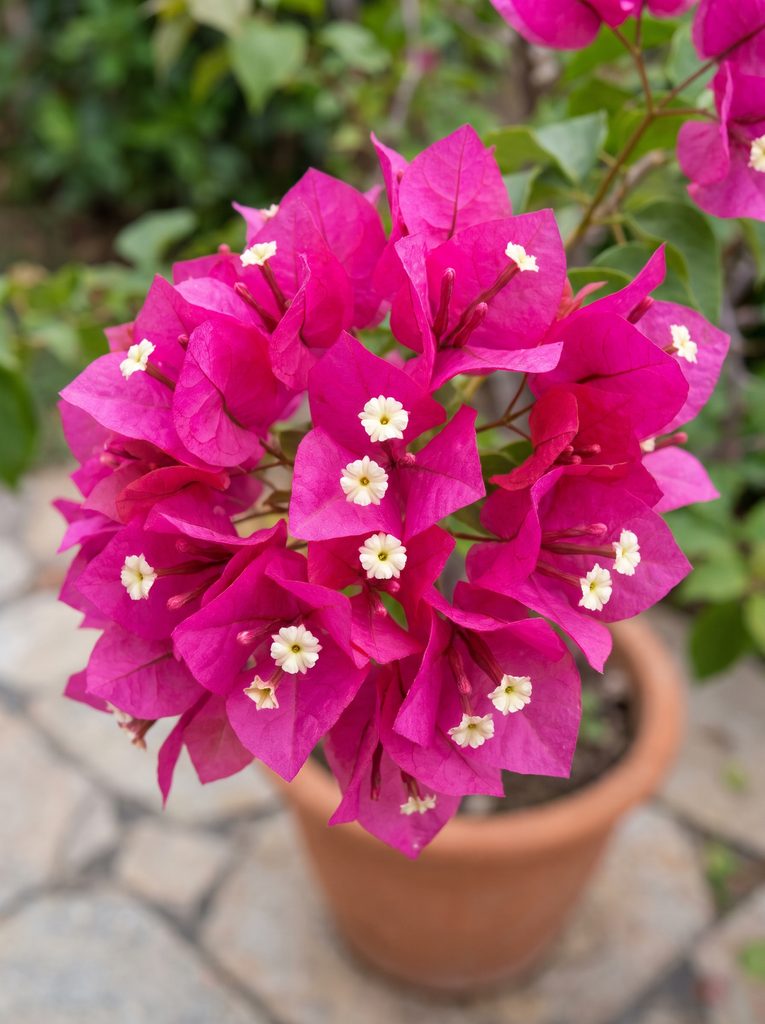
Fuchsia is a bright pink-purple that is vivid but slightly lighter and pinker than magenta.
- Fuchsia vs. magenta: Fuchsia has more pink and glows. Magenta is deeper and more purple-red.
- Popular varieties: Several hot pink-purple hybrids are marketed this way. Names are inconsistent across nurseries.
13. Golden-Orange Bougainvillea
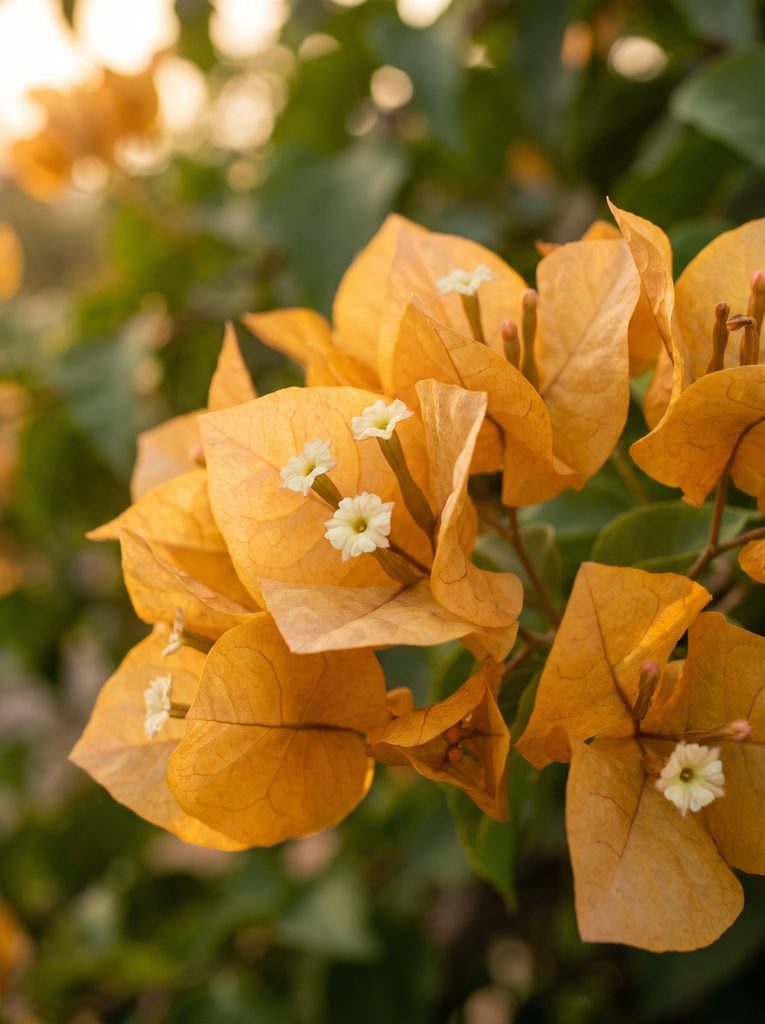
This is a luminous golden-orange or amber tone.
- Popular selections: ‘Rosenka’ (opens gold and ages toward pink), ‘Delta Dawn’, and similar selections.
- Golden-orange vs. yellow: Golden-orange has a stronger orange component and is warmer. Yellow is cleaner and lighter.
14. Bicolor Bougainvillea
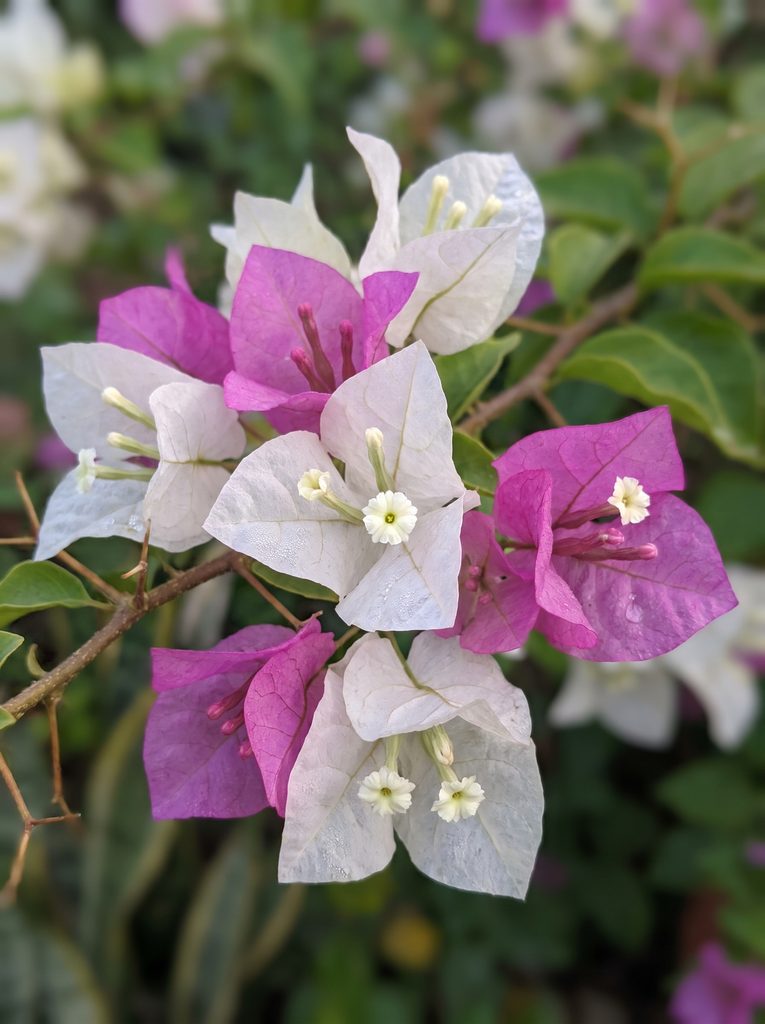
Bicolor bougainvillea shows two colors at once, either in the same bract or on different branches.
- Common combinations: Pink and white, magenta and white, and orange with pink.
- Popular cultivars: ‘Mary Palmer’ (white and magenta on the same plant), ‘Imperial Delight’, and ‘Raspberry Ice’ (variegated foliage with pink-magenta bracts).
- What makes it special: Bicolors are often genetically unstable. A plant may revert to a single color and produce stems of only one of them. If this happens, prune out the reverting branches promptly to keep the bicolor look.
15. Cream Bougainvillea
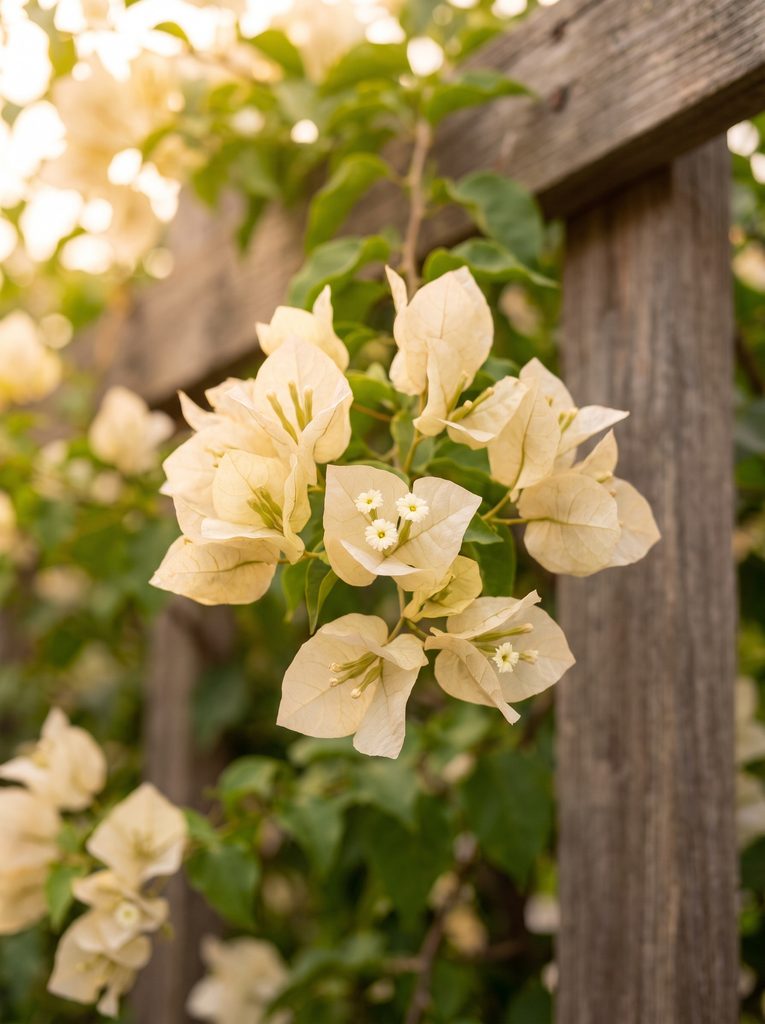
Cream and ivory are subtle, with a warm, soft glow.
- Cream vs. white: Cream has a warm yellow undertone. White is cooler and cleaner.
- Popular selections: Some “white” cultivars display creamy tones in cooler weather or as bracts age.
Popular Bougainvillea Varieties and Their Colors
| Variety | Typical bract color | Distinguishing characteristics |
|---|---|---|
| Barbara Karst | Bright magenta-red | One of the most widely planted; vigorous, free-blooming, thornier |
| San Diego Red | Deep red to magenta-red | Strong grower with large bracts; good on walls and fences |
| California Gold | Golden yellow | Bracts may soften or blush with age; less cold-hardy |
| White Madonna | Clean white | Elegant and bright; a classic choice for evening gardens |
| Vera Deep Purple | Deep purple-magenta | Rich, dark tone; vigorous |
| Sanderiana | Purple | Classic, hardy, and floriferous |
| Mary Palmer | White and magenta (bicolor) | Two colors on one plant; may revert |
| Raspberry Ice | Pink-magenta | Variegated foliage adds interest |
| Rosenka | Gold aging to pink | Changing color as bracts mature |
| Helen Johnson | Pink | Compact; popular in containers |
Note: Cultivar names and color descriptions vary between nurseries and growing regions. Always check a local nursery’s plants in bloom before buying.
- 🏷️ Plant Labels or Garden Markers—Check price on Amazon
- 🌿 Wall-Mounted Trellis or Garden Arch—Check price on Amazon
- 🌸 Slow-Release Fertilizer for Flowering Plants—Check price on Amazon
What Is the Rarest Bougainvillea Color?
There is no single official “rarest” color, but stable true yellow, clean white with no pink flush, and well-defined bicolors are the hardest to find in good quality and the most prized.
- Why some shades are harder to find: Yellow and orange pigments are less dominant than magenta pigments, so these cultivars are less common. Many are also less vigorous or cold-sensitive.
- Unusual combinations: Color-changing cultivars and stable bicolors are the most sought after.
- Rare cultivars vs. unusual color variations: A rare cultivar is a distinct, named, propagated plant. A one-off color variation can simply be a branch sport, a response to light, or a difference caused by climate. Not every unusual photo represents a stable, buyable plant.
Can Bougainvillea Have Blue, Black, or Green Flowers?
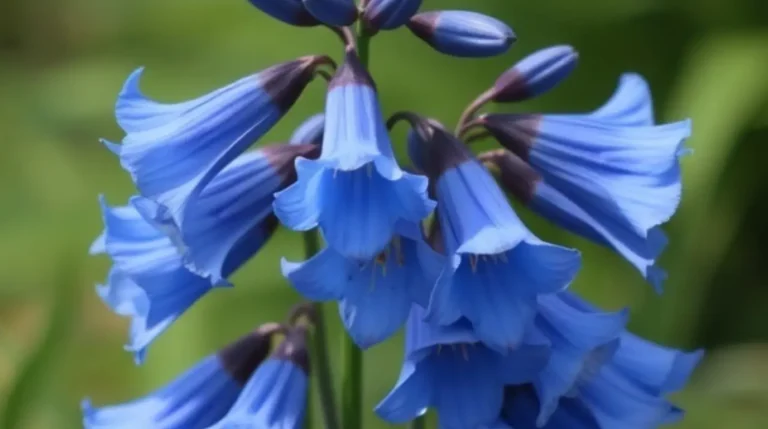
Blue: No. True blue bougainvillea does not exist. Bougainvillea belongs to a plant group that produces betalain pigments rather than the anthocyanins responsible for most blue flowers. The closest you will find is cool lavender or blue-leaning purple. Images showing sky-blue bracts are typically edited, filtered, or dyed.
Black: No. Nothing is truly black. Names such as “Black India” refer to very deep purple or dark magenta types, which can look near-black in shade or in photos.
Green: Not a mature ornamental color. New bracts can look greenish at first, and some pale cultivars have a green tinge when they open, but this is a stage, not a standalone color.
Misleading photographs: Strong filters, saturation, dyed plants, and AI-generated images often exaggerate colors. Look for photos in natural light, ideally from the nursery selling the plant.
Why Do Bougainvillea Colors Look Different?
The same plant can appear to change color, for good reasons:
- Cultivar variation: Even within one color group, shades differ widely between cultivars.
- Pigment and age: Bracts often deepen, fade, or shift hue as they mature.
- Light: Full sun intensifies color. Shade can make bracts look paler or duller. Morning sun reads differently than evening light, and photos taken in shade look cooler.
- Season and temperature: Cool nights tend to deepen color, and hot weather can bleach it. Bloom flushes after a dry spell are often the most vivid.
- Photography: Camera settings, screen calibration, and editing all change how colors appear. A single plant can look quite different in different photos.
How to Choose the Best Bougainvillea Color
- Bright, colorful landscapes: Magenta, hot pink, orange, and red give maximum impact.
- White or neutral backgrounds: Magenta, purple, and deep pink pop against white stucco. Gold and orange look warm and sunny.
- Mediterranean-style gardens: Magenta, purple, and terracotta-friendly oranges suit stone, clay, and whitewashed walls.
- Tropical designs: Orange, gold, coral, and hot pink match lush foliage.
- Pergolas, walls, and containers: Choose vigorous cultivars (e.g., ‘Barbara Karst’, ‘San Diego Red’, ‘Sanderiana’) for large structures. Choose compact varieties (e.g., ‘Helen Johnson’, dwarf types) for containers, and prune regularly.
Growing tip: All colors need at least six hours of direct sun to bloom well. Bougainvillea performs best in warm climates (roughly zones 9b to 11) and in containers elsewhere, with winter protection. Water sparingly between soakings and avoid excess nitrogen, which produces leaves rather than colorful bracts.
- 🏡 Large Decorative Planters for Patios and Balconies—Check price on Amazon
- 🌿 Garden Trellis or Pergola Support Kit—Check price on Amazon
- 🪢 Soft Plant Ties or Garden Twine—Check price on Amazon
Frequently Asked Questions About Bougainvillea Colors
What are the most common bougainvillea colors?
Magenta, pink, purple, and red are the most common. White, orange, and yellow are widely available but less frequent.
What is the rarest bougainvillea color?
Stable yellow and well-defined bicolors are among the hardest to find. There is no single official rarest color.
Does blue bougainvillea exist?
No. Bougainvillea lacks the pigments needed for true blue. Plants described as blue are lavender or blue-toned purple, or the images are edited.
Is there a true purple bougainvillea?
Yes. Cultivars such as ‘Sanderiana’ and ‘Vera Deep Purple’ produce purple to purple-magenta bracts.
Do yellow bougainvillea varieties exist?
Yes. ‘California Gold’ and ‘Thai Gold’ are well known, though yellow bracts often shift toward peach or pink with age.
What is the most popular bougainvillea color?
Magenta and pink are the most widely grown, thanks to vigorous, reliable cultivars.
Can one bougainvillea plant produce multiple colors?
Yes. Bicolor cultivars such as ‘Mary Palmer’ can, and some plants change color as bracts age. Branch sports may also produce a different color.
Are bougainvillea flowers actually colorful?
Not the true flowers. The colorful parts are the bracts. The real flowers are small and cream or white.
What is the difference between pink and magenta bougainvillea?
Pink is lighter and softer. Magenta is deeper, more saturated, and leans toward purple-red.
Which bougainvillea varieties have two colors?
‘Mary Palmer’, ‘Imperial Delight’, and ‘Raspberry Ice’ are among the best-known. Bicolor traits can be unstable, so prune reverting branches.
Conclusion
Bougainvillea offers an exceptional color range, from vivid magenta and fiery red to soft peach, golden yellow, and clean white. Every color comes from the bracts rather than the true flowers, and light, age, temperature, and cultivar all affect what you see. Blue and black bougainvilleas don’t exist, and rare colors like stable yellow and bicolors reward patient shopping.
Whichever shade you choose, look at plants in bloom, match the cultivar’s vigor to your space, and give it plenty of sun for the best display.